Breaking
Recover Stolen State Funds Instead of Jailing Offenders-Martin Kpebu

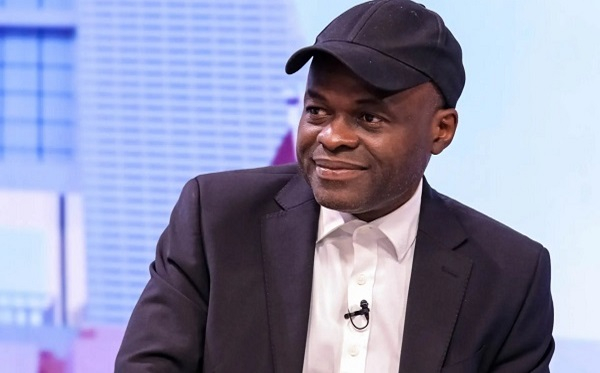
Private legal practitioner Martin Kpebu has argued that Ghana should focus more on recovering misappropriated state funds than imprisoning people convicted of corruption-related offences.
Speaking on The Key Point on June 13, 2026, Kpebu said recovering stolen public funds would provide greater benefits to the country by allowing the money to be invested in important sectors such as healthcare and infrastructure.
“What shall it profit a man to throw somebody in jail and then he doesn’t give us one farthing, so that he keeps all their money?” he asked.
Kpebu pointed to the country’s development needs, arguing that recovered funds could help address critical challenges in the health sector.
He added, “Looking at our state of development, the way hospitals need beds, I still can’t believe the Afariwa Hospital has not been opened. I would take their money any day and possibly with some interest so that we can get beds and other equipment to open Afariwa Hospital and it will save more lives than just throwing one person in custody or in jail.”
While acknowledging concerns that allowing offenders to repay stolen funds could reduce the deterrent effect of anti-corruption efforts, Kpebu maintained that public shame and reputational damage can serve as powerful punishments.
“After that, I can come and sit on TV3 and then when any matter concerning me comes up, I’ll say, ‘Wontumi who held our money illegally for some years and finally had to be coerced to pay?
“The point I’m making is that we’ll continue to name and shame him, stigmatising him for the rest of his life and it will even affect his family. So that is punishment enough,” he said.
According to Kpebu, people accused of misusing public resources often face long-term social consequences that can affect both their personal and professional lives.
“For such a case, returning the money, the stigma the person will suffer, for me, the value is the same,” he stated.
When asked whether recovering funds without imposing prison sentences would be enough to discourage corruption, he responded: “Absolutely. I’ll tell you 150%. That’s my opinion.”
Kpebu also cited previous cases where the state recovered part of the funds lost through corruption, arguing that more aggressive recovery efforts could have generated significant benefits for the public.
He emphasized that returning stolen money should not be viewed as proof of innocence but as a way of ensuring that the state recovers resources that belong to the people.
The lawyer further noted that plea bargaining is a legitimate legal tool used in Ghana and many other countries.
“Plea bargaining is used everywhere,” he said. “For me, knowing the weakness of the Ghanaian system, half a loaf is always better than none.”
Kpebu concluded by urging prosecutors and policymakers to prioritize the recovery of public funds while ensuring that individuals involved in corruption remain publicly accountable for their actions.
Watch the Video below:
We should recover our money back and continue to name, shame and stigmatise Chairman Wontumi for the rest of his life. That is punishment enough for him. – Martin Kpebu, Private legal practitioner pic.twitter.com/jFkpRdzE1g
— With All Due Respect (@cdzas) June 14, 2026