Breaking
CISLAC Urges Tinubu To Audit Military Spending After General’s Tragic Death In Bandits’ Captivity

The Civil Society Legislative Advocacy Centre (CISLAC) has urged President Bola Tinubu to declare a national state of emergency on insecurity and launch an immediate probe into military spending following the death of retired Major General Rabe Abubakar in captivity. Describing the incident as a “tragic symbol” of systemic security failures, the group emphasizes that the event highlights the expanding reach of criminal networks despite significant budgetary allocations.
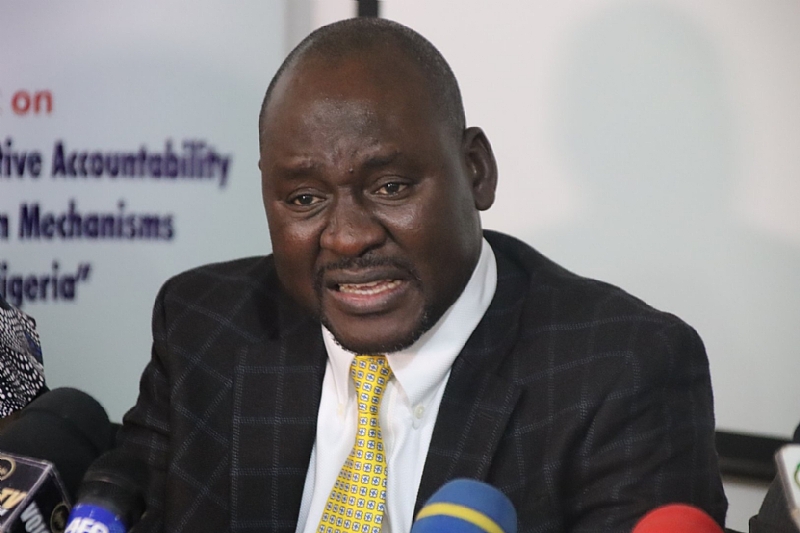
In a statement by Executive Director Auwal Musa Rafsanjani, CISLAC criticized the inability of current security structures to protect citizens, calling for an investigation into defense expenditures. The advocacy group argues that the incident underscores a profound failure within the national security framework.
“The death of a retired Major General in captivity is not only a personal tragedy but a national one that reflects the alarming state of insecurity in the country,” Rafsanjani said. “If a decorated military officer who dedicated his life to defending Nigeria can fall victim to bandits, then ordinary Nigerians face even greater risk.”
CISLAC called on President Tinubu to immediately declare a national emergency on insecurity to enable coordinated, intensive interventions across affected regions. The group argued that such a declaration would unlock faster, centralized responses and compel stricter accountability for security operations.
Rafsanjani pointed to President Tinubu’s June 12 Democracy Day disclosure that the 2026 budget committed N5.41 trillion to defence and security — the largest security allocation in Nigeria’s history — and urged the presidency to reconcile spending with outcomes on the ground.
“Trillions of naira are being spent, yet insecurity is worsening. The President must order a full audit of defence spending and security votes at federal and state levels to ensure transparency and that resources are being used effectively to protect citizens,” he said.
Citing Amnesty International’s April 2026 report—which documented at least 1,100 abductions in northern Nigeria between January and April—CISLAC warned that surging kidnappings and attacks on rural communities and schools are rapidly eroding public confidence. The civil society group emphasized that this worsening security trend is actively discouraging school attendance and crippling educational advancement in the affected regions.
Auwal Musa Rafsanjani attributed the country’s worsening crisis to deeply entrenched systemic failures within Nigeria’s security apparatus, specifically citing weak intelligence coordination, negligence, and corruption. He noted that these glaring institutional vulnerabilities have created a permissive environment where criminal syndicates operate with total impunity, despite the existence of multiple elite intelligence bodies, including the Office of the National Security Adviser (ONSA), the Department of State Services (DSS), and the Defence Intelligence Agency (DIA).
To reverse this dangerous trend, the CISLAC chief stressed that the federal government must urgently overhaul its approach to internal security by modernizing operations to eliminate crippling operational gaps. “There is an urgent need to strengthen intelligence gathering, improve inter-agency coordination, and dismantle the networks supporting these criminal activities,” Rafsanjani stated, insisting that immediate structural reforms are required to disrupt the logistics and financial lifelines of bandits and terrorists.
In addition to demanding a national emergency declaration and a comprehensive military audit, CISLAC called for a massive injection of resources into the frontline workforce to improve the welfare, training, equipment, and overall operational capacity of security personnel. While advocating for a shift toward proactive, intelligence-led combat operations, the organization explicitly cautioned that any proposed transition toward state policing must be built upon rigid legal and accountability frameworks to prevent political victimization and human rights abuses.
CISLAC concluded by demanding comprehensive security sector reforms, stronger community engagement, and sustained political will to permanently restore peace and protect Nigerian citizens.
Finally, Rafsanjani strongly condemned Nigeria’s political leadership for consistently prioritizing partisan electoral politics and power struggles over the pressing security needs of vulnerable populations. Warning that “governance becomes meaningless without citizen safety,” he tasked the National Assembly with stepping up to its constitutional responsibilities by intensifying its legislative oversight functions to guarantee that all security resources are properly utilized.