World
With eye to Israel’s future, Israeli experts help launch European healthy-aging initiative

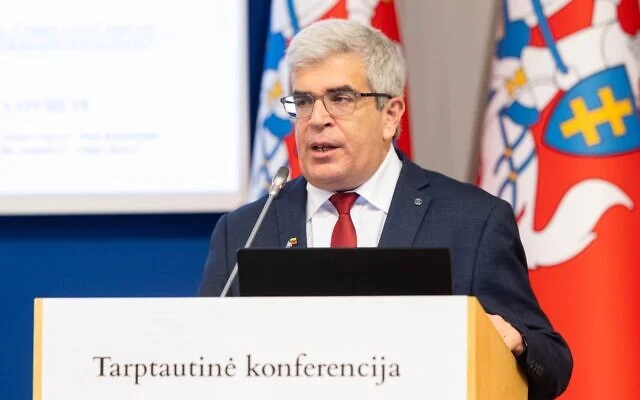
Israeli experts are helping launch a new international healthy-aging initiative at Lithuania’s parliament on Friday, hoping the European effort will also help Israel prepare for the pressures of an older population.
Currently, 22% of Europe’s population is 65 or older, according to Eurostat, compared with about 13% of Israel’s population, according to official Israeli figures for 2026.
While there have been national parliamentary initiatives on aging in Israel and the United Kingdom before, the International Parliamentary Cooperation Initiative for Healthy Ageing and Longevity is the first formal international plan bringing together experts and lawmakers from countries around the world.
“The goal is to help Europe, and if Israel is part of the European initiative, then all the policies that will be developed will benefit Israel as well,” said Ilia Stambler, who led a research paper that contributed to the formation of the Lithuanian initiative, speaking to The Times of Israel via video call.
Although the Israeli birth rate is higher than that of Europe, Stambler said that the health and economic challenges of an aging population “are coming for us too.”
“We hope that crucial policies that are developed now in Europe will also be enacted in Israel before it’s too late,” Stambler said.
Stambler is the founder and chairman of the International Longevity Alliance, and chairman of the Israeli organization Vetek (Seniority) Association – the Movement for Longevity and Quality of Life.
Shelly Hugler Livne, Israel’s ambassador to Lithuania, told The Times of Israel that the initiative combines “Israel’s cutting-edge technology, innovation, digitalization, and startups” with Lithuania’s “very strong scientific community that will benefit both nations, Europe, and the entire world.”
Livne, who will attend the Friday launch, said the effort “is not only about adding years to life, but adding life to years.”
The effort ‘is not only about adding years to life, but adding life to years’
Along with Stambler, about a dozen other Israelis are in Lithuania to participate in the initiative, as well as World Health Organization representatives, politicians, and scientists from around the world.
Some of the initiative’s goals include promoting research and innovation in healthy longevity, public education for healthy aging, facilitating access to technical, analytical, and scientific support from expert networks and research institutions, and improving professional training for the longevity workforce.
This initiative grew out of a conference that Stambler, as the International Longevity Alliance chairman, helped to organize in the Lithuanian Parliament in 2025.
“The success was so great that various institutions in five Lithuanian cities, including the Academy of Sciences and several universities, are getting involved in promoting healthy aging,” he said.
Developing a ‘clear policy toward aging’
Aging is a major risk factor for all chronic diseases, including cancer, cardiovascular disease, diabetes, and neurodegenerative disorders.
Moreover, non-communicable aging-related diseases account for approximately 90% of all deaths in Europe, according to the World Health Organization.
Age-related illnesses contribute to 7% to 10% of the gross domestic product across EU member states
These age-related illnesses contribute to a significant share of healthcare expenditure, estimated at 7% to 10% of the gross domestic product across EU member states.
The initiative’s goal is to plan policies that shift the focus of scientific and medical research away from individual diseases and toward geroscience, a research field that zeroes in on the aging process itself to prevent age-related ill health.
“The European Union focuses on individual diseases, and it doesn’t have a clear policy toward aging,” Stambler said.
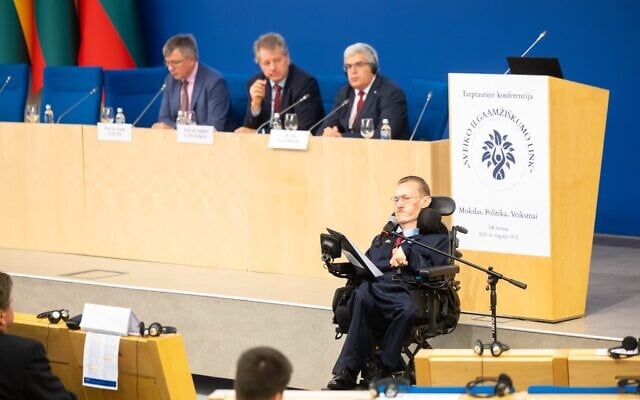
Stambler led a peer-reviewed paper calling for the establishment of a coordinated support program on healthy aging and longevity, which recently appeared in Mechanisms in Ageing and Development.
The authors of the paper, including more than 80 researchers and experts in the field from over 100 international organizations, urged the European Union to increase support for healthy longevity research.
“We’re advancing ideas to set policy for healthier aging, and to prepare society for people living even longer than ever before,” said Stambler, whose efforts have been supported by Vetek, the Israeli Health Ministry, and the Israel-Europe Research and Innovation Directorate.
Stambler said that longer periods of health, activity, and productivity will improve older citizens’ quality of life and reduce pressure on Europe’s healthcare and social welfare systems.
‘The savings in healthcare and the welfare systems can free resources for wider scientific, technological, and social development’
At the same time, this new productivity could “stimulate substantial economic growth in Europe and strengthen its innovation and competitiveness,” Stambler said. “The savings in healthcare and the welfare systems can free resources for wider scientific, technological, and social development.”
Stambler added that he hoped to take “this precedent and expand it so that it will eventually reach Israel and around the world.”
Stambler said he is concerned about what might happen to Israel’s healthcare and social welfare systems if there is another pandemic like COVID-19, in which most deaths occurred among older people.
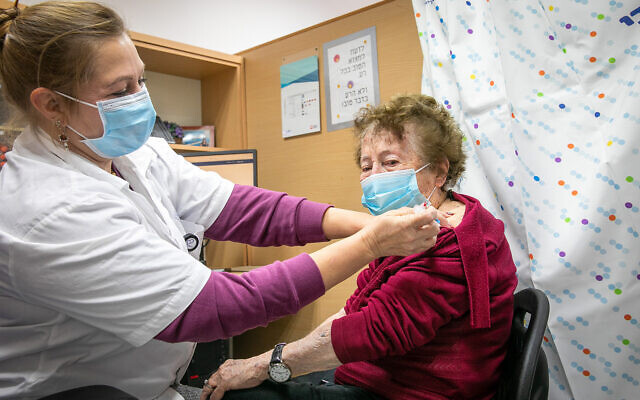
“COVID-19 was a test case,” Stambler said. “We saw what happened. Suddenly, there was no place in hospitals, and the healthcare and social welfare systems almost collapsed. The disease hit older people the hardest. That’s what will happen again if aging health continues to deteriorate. It’s time Israel addresses it. It’s not as severe as Europe, but it’s a matter of degrees.”
“If we’re able to address aging as the root cause of disease and disability, this will advance preventive medicine in a really significant way,” he said.
Even today, during times of war, people need to focus on healthy aging, he urged.
“The war will end eventually,” Stambler said, “but aging will continue, and we need to address it.”