World
America’s war-based economy still strengthens its rivals — and Trump is accelerating this

For more than two decades, experience has shown a clear pattern: whenever the United States rushes into wars, it does not weaken its enemies as it expects. Instead, it often opens wide doors for them to grow, expand, and build influence. The question is no longer whether rival powers benefit from Washington’s constant wars.
The real question is: how much do these wars speed up America’s rivals economically and politically?
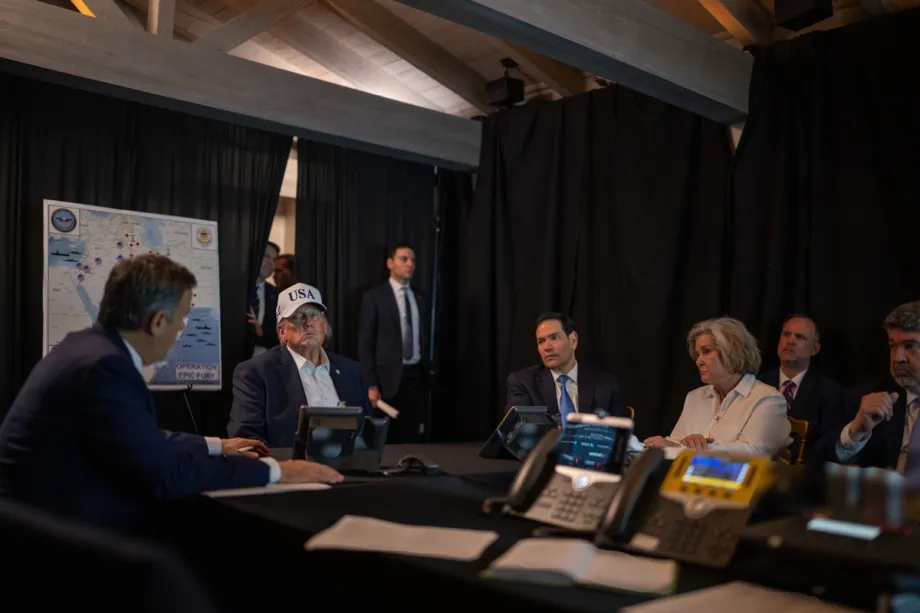
Today, with Donald Trump returning to the center of global influence and using escalating rhetoric and threats — commercial, military, and geopolitical — Beijing increasingly views “Trump’s wars” as a rare strategic opportunity, not an existential threat.
Wars drain Washington and disrupt its priorities
Beijing understands this well. When the U.S. spends its resources on military campaigns and naval deployments, it is not building new factories, not investing at the same speed in education, research, and technology, and not focusing on the long-term industrial race. That is exactly what China wants: more time and more space to speed up production, deepen innovation, and expand its influence.
READ: Iranian military source claims missiles penetrated US defences and hit majority of targets
Trump’s wars weaken allies before they weaken rivals
America’s direct rivals are not the only ones affected by war. Europe and NATO often pay a double price: rising energy costs whenever supply routes are threatened, disruption of shipping and maritime insurance, internal inflation, and growing political polarization driven by living-cost pressures and migration.
Here China sees the opportunity. The more Washington gets pulled into a new confrontation, the more Europe becomes anxious, divided, and less able to sustain a “long economic war” against China.
This pressure is also felt by America’s Gulf allies, especially as the U.S. confrontation with Iran intensifies.
Wars create a “Fear Economy” and China presents itself as the economic alternative
Wars do not only create deaths and destruction. They also create a global “Fear Economy” that leads to markets panic, investors hesitate, and companies search for stability in supply chains. In economics, stability is as valuable as power.
China tries to present itself at this moment as the “more responsible economic actor”. This means a state focused on trade, infrastructure, and investment that offers itself as an alternative partner in Asia, Africa, and Latin America.
The more the U.S. moves toward war, the easier it becomes for China to sell a simple message:
We represent development; they represent chaos.