World
Deal a ‘declaration of US defeat,’ chief Iran envoy says, as IAEA vows inspections

The deal between Iran and the United States to end their war is “America’s declaration of defeat,” Mohammad Bagher Ghalibaf, the head of the Iranian negotiating team, said on Wednesday.
Ghalibaf made the statement amid a continued clash over inspections at Iran’s nuclear sites, and ahead of a fresh round of talks between the countries’ negotiators set to take place next week. On Wednesday, amid those negotiations, US Secretary of State Marco Rubio kicked off a tour of the Gulf with a visit to the United Arab Emirates, while his Iranian counterpart spoke with a Hamas leader about the talks.
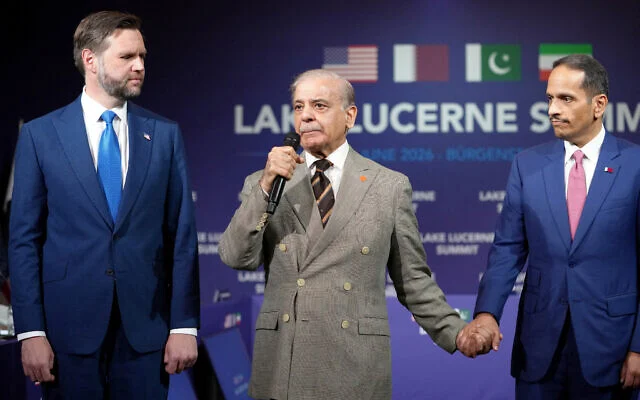
The talks follow last week’s signing of a memorandum of understanding, mediated by Pakistan, which formally halted the fighting between the sides and kicked off 60 days of negotiations on a final agreement, a period that began last week.
Speaking at a conference in Azerbaijan, Ghalibaf also said that regional countries alone should determine the Middle East’s political and security order, rejecting external involvement and calling for expanded intra-regional cooperation. Israel, which launched the war alongside the US at the end of February, is not included in the talks, and its officials have expressed alarm at the terms of the MoU.
“The Islamabad understanding was not the result of pressure and coercion, but rather the result of the resistance and authority of the brave Iranian nation,” Ghalibaf said. “That is why the Islamabad memorandum of understanding became a declaration of America’s defeat.”
He added, “We consider the withdrawal of foreign military forces from the region a strategic goal” because “not only do they not create sustainable security but they are also a source of instability.”
Pakistan said on Wednesday that the technical talks it has been mediating between the United States and Iran were set to restart next week, though he did not provide details on the venue.
“Talks will resume next week, I presume on Tuesday,” Pakistan’s foreign ministry spokesman Tahir Andrabi told journalists in Islamabad, adding that Monday or Wednesday were also possible start dates.
IAEA chief vows inspections in Iran are ‘going to happen’
The previous round of talks took place earlier this week in Geneva, where the US team was led by Vice President JD Vance. Mediators said the sides agreed on a framework to reach a final accord, and Vance touted Iran’s agreeing to invite International Atomic Energy Agency inspectors back into the country, which he called a “major milestone.”
But Iranian Foreign Ministry spokesman Esmaeil Baghaei responded that Iran has neither held a meeting with IAEA chief Rafael Grossi in Switzerland nor plans for the UN nuclear watchdog to inspect Iran’s damaged nuclear facilities.
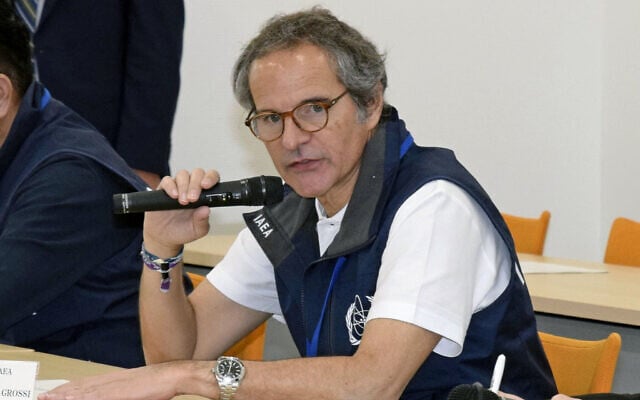
Still, on Wednesday Grossi signaled that Iranian nuclear enrichment sites would indeed be visited by his inspectors. Since the first round of Iranian-Israeli fighting in June 2025, the IAEA has been blocked by Tehran from visiting enrichment sites where the Islamic Republic is believed to be storing enough highly enriched uranium to potentially build as many as 10 nuclear weapons.
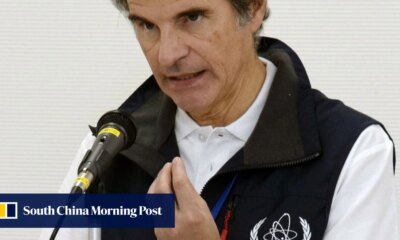
“I can understand political statements, they are part of the reality, but the fundamental thing I would like to remind you and draw your attention to is that there has been a memorandum of understanding, signed by both presidents,” Grossi told journalists at a news conference at the Fukushima Daiichi nuclear power plant in Japan, which was hit by a tsunami in 2011.
The accord “explicitly states that the nuclear activities that are going to be carried out with the regards of the nuclear material facilities will be supervised by the IAEA — in all letters,” he said.
Grossi added, “Obviously, to do that, we have to inspect. Whether this happens the day after tomorrow or in one week or in 10 days, it’s important, but not essential. This is going to happen.”
Iran long has maintained that its nuclear program is peaceful, though it has enriched uranium beyond any levels needed for civilian use.
The two sides have also disagreed on details of a provision that would give Iran access to funds that have been frozen in overseas accounts.
US President Donald Trump has said any unfrozen assets would be used to buy food and medical supplies from the US, while Iran’s ambassador to the United Nations in Geneva, Ali Bahreini, said Iran would decide how to spend that money.
Washington has already agreed to waive sanctions on Iran for 60 days, allowing Tehran to sell oil and related products and receive payment for them.
The waiving of the sanctions, along with a lack of clear concessions by Iran on the nuclear issue, are among the reasons Israeli officials have expressed alarm about the deal.
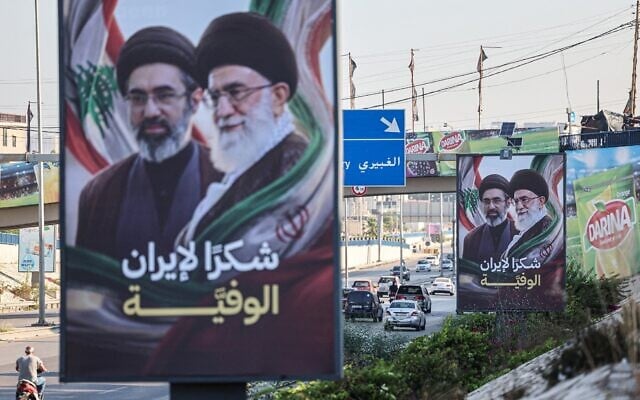
The MOU also imposed a ceasefire in the fight between Israel and the Iran-backed Hezbollah terror group in Lebanon. A deconfliction mechanism for Lebanon established under the US-Iran negotiations reportedly includes Iran while excluding Israel.
Iran’s Araghchi speaks with Hamas leader
Araghchi spoke with a senior official from the Palestinian terror group Hamas regarding the US-Iran talks, Iranian state television reported on Wednesday.
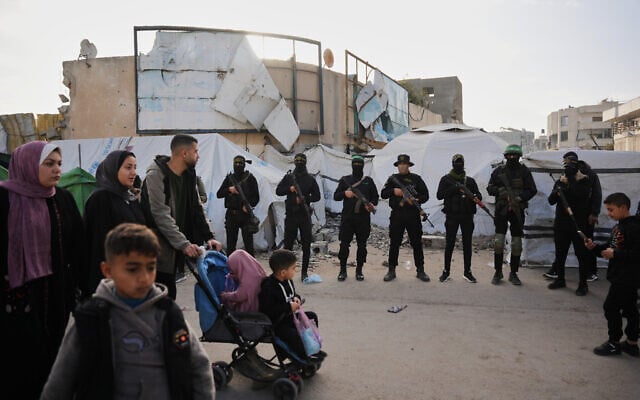
Iran’s top diplomat discussed the “latest developments” in the region with Basem Naeem, a member of Hamas’s political bureau, Iranian television said.
The text of the MOU does not mention Gaza but stipulates “an immediate and permanent cessation of military operations on all fronts, including in Lebanon.” Iran has long supported and funded Hamas as well as Hezbollah.
Hamas has welcomed the agreement and expressed hope that it would also help end the violence in the Gaza Strip, which is split between the terror group and Israeli control, and where fighting has continued at a low level despite an October 2025 ceasefire.
During the call, according to the Iranian TV report, Araghchi “reaffirmed the Islamic Republic’s continued support for Palestinians and their just cause until their legitimate national rights are fully realized.”