World
France reports 50 weather-related deaths as record heat wave sweeps Western Europe

Western Europe was in the grip of a deadly, record-setting heatwave on Wednesday that has killed dozens of people, closed schools, slowed trains, knocked out electricity and forced farmers to harvest grain at night.
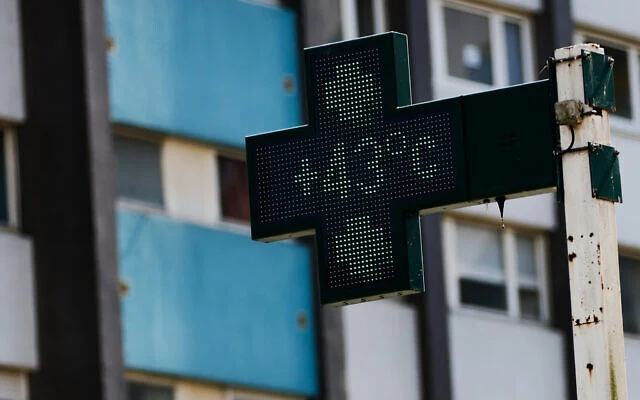
In France, which on Tuesday recorded its hottest day since records began nearly 80 years ago, authorities sought to restore electricity to thousands of homes hit by power cuts in the northwestern region of Brittany. The recorded temperature peaked at 44.3 degrees Celsius (111.7 degrees Fahrenheit) in the southwestern town of Pissos.
Italy’s health ministry issued its highest heat alert for 16 cities, from Florence and Milan to Rome, Turin and Verona.
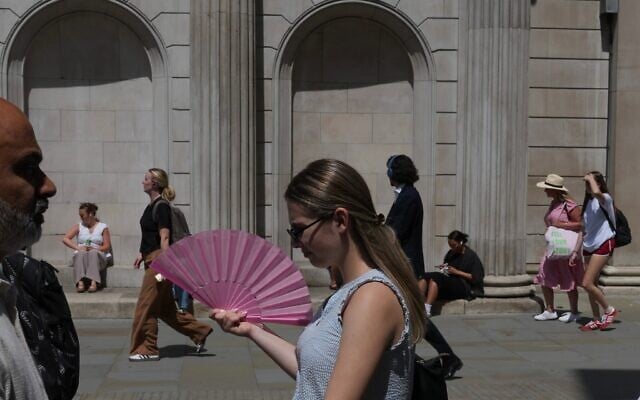
In Britain, on course for its hottest June day ever, the Met Office weather service issued only the second extreme-heat weather warning in history. Hundreds of schools stayed shut or closed early, as high temperatures could place even healthy people at risk.
At least 48 people have died in France from drowning as they attempted to seek respite from the crippling heat, while two young children were killed by heat in a car, authorities said.
Two elderly people died of heatstroke in Spain, which has experienced extreme temperatures since the weekend exceeding 40°C. Temperatures there were starting to ease on Wednesday.
A rare weather pattern known as an Omega block was causing the record-breaking temperatures across Europe, as high as 18 degrees Celsius (32 degrees Fahrenheit) above normal, according to the Reuters Climate Monitor.
The phenomenon resembles the shape of the Greek letter Omega, with a bulbous middle trapping in intensifying heat hovering over regions for extended periods, with cooler weather on its fringes.
Weather agency Meteo-France has said the conditions are comparable to a heatwave in August 2003 that lasted 16 days and caused an estimated 80,000 excess deaths across Europe.
Europe is warming at more than twice the global average, the World Meteorological Organization has said, which makes prolonged heat episodes increasingly likely.
Models, builders feel the heat
In Paris, where the annual Fashion Week was under way, onlookers could be seen gasping and sweating during the Louis Vuitton show as male models showed off creations by pop singer Pharrell Williams. Labels including Dior and Rick Owens changed their schedules to hold shows in the morning, organizers said.
The Eiffel Tower and the Louvre Museum shut early on Tuesday. In Switzerland, local authorities opened air-conditioned theaters for free daytime cinema screenings.

Construction contractors across the continent altered working hours so employees could avoid the worst, while retailers struggled to meet demand for fans and portable air-conditioners.
A French agriculture cooperative said farmers were introducing night shifts for harvesting to protect workers from afternoon heat and fields from fire risk.
In Britain, the grid operator asked generators to make more power available amid soaring temperatures poised to break records later on Wednesday.
Britain’s train operators have advised only essential journeys on Wednesday and Thursday, as the heat has brought speed restrictions.
In Italy, conditions were expected to worsen further, especially across central and northern regions, with the heatwave likely to peak between Sunday and Monday, meteorologists said.
Temperatures could reach 41°C (105.8°F) between Tuscany and Emilia, while in coastal areas such as Liguria the combination of heat and extreme humidity could drive perceived temperatures as high as 45°C (113°F).