Trends
Why 2026 Capital Budget May Not Be Implemented This Year

There are indications that the Federal Government’s (FG) capital budget for 2026 may record zero implementation at the end of the fiscal year, forcing further extensions across multiple fiscal years.
Speaking to Financial Vanguard in Lagos last weekend, a senior official in the Budget Office of the Federation (BOF) said, ‘‘it will be rolled over, it is normal’’. Vanguard findings from several ministries, departments and agencies of the government show that the FG is still stuck with 2024 and 2025 capital budget releases which they said are way below 50 percent, a situation which also indicates that the combined budgets of the two previous years would be rolled over again to end of this year.
The roll-over of the two previous years’ capital budgets has been done twice so far with the second roll-over set to expire by September 30, 2026. The Executive arm of the government had made the Legislative arm to approve a roll-over of about N16.8 trillion capital expenditure appropriated in the 2024 and 2025 budget into 2026 budget up till June 2026, a date that expired without significant executions, forcing a further extension to September 30, 2026.
The N16.8 trillion formed the larger part of the N32.3 trillion capital budget for 2026. Vanguard learnt that the balance of N15.5 trillion meant for 2026 capital expenditure cannot be implemented due to the huge outstanding for 2024/ 2025 capital budget.
Issues at the House of Reps
Vanguard’s findings also show hat in the past one year, proceedings of the House of Representatives Committee on Appropriations, near implementation. Presenting the committee’s findings on the floor of the House, Bichi disclosed that N16.765 trillion had to be stripped out of the capital allocation and rolled over into the 2026 fiscal year “due to funding constraints,” after his committee met directly with the then Minister of Finance and Co-ordinating Minister of the Economy, Mr Wale Edun; The Minister of Budget and Economic Planning, Atiku Bagudu; and the Director-General of the Budget Office, Tanimu Yakubu, to establish why the money had not been released.
The committee’s work did not end there. By April 2026, as the House and Senate finalised the N68.323 trillion 2026 budget, Bichi’s committee confirmed that N32 trillion of that figure was earmarked for capital expenditure through the Development Fund and that a chunk of the increase from the executive’s original N58.47 trillion proposal existed specifically to “regularise” outstanding capital obligations carried over from 2025, so that “contractors and developers are paid for completed works.”
In effect, the Appropriations Committee’s own numbers show the 2026 budget was built, in part, on paying for the previous year’s unfinished business rather than a purely new budget.
The committee has since had to return to the same problem twice more. In June 2026, Majority Leader Julius Ihonvbere told the House that “substantial funds released to Ministries, Departments, and Agencies (MDAs) remained unspent due to administrative bottlenecks, procurement delays and implementation challenges,” as he moved the bill extending the 2025 capital budget’s lifespan from June 30 to September 30, 2026. Speaker Tajudeen Abbas backed the extension, telling members that “from the records we received from the Chairman, Appropriations, and other relevant quarters, it has yet to be fully implemented.”
Healthcare Services Committee
If one moment crystallised how deep the shortfall runs, it came before the House Committee on Healthcare Services, chaired by Hon. Amos Gwamna Magaji, during the 2026 budget defence session in February 2026. The Coordinating Minister of Health, Prof. Muhammad Ali Pate, told the committee that out of the N218 billion appropriated for the ministry’s capital projects and programmes in 2025, only N36 million, about 0.02 per cent had been released, and even that had not been utilised.
Pate attributed the near-total freeze to the “Bottom-Up Cash Plan” policy operated by the Office of the Accountant-General of the Federation, and separately noted that delays in releasing Nigeria’s counterpart contributions had also locked the ministry out of donor co-financing for some health programmes. He described 2025 as “an unusual budget year” in which implementation was delayed by circumstances beyond the ministry’s control.
Magaji’s response signaled that the committee was not taking the explanation at face value: he directed the minister to furnish the committee with full documentation of all donor funds received by the ministry and a detailed account of how those funds — as distinct from the frozen treasury allocation — had actually been spent, effectively opening a parallel line of inquiry into whether health capital spending was happening off-budget even as the appropriated capital vote sat unreleased.
Public Accounts Committee
Where the Appropriations and Healthcare Services committees have largely documented the shortfall, the House Committee on Public Accounts, chaired by Hon. Bamidele Salam, has moved toward punishing it.
In February 2026, following an investigative hearing, the committee recommended excluding 22 MDAs from the 2026 budget process entirely — among them the Nigerian Meteorological Agency, the Federal Housing Authority, the Standards Organisation of Nigeria, the National Insurance Commission and the National Business and Technical Examinations Board — over their persistent failure to account for public funds and respond to the Auditor-General for the Federation’s audit queries for 2020, 2021 and 2022.
Salam said the committee’s patience had run out after “repeated invitations and directives” to the affected agencies went unanswered, and noted that several of them had also failed to submit audited financial statements for three to five years or more, in violation of statutory requirements.
The committee grounded its recommendation in the Financial Regulations 2009 and in the House’s constitutional oversight powers — a signal that non-disclosure of how prior-year allocations, including capital releases, were used could now cost an agency its next budget line altogether.
Ad-hoc committee, wider pattern of stonewalling
In another development, a House ad-hoc committee investigating agricultural subsidies, intervention funds, aid and grants programmes from 2015 to 2025 has separately documented a related problem: government agencies and financial institutions simply refusing to appear before the National Assembly.
Committee’s findings, suggests that poor capital-release accounting is compounded, in a meaningful number of cases, by MDAs actively avoiding legislative scrutiny of how allocated funds released or not were used.
Long history of carry-overs
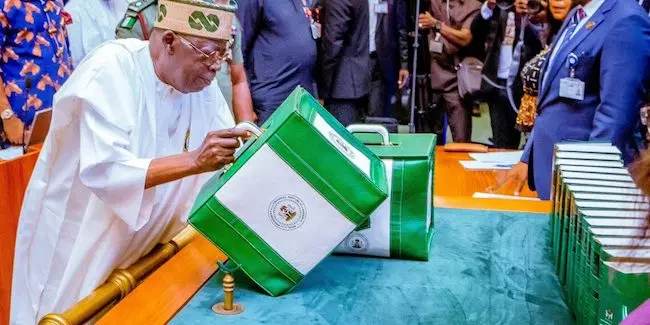
Recall that President Bola Tinubu told the National Assembly that as at the third quarter of 2025, only N3.10 trillion — about 17.7 per cent — of the 2025 capital budget had been released, with priority still being given to completing outstanding 2024 capital projects, of which N2.23 trillion had been released as of June 2025 under an extension that ran to December 2025.
Ministries in massive shortfalls
Meanwhile, sector-by-sector disclosures during the 2026 budget-defence sessions — showed the Ministry of Women Affairs receiving N394.8 million of an N89.8 billion capital vote (0.44 per cent); Marine and Blue Economy getting N202 million of N353 billion, less than 1.0 per cent; Transportation receiving N2.5 billion of N256.7 billion (about 1.0 per cent); Housing and Urban Development getting N2 billion of N100 billion (2.0 per cent); Water Resources receiving N1 billion of N80 billion (1.5 per cent); and Agriculture and Food Security getting N3 billion of N120 billion — a pattern consistent across eight ministries reviewed, where only N9.13 billion of N1.218 trillion in appropriated capital funds, or 1.3 per cent, had actually been released.