Trends
Petrol Price Surge And The Nigerian Worker: When Survival Becomes A Daily Struggle

The continuing rise in the price of petrol has moved beyond the realm of energy policy and economic statistics. It has become a serious question of human welfare, social justice and the ability of ordinary Nigerians to live with dignity.
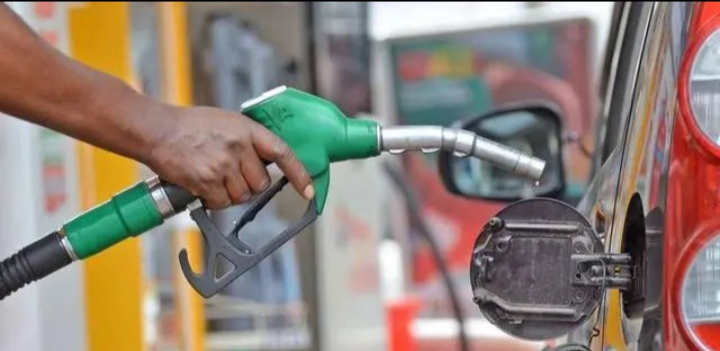
Across the country, Nigerians are confronting a cost-of-living crisis in which the price of virtually every necessity is being pushed upwards by the rising cost of transportation and energy. Recent reports indicate that petrol is selling for about N1,430 per litre in major urban centres, with even higher prices reported in some less accessible locations.
For a worker earning the national minimum wage of N70,000 per month, the arithmetic is disturbing. Ten litres of petrol at N1,430 costs N14,300, more than one-fifth of an entire month’s minimum wage. The N70,000 minimum wage was established under the National Minimum Wage framework following the 2024 amendment.
Yet the worker must still eat, travel to work, pay rent, educate children, meet medical expenses, pay electricity bills and provide for other basic necessities.
This is why the petrol-price question cannot be examined solely from the standpoint of deregulation, market forces, international crude prices or exchange rates. Economic policy must ultimately be measured by its impact on human beings.
For millions of Nigerian workers, wages are increasingly becoming inadequate before they are even received.
Every increase in the price of petrol immediately affects transportation. Bus operators, taxi drivers, commercial motorcyclists, haulage companies and other transport providers understandably adjust their fares to reflect their increased operating costs. The worker therefore pays more simply to get to work and return home.
But the impact does not stop at the bus stop. Farmers pay more to move produce. Traders pay more to transport goods. Manufacturers and small businesses that depend on generators face higher energy costs. Distributors pay more to move products across the country. Eventually, these costs find their way into the prices paid by consumers.
Food, transportation, electricity, school expenses, healthcare and other household necessities consequently compete for a salary that has not increased at anything approaching the same rate.
This is effectively a reduction in real wages. A worker may still receive the same figure on a payslip, but that money buys progressively less.
The situation is even more troubling for Nigerians living below or close to the poverty line. A wealthy household may respond to a fuel-price increase by reducing discretionary expenditure. A poor household frequently has no discretionary expenditure to reduce.
The choices become painfully basic: food or transportation; medicine or school expenses; rent or electricity.
Low-income households spend a substantial part of their resources on necessities. When the prices of those necessities rise sharply, there is very little financial protection available.
Families may begin reducing the quantity or quality of food they consume. Medical treatment may be postponed. Children may be withdrawn from certain educational activities. Savings disappear. Borrowing increases. In that sense, rising petrol prices can become a poverty multiplier.
Particular attention must also be paid to pensioners and elderly Nigerians. Many elderly citizens depend on pensions, retirement savings or financial assistance from their children and extended families. Their capacity to increase their income in response to inflation is considerably limited.
At the same time, many require regular medication, hospital appointments and other healthcare services.
When transport fares rise, going to the hospital becomes more expensive. When distribution costs increase, medicines and essential commodities may become more costly. When the working members of a family are themselves financially distressed, their capacity to support elderly relatives also diminishes.
The welfare of elderly Nigerians therefore deserves specific consideration in any economic intervention designed to cushion the effects of rising energy prices.
Nigeria’s constitutional philosophy does not treat economic management as being completely detached from the welfare of citizens.
Chapter II of the Constitution sets out the Fundamental Objectives and Directive Principles of State Policy. Among other objectives, Section 17 envisages policies directed towards adequate means of livelihood, just and humane conditions of work, protection of the health, safety and welfare of persons in employment, adequate medical facilities, protection of elderly persons against material neglect and public assistance in deserving cases. These principles provide an important framework through which public policy should be examined.
Government unquestionably has to confront difficult fiscal and economic realities. Sustainable public finances, energy security, domestic refining capacity and efficient markets are legitimate concerns.
But economic reform should also be accompanied by serious consideration of its distributional consequences.
A reform cannot be assessed only by what it saves the treasury. Its consequences for the market woman, factory worker, teacher, nurse, civil servant, pensioner, unemployed graduate and low-income household also matter.
Nigeria’s informal economy provides livelihoods for millions of citizens. The barber running a generator, the welder, the food vendor, the commercial driver, the tailor, the small retailer and the neighbourhood business owner all feel the impact of expensive energy.
Many cannot simply absorb repeated cost increases. They are left with three unpleasant choices: increase their prices, reduce their operations or close. Each option has consequences. Increasing prices transfers the burden to consumers. Reducing operations can reduce employment. Business closures destroy livelihoods altogether.