World
‘War of words’: Nuclear inspection dispute shows US, Iran negotiating in public

The head of the UN’s nuclear agency said Wednesday that Iranian nuclear enrichment sites would be visited by his inspectors as part of the interim US-Iran deal to reach an end to the war.
An Iranian diplomat insisted, instead, that any such visit would only come after a final deal.
The comments echoed contradictory remarks about nuclear inspections a day earlier from the US and Iran. During the week since the two countries signed the deal, their leaders have repeatedly disagreed in public about what that document actually means.
International Atomic Energy Agency head Rafael Grossi on Wednesday acknowledged the “war of words” over Iran’s nuclear program. But the dueling narratives are playing out on several fronts, including Israel’s war with the Iranian-backed Hezbollah terror group in Lebanon, as well as how Tehran will spend billions of dollars once unfrozen.
With the signing of the memorandum of understanding, the US and Iran agreed to a 60-day period to iron out these and other details. Until that happens — during private talks — leaders from both countries will also continue to negotiate in public, raising the risks of derailing the shaky ceasefire in the region.
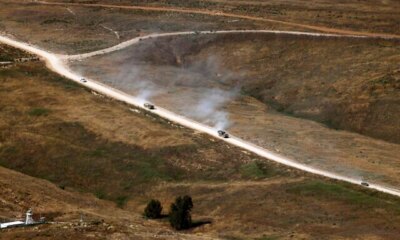
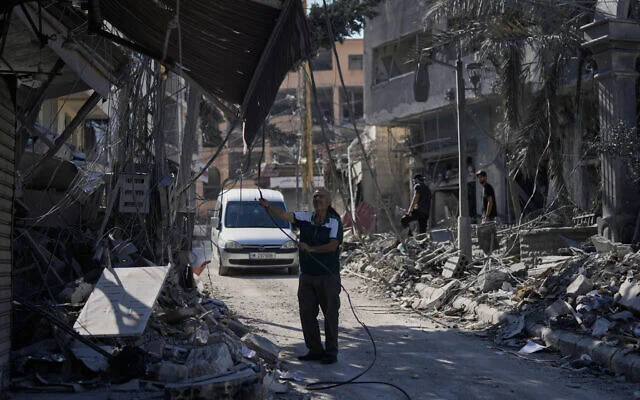
The fighting between Israel and Hezbollah, a threat to US-Iran diplomacy, flared on Wednesday. The IDF said two Hezbollah gunmen were targeted in an Israeli strike after being spotted near troops in southern Lebanon.
Lebanese media later reported two dead in another Israeli strike in southern Lebanon. Lebanon’s state-run National News Agency said that two people were killed when an Israeli drone targeted their vehicle near the town of Kfar Rumman.
There was no immediate comment from the IDF on the incident. However, a military official confirmed to The Times of Israel that a strike was carried out against Hezbollah operatives identified in the area.
UN’s nuclear agency head says inspections will happen
Since Israel launched its 12-day war on Iran in June 2025, the IAEA has been blocked by Tehran from visiting enrichment sites. The Islamic Republic is believed to store enough highly enriched uranium to potentially build as many as 10 nuclear weapons, should it choose.
Iran maintains that its program is peaceful, though it has enriched uranium up to 60 percent purity, far beyond the level needed for civilian use.
Grossi’s remarks were the firmest yet from the United Nations agency, which is central to determining the status of Iran’s nuclear stockpile.
“I can understand political statements, they are part of the reality, but the fundamental thing I would like to remind you and draw your attention to is that there has been a memorandum of understanding, signed by both presidents,” he said at the Fukushima Daiichi nuclear power plant in Japan, which was hit by a tsunami in 2011.
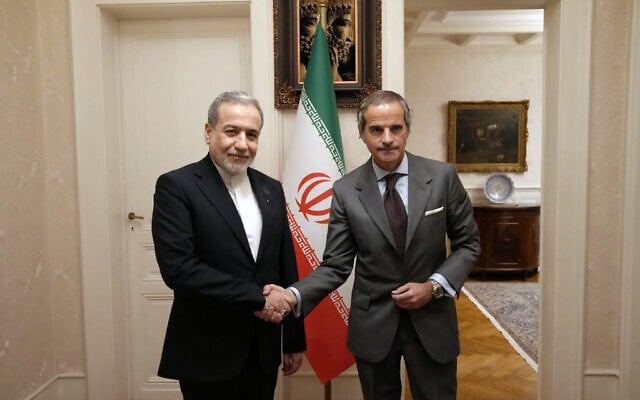
The accord “says explicitly that the nuclear activities that are going to be carried out with regards to the nuclear material facilities will be supervised by the IAEA — in all letters,” he said.
“Obviously, to do that, we will have to inspect,” Grossi said. “Whether this happens the day after tomorrow or in one week or in 10 days, it’s important, but not essential. This is going to happen.”
The deal calls for Iran’s uranium at least to be “downblended” from highly enriched levels, subject to negotiation.
Kazem Gharibabadi, an Iranian deputy foreign minister, took a swipe at Grossi after his remarks, saying Tehran didn’t meet with him while in Switzerland.
“These issues will be reviewed and decided only within the framework of a final agreement and as a result of practical action by the other side to end all sanctions and other measures.” Gharibabadi wrote on X.
He added, “You cannot advance the ‘stir up and take over’ policy with media hype.”
IAEA blocked from seeing bombed sites
The IAEA has been allowed to visit other nuclear sites in Iran since the 2025 war. But without accessing the enrichment sites, the IAEA says it can’t verify the status of Iran’s stockpile. Both Iran and the IAEA say Tehran hasn’t been enriching uranium, but nonproliferation experts worry the Islamic Republic may be moving its stockpile.
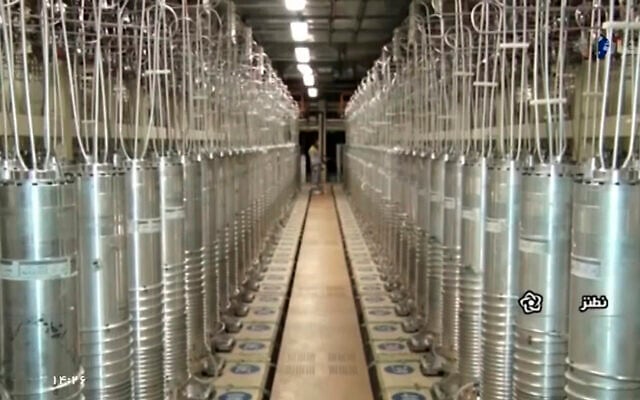
The US and Iran agreed to the deal last week that calls for Tehran to dilute its stockpile of enriched uranium and waives US-backed sanctions on Iranian oil.
But the uneasy ceasefire already has been tested by Iran saying it closed the Strait of Hormuz again over fighting between Israel and Hezbollah in Lebanon.
Defense Minister Israel Katz said Wednesday the US has not demanded that Israel withdraw from Lebanon. Prime Minister Benjamin Netanyahu declared that “as long as I am prime minister, we will maintain the security zone in southern Lebanon.”
Lebanese and Israeli officials are meeting this week in Washington as part of direct negotiations between the two countries, through which Lebanon hopes to reach a plan for Israeli withdrawal and Israel aims to have Hezbollah disarmed.
Technical-level talks between the US and Iran are expected to resume early next week in Switzerland, Pakistan’s Foreign Ministry said Wednesday. Pakistan has been a key mediator.
US has plan to oversee Iran’s frozen funds
The interim deal also includes a pledge to unfreeze billions in Iranian assets. US President Donald Trump wants that money to go toward buying American-grown crops, but Iranian officials say they will decide how it’s spent.
US Treasury Secretary Scott Bessent said his department would have people in Qatar to oversee what happens with the funds. He said in a CNBC interview that Iran would spend “a very large percent” of its released money on “US foodstuffs and medicines.”
“We will be recycling the money back into US products,” Bessent said.
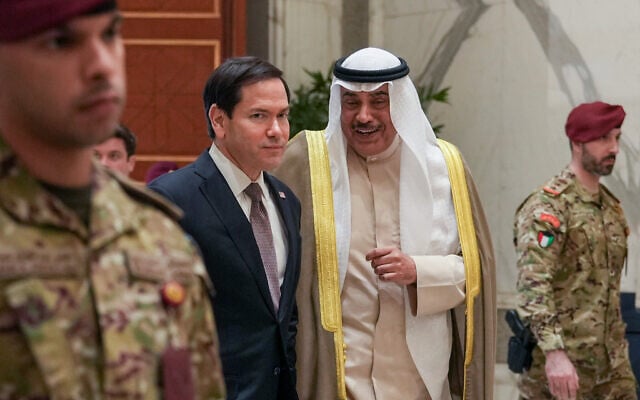
Rubio, in Middle East, pledges not to ‘undermine’ allies
US Secretary of State Marco Rubio traveled in the Persian Gulf for a three-nation tour, starting with a meeting in Abu Dhabi with Emirati President Mohammed bin Zayed Al Nahyan, the State Department said Wednesday.
“We’re not going to do anything that undermines the security of our allies,” Rubio later said while in Kuwait, where the Trump administration announced the limited reopening of the US Embassy, which was closed at the height of the Iran war.
Before leaving for Bahrain, Rubio said ongoing negotiations include the creation of “hundreds of specific areas” where Lebanon’s military could secure its territory.
He called the discussions part of the process and said it wasn’t going to “happen overnight.”