Breaking
US-Iran, Russia-Ukraine Crises Making It Difficult For Nigeria To Get Military Weapons—Defence Minister, Musa

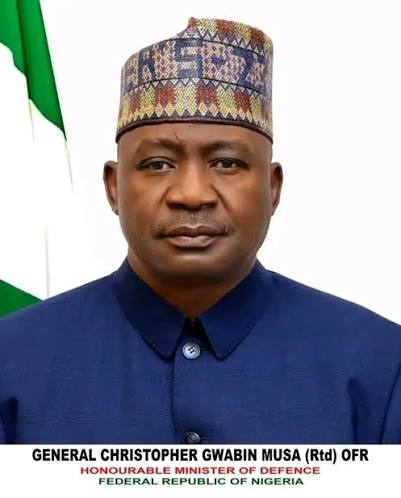
Nigeria’s Minister of Defence, Christopher Musa, has said that the ongoing conflicts involving the United States, Iran, Israel, and the protracted Russia-Ukraine war are complicating Nigeria’s efforts to procure military hardware needed to combat insecurity across the country.
Speaking on Saturday at the Nigerian People’s Strategic Conference and Defence Exhibition 2026 in Abuja, Musa explained that rising global tensions have intensified competition for weapons and defence equipment, making it increasingly difficult for countries such as Nigeria to access critical military assets.
According to him, nations directly involved in active conflicts often secure priority access to defence supplies by placing massive orders and leveraging stronger financial resources, leaving other countries at a disadvantage in the international arms market.
“The reality of the current global security environment has shown us how vulnerable countries can become when they depend heavily on foreign sources for military equipment,” the minister said.
Musa noted that the situation highlights the urgent necessity for Nigeria to strengthen its domestic defence manufacturing capacity and reduce reliance on external suppliers.
He called for increased government backing for local defence industries, innovators and manufacturers, stressing that indigenous production offers the most sustainable path toward addressing the country’s long-term security needs.
The minister urged policymakers and stakeholders to invest more heavily in local research, development and production of military hardware, saying such efforts would enhance national security and strategic independence.
Beyond defence procurement, Musa identified the absence of a comprehensive national database as a major challenge confronting security agencies in their fight against crime and terrorism.
He appealed to the National Assembly to support the establishment of a reliable database capable of capturing the identities and records of all Nigerians, arguing that such a system would significantly improve intelligence gathering, investigations and criminal tracking.
According to him, security agencies, particularly the Nigeria Police Force, have continued to record notable successes despite operating without the support of an integrated national database.
He commended the police for their efforts in crime prevention and detection, describing their achievements as commendable given the operational constraints they face.
Musa also stressed the importance of public participation in security matters, insisting that citizens must actively collaborate with law enforcement agencies by providing timely information on suspicious activities within their communities.
He expressed concern over the recurring destruction of public infrastructure, including roads, rail facilities and solar-powered streetlights, maintaining that many of such incidents could be prevented through prompt reporting by residents.
Addressing the root causes of insecurity, the defence minister urged state governors to ensure that increased federal allocations result in meaningful improvements in the welfare of citizens.
He identified poverty, unemployment and illiteracy as key drivers of insecurity, warning that economic hardship continues to make young people susceptible to recruitment by criminal and extremist groups.
Musa argued that addressing these socioeconomic challenges at the grassroots level would help reduce crime and strengthen national stability.
The minister also cautioned against the uncontrolled proliferation of weapons among community-based security groups, including the Civilian Joint Task Force, warning that poorly regulated outfits could become future security risks.
He advocated stricter oversight and regulation of such groups to prevent unintended consequences.
Also speaking at the conference, Deputy Speaker of the House of Representatives, Benjamin Kalu reaffirmed the commitment of the National Assembly to supporting security agencies through legislative interventions, budgetary allocations and oversight functions.
Kalu, however, maintained that military operations alone cannot solve Nigeria’s security challenges, emphasizing the need for broader institutional and governance reforms.
He disclosed that local government reforms remain a significant aspect of the ongoing constitutional amendment process and called for support for the State Police Bill, which recently passed through the House of Representatives.
Describing the proposed legislation as a major milestone, Kalu noted that previous attempts to decentralise policing had repeatedly failed despite growing concerns over the effectiveness of the current system.
According to him, Nigeria’s centralised policing structure is increasingly overstretched given the country’s population of more than 220 million people, making state policing an important reform option.
The deputy speaker further urged greater private-sector involvement in addressing security challenges, noting that businesses, financial institutions and technology firms possess critical resources and expertise that can complement government efforts in strengthening national security and responding to emerging threats.