Viral
Trump Orders Probe Into Oil Companies Over High Fuel Prices Amid Public Backlash

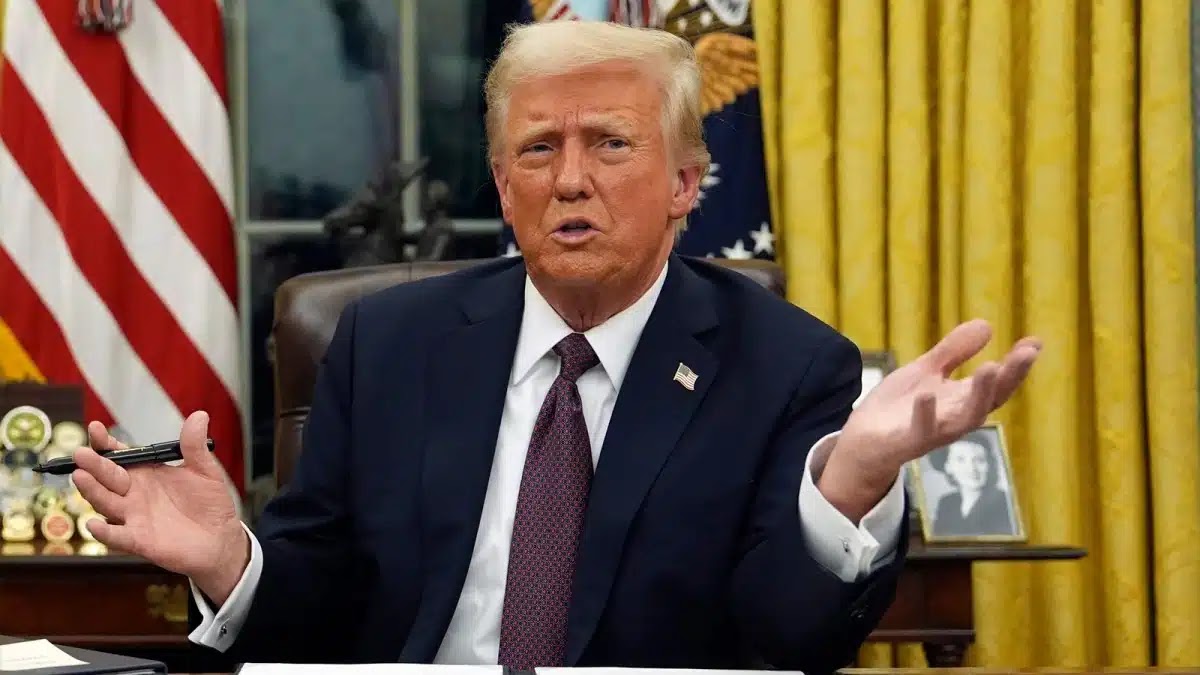
United States President Donald Trump has directed federal authorities to investigate major oil companies over allegations that consumers are not benefiting from declining crude oil prices.
The move comes as the administration faces mounting criticism over rising fuel costs and the economic consequences of the recent conflict in the Middle East.
In a post shared on his Truth Social platform on Wednesday, Trump accused large oil producers of failing to pass on savings to motorists despite a significant drop in crude oil prices in international markets.
According to the President, the continued high cost of gasoline at filling stations does not reflect current market realities and may amount to unfair pricing practices.
“The big Oil Companies are not dropping their price at the pump commensurate with the sharply lower prices they are paying for oil,” Trump wrote.
“Those prices are dropping like a rock. In other words, customers are being ‘gouged’,” he added.
Fuel Prices Remain Sensitive Political Issue
Gasoline prices have long been a major political and economic concern in the United States, where millions of citizens rely heavily on personal vehicles for daily transportation.
As a result, fluctuations in fuel costs often have a direct impact on household budgets and consumer confidence.
The issue has become even more politically significant as the country moves closer to the November congressional elections, with opposition figures and some voters blaming the administration for failing to shield Americans from rising living costs.
Critics have also linked the surge in fuel prices to recent geopolitical tensions and military engagements in the Middle East.
Impact of Middle East Conflict
Global energy markets experienced significant volatility following disruptions to oil transportation routes in the region.
Oil prices surged after Iran reportedly halted the movement of oil through the Strait of Hormuz in response to military actions involving the United States and Israel earlier this year.
The Strait of Hormuz is one of the world’s most critical energy corridors, carrying a substantial portion of global oil exports. Any disruption to traffic through the waterway often triggers immediate reactions in international energy markets.
Although tensions have eased somewhat following diplomatic engagements between Tehran and Washington, fuel prices in the United States remain above levels recorded before the conflict.
Economists Urge Patience
President Trump has repeatedly maintained that gasoline prices would fall sharply once hostilities subsided and energy supplies stabilized.
However, several economists have cautioned that fuel prices do not always respond immediately to changes in crude oil costs.
Experts argue that market adjustments often take time due to supply chain factors, refining costs, distribution expenses and existing fuel inventories purchased at higher prices.
As a result, consumers may not see significant reductions at the pump until weeks or even months after crude oil prices decline.
Progress in US-Iran Talks
Meanwhile, the United States and Iran have reportedly reached a preliminary understanding that has allowed oil tanker operations to resume through the Strait of Hormuz.
The development has helped ease some concerns in global energy markets and contributed to a gradual decline in oil prices since the agreement was announced.
Despite the progress, several major issues remain unresolved, including disputes surrounding Iran’s nuclear programme and broader regional security concerns.
Analysts say the durability of the agreement will play a key role in determining future movements in global oil and fuel prices.
Americans Voice Economic Concerns
The Trump administration has also faced criticism from some Americans who argue that substantial government spending related to the Middle East conflict has added pressure to the economy at a time of rising inflation and living costs.
Many voters have expressed concerns about the combined impact of fuel prices, inflation and broader economic uncertainty on household finances.
According to data released by the AAA motor club, the national average price for a gallon of regular gasoline stood at $3.93 on Tuesday, remaining above levels recorded before the outbreak of the conflict.
With fuel prices continuing to influence public opinion and economic sentiment, the outcome of the investigation into oil companies is expected to attract significant attention from consumers, industry stakeholders and political observers alike.