Viral
Soldiers Raise Alarm Over Alleged Directive to Work With Repentant Boko Haram Members

Nigerian soldiers engaged in counter-insurgency operations in the North-East have reportedly expressed concerns over an alleged directive requiring them to collaborate with former Boko Haram members who have undergone rehabilitation and reintegration programmes.
According to reports, some military personnel serving on the frontline voiced reservations about the arrangement, arguing that it could pose serious security risks and undermine ongoing operations against insurgent groups in the region.
The concerns were reportedly shared by soldiers who spoke anonymously, citing fears over trust and the possibility of intelligence leaks during military missions.
One of the soldiers claimed that some former Boko Haram fighters who participated in the Borno State Government’s deradicalisation programme had been attached to local security outfits working alongside troops in certain parts of the state.
According to the source, the move is believed to be part of efforts by authorities to demonstrate the effectiveness of the government’s reintegration strategy.
“The government wants to show that the rehabilitation programme is yielding results, so some of the repentant insurgents are being attached to community security groups that support military operations,” the soldier reportedly said.
“However, many of us are uncomfortable with the arrangement because there have been situations in the past where operational information was compromised. Trust remains a major concern.”
Another source expressed doubts about the long-term loyalty of some former insurgents, noting that many soldiers remain cautious despite the rehabilitation process.
“We do not completely trust them. There have been too many incidents over the years to ignore. That is why, in many cases, they are accommodated separately. Now there is increasing pressure for troops to work closely with them during operations, and many of us are worried about the implications,” the source stated.
The soldiers reportedly argued that the government should prioritise improving military welfare, intelligence gathering capabilities, logistics, and operational equipment rather than encouraging close collaboration between troops and former insurgents.
One of the sources further suggested that recent attacks resulting in the deaths of military commanders and personnel may indicate that sensitive information is still finding its way into the hands of insurgents.
“You can see how Boko Haram fighters have continued to target and kill our commanders. That alone raises questions about possible information leaks. Yet we are being asked to trust and work alongside former insurgents. Many of us believe that is not the right approach,” the source added.
The reported concerns emerged shortly after the Borno State Government announced the reintegration of hundreds of former insurgents and their family members into various communities across the state under its deradicalisation initiative known as the “Borno Model.”
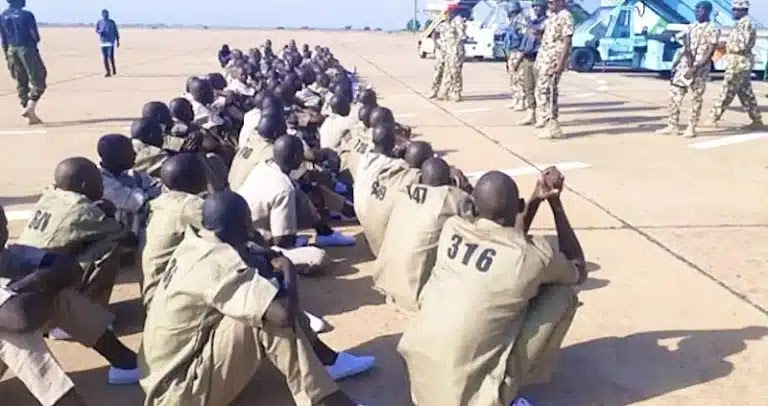
The latest batch reportedly included 720 former insurgents, 992 spouses, and 2,050 children who had previously surrendered to security agencies and completed rehabilitation programmes before being returned to civilian life.
The beneficiaries were said to have undergone counselling, vocational training, and deradicalisation exercises at the Hajj Camp in Maiduguri before their reintegration into society.
Speaking during the reintegration ceremony, the Special Adviser to Governor Babagana Zulum on Security, retired Brigadier General Abdullahi Ishaq, described the initiative as a key component of the state’s non-military strategy for addressing insurgency.
According to him, the programme is built on the principles of rehabilitation, forgiveness, reconciliation, and community acceptance as a pathway toward lasting peace in the region.
He disclosed that since the programme commenced in July 2021, more than 350,000 individuals have reportedly left insurgent-controlled camps, while 9,680 former insurgents and their dependants have been successfully reintegrated through nine separate batches.
The reintegration programme has continued to generate mixed reactions among security experts, community leaders, and members of the public, with supporters arguing that it promotes peace and reconciliation, while critics question whether adequate safeguards exist to prevent security breaches and ensure long-term loyalty among former fighters.
As debates continue, military authorities have yet to publicly respond to the concerns reportedly raised by soldiers regarding the alleged directive.