Viral
Six Major Court Cases Threaten to Shape INEC’s 2027 Election Preparations

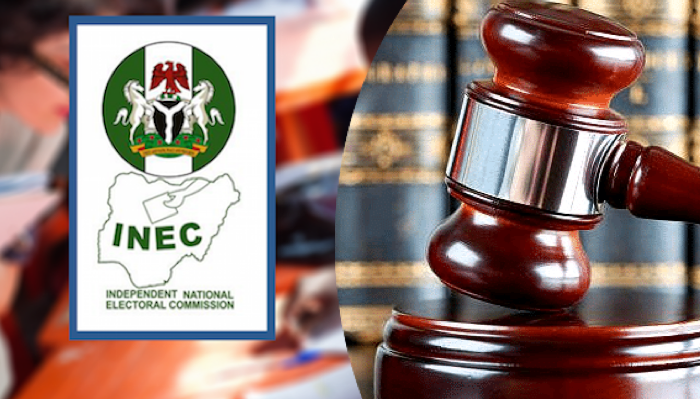
The Independent National Electoral Commission (INEC) is currently entangled in at least six major court cases that could significantly influence its preparations for Nigeria’s 2027 general elections.
The cases, which are pending before the Federal High Court and the Court of Appeal, challenge various aspects of the commission’s powers, including the legality of its revised election timetable and the status of some registered political parties.
The litigation comes just four months after INEC unveiled its revised timetable and schedule of activities for the 2027 elections.
Under the commission’s timetable, political parties were expected to submit their membership registers between March 24 and April 25, conclude their primary elections by May 31, while the nomination portal for presidential and National Assembly candidates opened on June 27 and is scheduled to close on July 11.
Campaigns for presidential and National Assembly elections are expected to begin on August 19, with the elections fixed for January 16, 2027. Governorship and State House of Assembly elections are scheduled to take place on February 6, 2027.
However, the outcome of the pending legal battles could affect some of these electoral processes.
Youth Party Challenges INEC’s Revised Timetable
One of the most significant cases is Suit No. FHC/ABJ/CS/517/2026, filed by the Youth Party before the Federal High Court in Abuja.
The party argued that INEC exceeded its legal authority by introducing timelines that allegedly reduced periods specifically guaranteed under the Electoral Act.
It challenged deadlines relating to the submission of party membership registers, party primaries, nomination of candidates, withdrawal and substitution of candidates, as well as the publication of candidates’ particulars.
The Federal High Court ruled in favour of the Youth Party, holding that while INEC possesses constitutional powers to conduct elections and issue guidelines, it cannot override timelines expressly provided in the Electoral Act.
The court subsequently nullified the affected portions of the revised timetable and restrained the commission from enforcing those provisions.
Dissatisfied with the judgment, INEC appealed the decision, arguing that the lower court wrongly limited its constitutional and statutory authority to regulate election activities.
According to the commission, every stage of the election timetable forms part of an integrated electoral process, and removing some timelines could create uncertainty and disrupt preparations for the 2027 elections.
The Court of Appeal has already heard arguments from both parties and reserved judgment, with a date yet to be announced.
SDP Also Questions INEC’s Election Schedule
Another major case, Suit No. FHC/ABJ/CS/720/2026, was filed by the Social Democratic Party (SDP), which also challenged aspects of the revised timetable.
The SDP particularly questioned provisions relating to the nomination, withdrawal and substitution of candidates, arguing that INEC’s administrative timelines conflicted with the Electoral Act.
The Federal High Court acknowledged INEC’s constitutional authority to issue election timetables but ruled that the commission could not alter statutory timelines established by law.
Consequently, the court invalidated the disputed portions of the timetable.
INEC appealed the decision, insisting that the trial court failed to appreciate the practical realities of managing nationwide elections and that every stage of the timetable was carefully designed to ensure smooth electoral operations.
The appeal has equally been argued before the Court of Appeal, which has reserved judgment.
The outcome is considered important because political parties are currently submitting nomination forms for presidential and National Assembly candidates through INEC’s nomination portal.
Appeals Could Define INEC’s Powers
The appeals arising from the Youth Party and SDP cases have become the most significant pre-election legal battles ahead of the 2027 polls.
At the heart of both appeals is whether INEC possesses the legal authority to prescribe administrative timelines that go beyond or modify periods already established under the Electoral Act.
While the Federal High Court maintained that the commission cannot shorten or alter timelines specifically provided by law, INEC argues that election management requires flexibility and that every activity in its timetable is interconnected.
Legal observers believe the Court of Appeal’s decision will determine the extent of INEC’s powers in future election planning and could influence how the commission conducts subsequent stages of the electoral process.
Five Political Parties Fight Deregistration
Another politically sensitive case is Suit No. FHC/ABJ/CS/2637/2026, filed by the Incorporated Trustees of the National Forum of Former Legislators.
The suit seeks the deregistration of five political parties the African Democratic Congress (ADC), Accord, Action Alliance (AA), Action People’s Party (APP), and Zenith Labour Party (ZLP).
The Federal High Court granted the request and ordered INEC to deregister the parties.
However, the judgment has not taken effect after the affected parties filed appeals.
The Court of Appeal granted a stay of execution pending the determination of the appeals, allowing the parties to continue existing legally until the matter is finally resolved.
Fresh Legal Challenge Targets NDC Registration
Another pending suit, FHC/ABJ/CS/1115/2026, was instituted by Ahidjo Ibrahim Karlahi against INEC and the Nigeria Democratic Congress (NDC).
The plaintiff is questioning the legality of the registration and recognition of the political party, asking the Federal High Court to determine whether the process complied with constitutional and statutory requirements.
The case remains before the court, and its eventual outcome could determine whether the NDC retains its legal status before INEC publishes the final list of candidates.
Appeal Over Deregistration Resumes
The legal battle over the deregistration of the five political parties is also continuing at the Court of Appeal.
The affected parties have urged the appellate court to overturn the Federal High Court’s judgment, arguing that the trial judge erred in ordering their deregistration.
When the appeals came up before a three-member panel of the Court of Appeal sitting in Abuja on July 7, 2026, the matters were adjourned until July 14 to enable all parties regularise and exchange the necessary court documents.
The outcome of the appeals will determine whether the affected political parties remain eligible to sponsor candidates before INEC releases the final list of presidential and National Assembly candidates on September 12.
Lawyers Differ on Possible Impact
Senior Advocate of Nigeria, Mike Ahamba, said the Court of Appeal would likely take the election timetable into consideration when delivering its judgments.
He stressed that it would be inappropriate to speculate on the likely outcome before the court reaches its decision.
Another Senior Advocate, Bankole Akomolafe, expressed confidence that the pending litigation would not disrupt INEC’s preparations.
According to him, the commission has acted prudently by accepting nominations from all political parties while awaiting final court decisions.
He explained that if any party eventually loses its legal status following the court’s judgment, INEC can simply exclude it from the election without jeopardising the entire electoral process.
INEC Insists Election Timetable Remains on Course
Despite the ongoing legal disputes, INEC says it remains committed to implementing its election timetable.
INEC National Commissioner, Mohammed Kudu Haruna, confirmed that party primaries had already been concluded and that political parties were expected to submit the names of their candidates before the July 11 deadline.
Haruna said the commission would continue carrying out its responsibilities while complying with all valid court orders.
According to him, although some judgments are currently subject to appeals and stay of execution orders, INEC will proceed with preparations until the courts deliver their final decisions.
He added that once the judgments are handed down, the commission will carefully study them and determine the appropriate next steps without interrupting the overall electoral process.