World
Senior US official: Pending deal ‘leads to’ US getting Iran’s enriched nuclear material

A US official said Friday that the emerging memorandum of understanding with Iran “leads to” Washington getting Tehran’s stockpile of highly enriched uranium.
“We provide in the agreement that this material would be destroyed on site, and then taken out of the country,” he said.
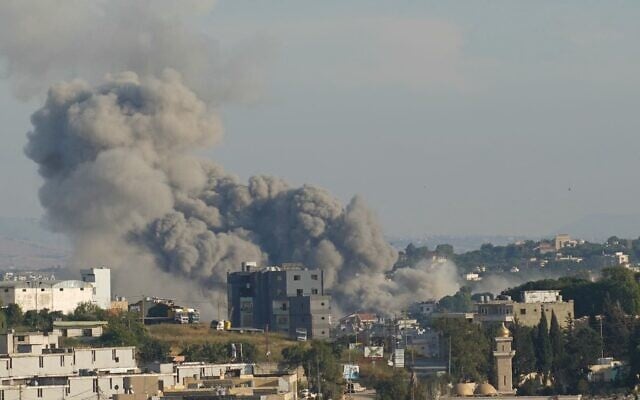
The official, who held a phone briefing with reporters on condition of anonymity, also said the draft agreement was “broad” and would include Lebanon, where Israel is fighting Iran’s proxy group Hezbollah. He added that Iran’s loosening grip on the Strait of Hormuz has cost it leverage in the talks, and that he was “80 to 85 percent” sure the deal would happen.
Meanwhile, key mediator and Pakistani Prime Minister Shehbaz Sharif wrote on X that “a final, agreed-upon text of the peace deal has been reached.” Further signaling a possible deal, four sources told Reuters that the United Arab Emirates had agreed to unlock billions of dollars for Iran — a claim Abu Dhabi denied. The Swiss foreign ministry told AFP it had offered to host the signing.
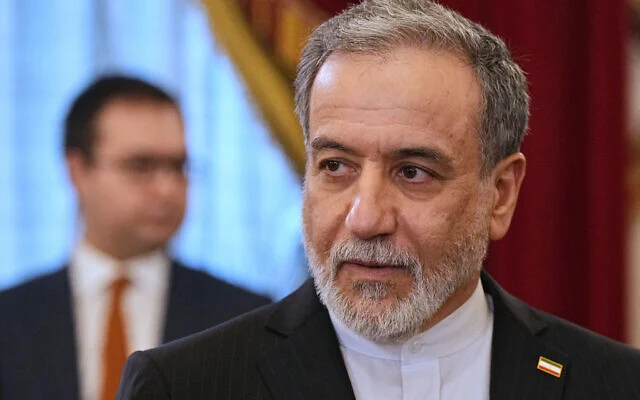
Iran’s Foreign Minister Abbas Araghchi also said the deal could be signed “remotely” in the coming days, and claimed it guarantees Iranian-Omani custody of the Strait of Hormuz. He also said Iran believes its highly enriched uranium could be diluted only inside the country.
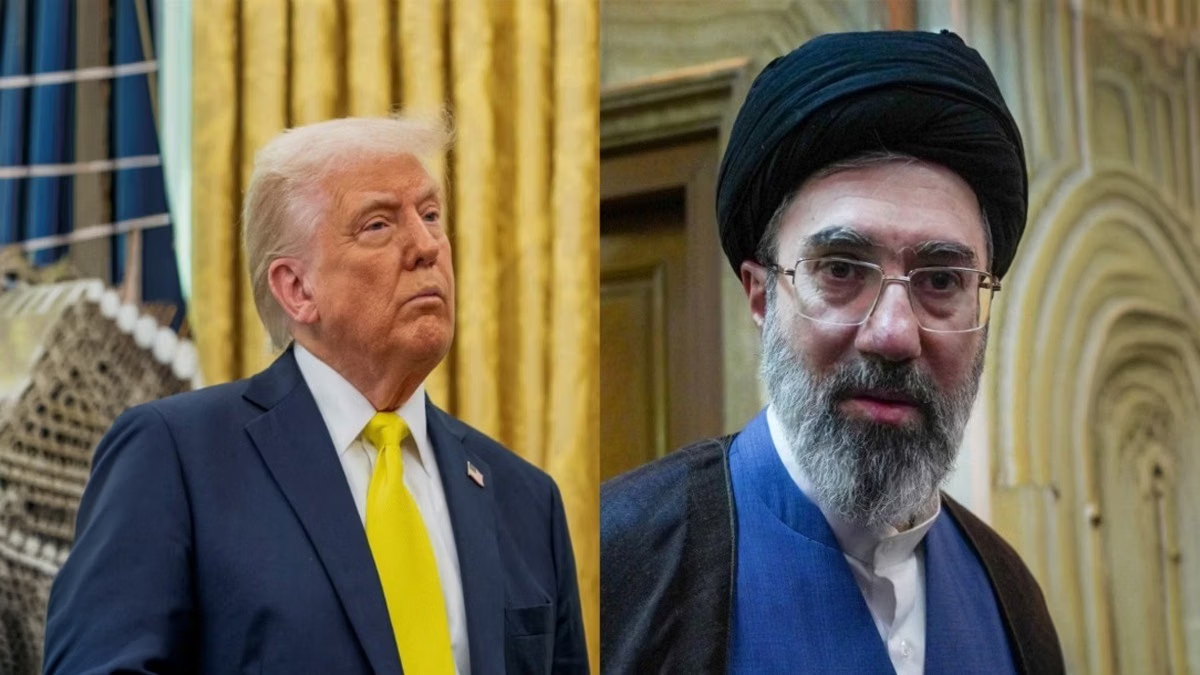
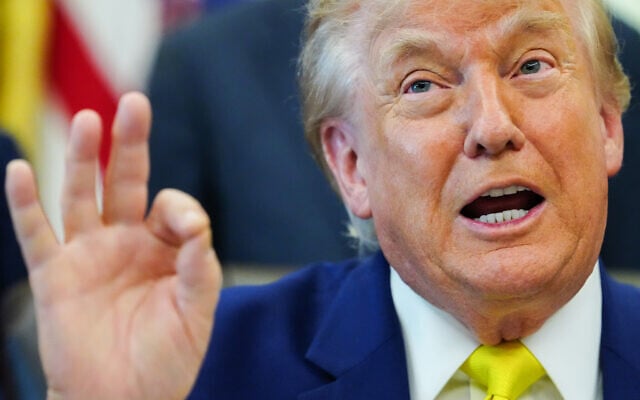
US President Donald Trump had on Thursday called off planned overnight strikes on Iran, claiming a draft agreement was ready to be signed over the weekend, possibly in Europe.
On Friday, he fumed at Iran over state media reports claiming Tehran would immediately receive billions of dollars in sanctions relief upon signing the MOU. In reality, the deal only offers Iran sanctions relief if it implements commitments regarding its nuclear program.
Trump told Channel 12 that he had demanded the Iranians apologize for publishing false information. Foreign Minister Abbas Araghchi subsequently issued a tweet in which he said that a deal has never been closer, while cautioning the media against speculative reporting on the contents of the MOU. Trump approved of Araghchi’s post, according to Channel 12, and reposted it on social media.
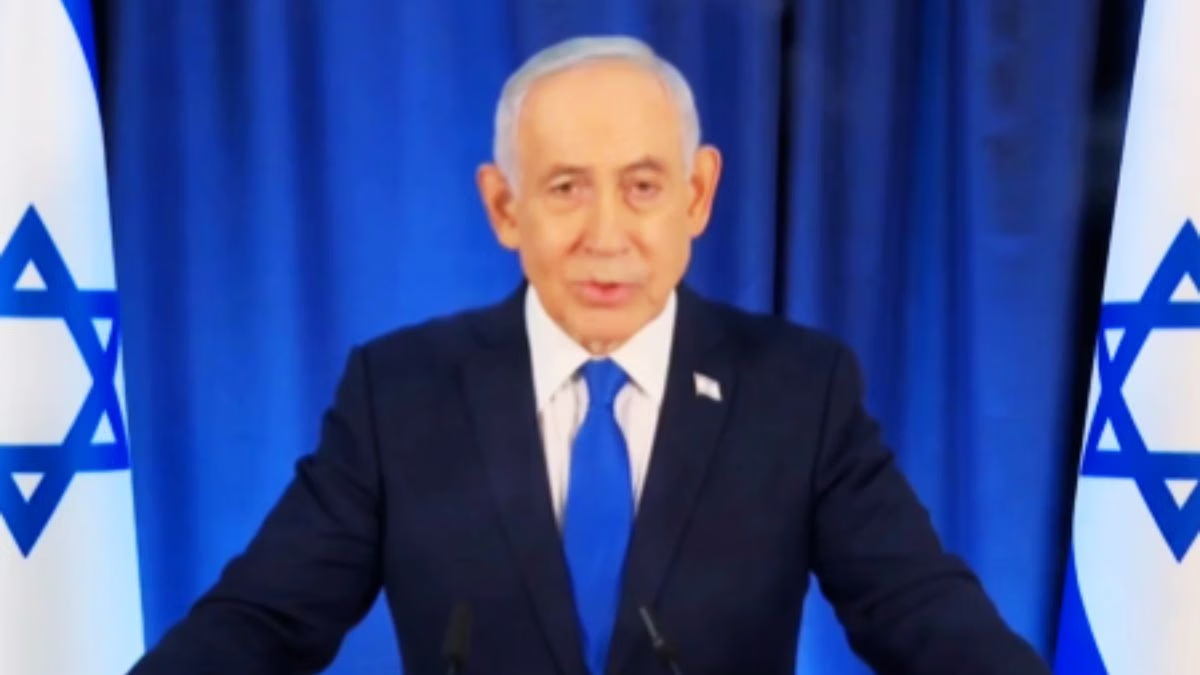
While Trump has said he finalized the details with Israel and other allies, his announcement Thursday reportedly caught Prime Minister Benjamin Netanyahu off guard. A senior US official quoted by Channel 12 on Friday said the premier was told by Trump in a phone call shortly after the announcement: “This is the deal. It’s an excellent deal. It’s time to end this war.”
The official who briefed reporters anonymously over the phone on Friday said Netanyahu “didn’t say much during the call. Apparently, he understands Apparently, he understand that there’s going to be a deal and that he doesn’t have the ability to stop it.”
However, the senior official said Trump and his top aides have ben in continuous contact with their Israeli counterparts. Washington feels the Israelis will show support “when they see the full terms of the deal, and when they appreciate that, fundamentally, there has to be delivery from the Iranians before we deliver any of the benefits,” he said.
“They certainly have expressed some skepticism of the misreported details that we’ve seen out there,” he added.
“We do expect us to be signing this agreement over the next few days. I can’t give you an exact date,” said the official.
“If I were to give you a confidence that we were going to be signing this agreement, I maybe would have said 75% this morning, it’s probably more like 80-85% now, but it’s not 100 percent,” he said. “We’re not quite at the finish line yet, but we are very close.”
Agreement maintains Israel’s ‘right to self-defense’
The official described the emerging deal as a “broad regional peace agreement.”
“It includes Lebanon, it includes Iran, it includes the Gulf countries, and it includes Israel,” he said.
“We feel quite confident that all of our allies — the Israelis and the Gulf [countries] — will get on board,” said the official. “That doesn’t mean they give up the right to self-defense, and if the Iranians don’t honor their end of the obligation, I wouldn’t expect the Israelis to not respond.”
“If Hezbollah is firing rockets at Israel, and Iran is paying for missiles that are getting launched into Israel, then obviously they haven’t kept their end of the bargain,” he said later in the briefing. “We expect the Iranians to be a real actor for peace, and if they are, then they’re going to get a lot of benefit out of the bargain, and if they don’t, then they don’t get any of the benefits of the bargain.”
He added: “I understand the Israeli skepticism. They’ve lived with Hezbollah for a long time. Hezbollah has killed a lot of innocent Israelis, especially Israeli civilians. We don’t expect any country, whether the Gulf coast or Israel, to give up their right of self-defense. What we do expect is that if we’re able to have everyone participate in the peace process, that everyone else will do the same.”
Deal ‘dismantles’ nuclear program, cedes enriched material
According to the official, the agreement accomplishes five US goals.
“First, it reopens the straits and lifts the [US] blockade [of Iranian ports],” the official says.
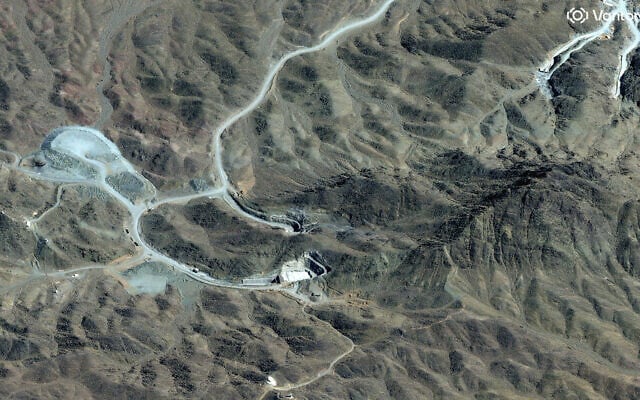
“Number two, it leads to the dismantling of the Iranian nuclear program,” he continued, hinting that the MOU itself does not force Iran to dismantle the program, but potentially “leads” to that result. This is because the deal merely extends the ceasefire between the sides by 60 days during which they will hold technical discussions regarding Iran’s nuclear program.
“Number three, it leads to the United States getting the enriched material. We provide in the agreement that this material would be destroyed on site, and then taken out of the country,” he said, appearing to stop short of saying that the MOU requires Iran to give up its stockpiles of highly-enriched uranium up front. This issue, too, is expected to be subject to the subsequent nuclear talks during the ceasefire extension.
“Number four, it guarantees a long-term peace in the region, and that would mean that the Iranians are no longer funding violence in the region, but it also means that everyone is respecting the territorial sovereignty of Iran,” the US official said.
This issue also is reportedly more vague in the MOU itself and would likely be up for discussion during the subsequent negotiations with the US, but Iran has shown no indication that it will be ceasing support for proxies.
“Finally, [this deal] has an inspection regime that makes sure that this is a long-term commitment and that it’s a long-term enforceable,” the US official said, again appearing to refer to a concession that the US is only hoping to secure as part of a subsequent agreement with Iran. The MOU itself is not expected to immediately establish an inspection system of Iran’s activity.
“What Iran gets out of the agreement is that if they comply, they’re going to be relieved of a lot of the economic pressures that they’ve been under for many, many years,” the senior US official said. “They do get reintegrated into the world economy, they’re going to be rewarded for acting like a normal country, rather than the largest state sponsor of terrorism.”
“The Iranians don’t get anything upon the signing of the MOU or upon the negotiation itself… If they turn over the nuclear material as promised, they’ll get something. If they dismantle their nuclear programs or their nuclear facilities, they’ll get something else. If they really commit to regional peace and stability, they’ll get additional things on top of that.
He went on to caution reporters against taking descriptions of the deal’s terms from Iranian state media, arguing that it was trying to sell the deal to its public and not necessarily doing so in a manner that was truthful.
The top official was asked what had changed in recent weeks that allowed Washington to now feel good about the MOU on the table. He said Iran’s control of the Strait of Hormuz had weakened substantially in recent weeks, with the US managing to quietly get a lot more oil out of the channel than it did earlier in the conflict. Accordingly, Iran’s leverage took a hit and the US negotiating position improved, the official said.
The US thus managed to secure stronger wording regarding the disposal of Iran’s highly enriched uranium, the official said, without getting specific.
“It’s something we were proposing a couple of weeks ago… [and] the Iranians have gotten consensus on their system over the last couple of days,” he said regarding the MOU’s language on Iran’s nuclear material.
He claimed that some hardliners in Iran oppose the deal but that internal dissent in Tehran to the MOU is “quite minimal.”
The US official clarified that there was still a great deal of mistrust between the sides, but argued that the deal is structured in a way that doesn’t rely on trust, but rather performance.
He confirmed that the subsequent nuclear talks that will kick off after the MOU is signed will last for 60 days.
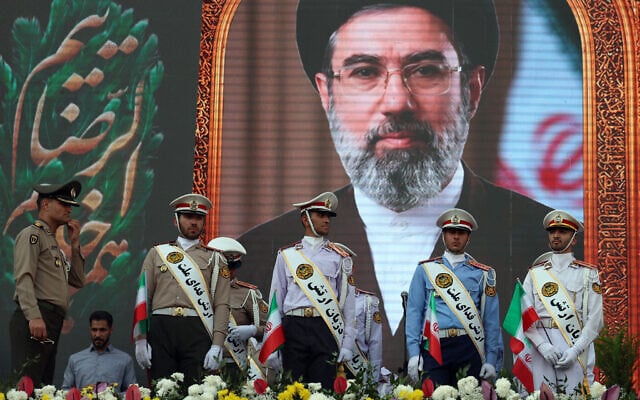
Asked whether Iran Supreme Leader Mojtaba Khamenei supports the emerging deal, the official said those in touch with him have attested that he is “comfortable with where we are in the negotiation.”
“In their system, they can’t do anything without the sign off of the supreme leader,” he added.
Asked whether the agreement was just creating more talks or if it actually dismantles Iran’s nuclear program, the US official responded, “It’s a direct line to those things.
“The Iranians commit to destroying and removing the enriched material, but how do you do that? It’s going to take a little bit of time to figure it out,” the US official admited. “The technical details need to be figured out, but I think there’s a commitment to do that. There’s also a commitment to dismantling the nuclear weapons program. There’s a commitment to decommissioning the nuclear sites.
“We’re going to figure out how to do that in the technical negotiations that will follow, but we think that this is the first and most important step to ensuring that the Iranians do not build a nuclear weapon,” the US official said.
Asked whether Iran has committed to a specific timeframe during which they will not develop a nuclear weapon, the official said, “They are committing indefinitely to never procure or develop nuclear weapons.”
This is a stance Iran has long taken publicly, while the US, Israel and other Western powers have doubted Tehran’s sincerity.
“We’re happy with the commitment to not build a nuclear weapon, but we have to verify that, and that’s why the deal is structured in the way that it is to ensure that there’s a verification and inspections regime,” the official said, “and that they don’t receive the benefits of the negotiation until we see that they’re actually taking the affirmative steps in order to dismantle that nuclear program.”
The official asserted that through the war, the US succeeded in destroying Iran’s conventional military and robbed Iran of the ability to project power in the Middle East and threaten its neighbors.
Asked whether the US would allow Iran to have a civilian nuclear program, the official said Washington was not principally opposed to the idea but that the infrastructure Iran has built went well beyond civilian purposes.
“We’re not bothered at all by the idea of civilian power plants in Iran. What we’re bothered by is the type of infrastructure that would allow them to jump from civilian power generation to nuclear weapons development,” he says.
If Iran complies with the agreement, US President Donald Trump “has instructed us to construct the kind of sanctions relief that would really integrate Iran into the 21st century economy.”
Lazar Berman, Emanuel Fabian and agencies contributed to this report.