Viral
Senate Advances Bill to Increase Federal High Court Judges, Considers Single Six-Year Tenure Proposal

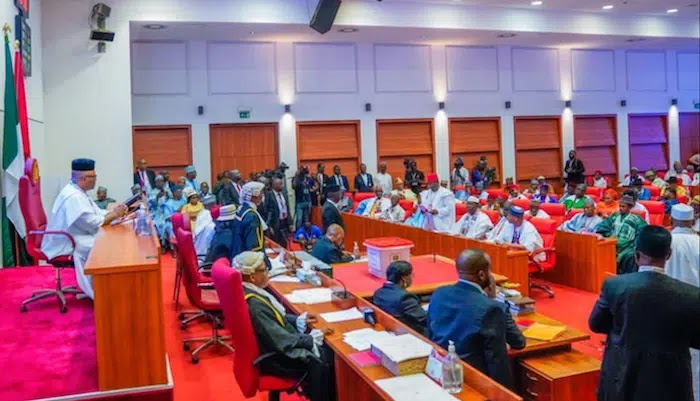
The Senate has passed for second reading a bill seeking to increase the number of judges serving on Nigeria’s Federal High Court as part of broader efforts to strengthen the country’s judiciary and improve the administration of justice.
The proposed legislation, which amends the Federal High Court Act, was debated and approved during Wednesday’s plenary session. If eventually passed into law, the bill will raise the number of Federal High Court judges from 70 to 90.
The development follows a request by President Bola Ahmed Tinubu to the National Assembly to amend existing laws governing major courts across the country. The request forms part of a comprehensive Judicial Reform Bill aimed at addressing growing case backlogs and improving the efficiency of the judicial system.
According to a letter read on the Senate floor by Godswill Akpabio, the President argued that the increasing volume of cases before Nigerian courts makes it necessary to expand the number of judicial officers.
As part of the reform package, Tinubu also proposed amendments to the Court of Appeal Act to increase the number of Justices of the Court of Appeal from 70 to 110. The move is expected to help reduce delays in the hearing and determination of appeals across the country.
The proposed amendment to the Federal High Court Act would similarly boost the court’s capacity to handle a growing number of civil, criminal, commercial, and constitutional matters brought before it annually.
Meanwhile, Senate Leader Opeyemi Bamidele has disclosed plans to introduce a separate constitutional amendment bill proposing a single six-year tenure for Nigeria’s presidents and state governors.
Speaking on the proposal, Bamidele said the bill would be presented when the next Senate is inaugurated following the 2027 general elections. The proposed legislation seeks to replace the current arrangement that allows elected presidents and governors to serve a maximum of two four-year terms.
According to him, the objective is to enable elected leaders to focus entirely on governance without the distraction of seeking re-election. He argued that under the existing system, many office holders begin political calculations for a second term shortly after assuming office, leaving less time and attention for governance.
Supporters of the proposal believe a single six-year term could promote policy continuity and reduce the intense political competition associated with re-election campaigns. However, the idea is expected to generate significant public and political debate, as it would require constitutional amendments and broad national consensus before it could become law.
The Senate’s consideration of both judicial reforms and constitutional tenure changes signals the possibility of major institutional adjustments in the coming years as lawmakers continue discussions on governance and justice sector reforms.