World
Scientists make ‘surprising’ discovery about Amazonian ‘ghost dogs’

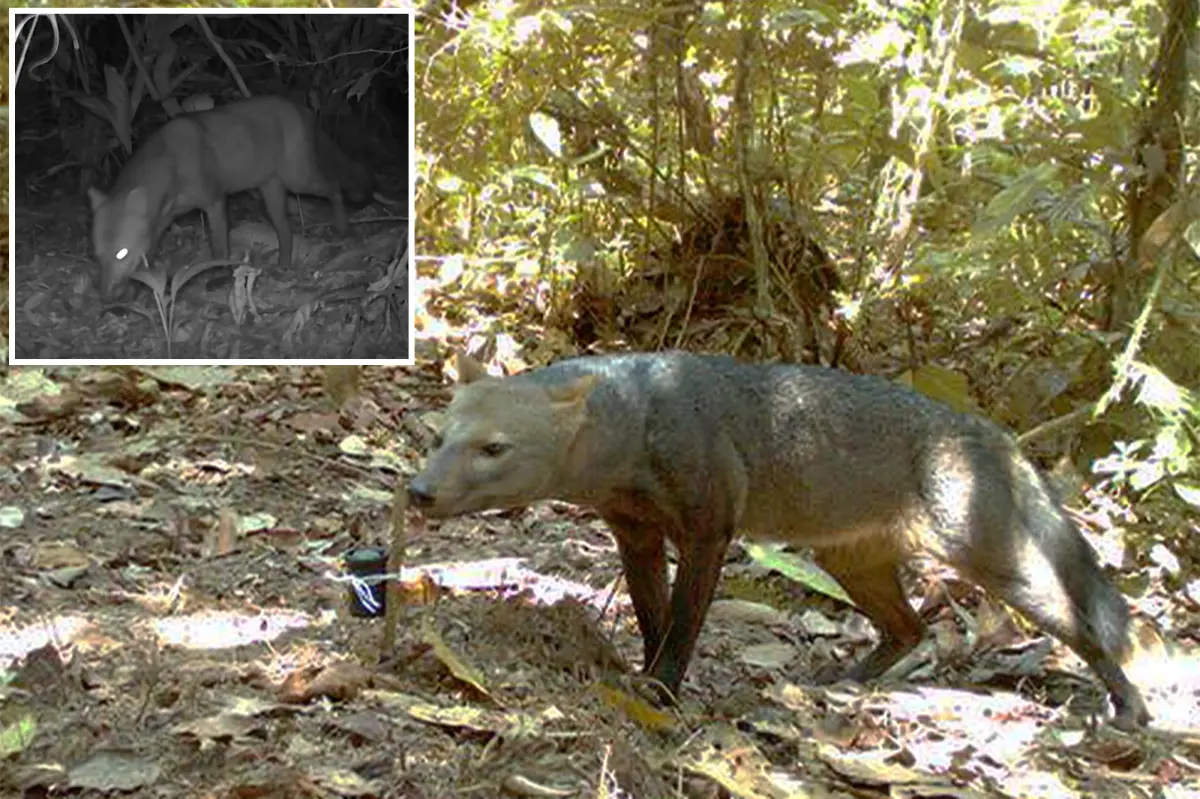
An extremely rare species of Amazonian wild canine nicknamed the “ghost dog” may have a higher population than initially thought, new data suggests.
Short-eared dog — the formal name for the species — were mapped using camera-trap sightings across lowland regions in Bolivia and Peru over the course of 25 years, according to a study published in May in “Neotropical Biology and Conservation.
“The most surprising aspect of the results was that despite being an almost mythical beast, short-eared dogs are much more abundant than we had imagined,” the researchers said.
Scientists emphasized that despite the species’ relative abundance, they are not considered common. Ghost dogs remain one of the least-studied canids in the animal kingdom.
“The short-eared dog, or ghost dog, is perhaps the least known medium- to large-sized Neotropical mammal and potentially one of the scarcest canids,” said Dr. Robert Wallace, the lead researcher.
Between 2001 and 2024, the dogs were caught in 594 photographs, complete with their large heads, small ears, short legs, webbed toes, puffy tail and red-to-black densely packed coat.
Data shows that ghost dogs typically have a density of 15 dogs per 38.61 miles — they prefer habitats with thick foliage, which makes them hard to see.
Ghost dogs are notoriously shy and have acute sight and hearing capabilities, which creates a significant barrier for scientists attempting to study the animal in its natural habitat.

In protected, conservationist areas, the dogs were spotted the most frequently, suggesting these areas are vital for their preservation.
“The most important management strategy is the protection of Amazonian forest canopy for which the creation and effective management of protected areas is the most important element, in combination with the sustainable management of Indigenous territories,” the researchers said.