Topnews
My Service to My Country Gave Me a Profound Sense of Who I Am — Former PSC Boss, Chief Simon Okeke

By Ijeoma John, Nnewi
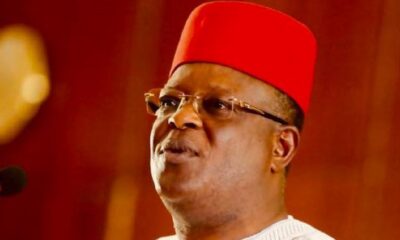
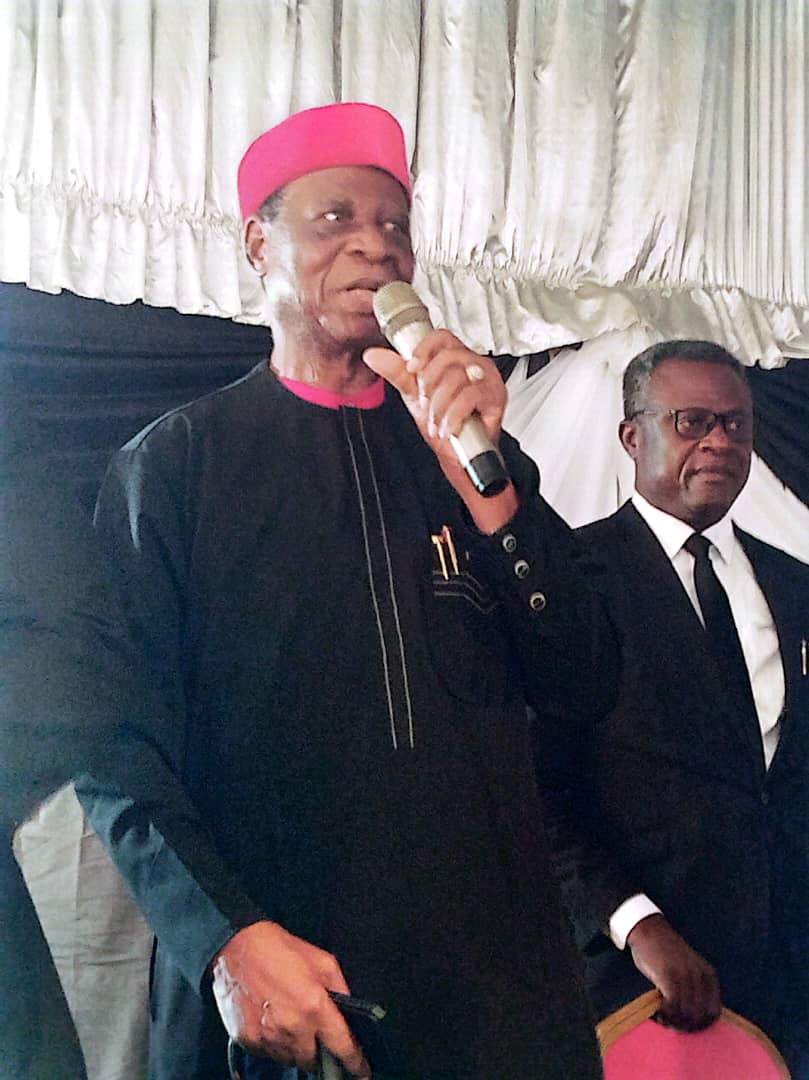
The former Chairman of Police Service Commission (PSC), Chief Simon Okeke (Ochendu) has shared a powerful reflection on his selfless service to the country and his fight for state police.
In his speech titled “The Role of Law and Security Institutions in Protecting Democracy” presented during the 2026 Law Dinner and Award Celemony of the Law Students held at the Hollywood Event Center Awka on July 3, 2026 ,Ochendu narrated how he started his journey as a patriotic Nigerian.
His speech read:
My presence here today takes me back to memory lane arising from the name of the Institution, Chukwuemeka Odumegwu Ojukwu University. Chukwuemeka Odumegwu Ojukwu, Eze-Igbo Gburugburu, Amuma na Egbe Igwe of the blessed memory was both my boss and a cherished friend.
He was my boss when he was the Commander-in-Chief of the Biafra Army where I served as Head of the Directorate of Military Intelligence (DMI) of the 11 Division of the Army under the Divisional Command of Brig Patrick Amadi. While 11 Division was at Nnewi Central School my DMI office was at Nnewi High School.
Till this day, anytime I pass through that school, I am reminded of the role I played at the heat of the war from 1968 to 13th January 1970 (when that bitter war technically ended in my home town Amichi where the then Commissioner of the 3rd Marine Commando, Lt Col. Olusegun Obasanjo came and collected the document of Surrender of Biafra from the Biafran Army leadership, Gen Philip Effiong and Justice Philip Mbanefo the Chief Judge of Biafra). General Ojukwu had left earlier for Abidjan where he was in exile till 1982 when he was granted pardon by the Nigeran Government led by President Shehu Shagari and Dr Alex Ekwueme the Vice President.
Following the grant of pardon the Vice President Dr Alex Ekwueme invited me to his office and charged me to organise the necessary funds to charter the aeroplane to bring Ikemba back from exile since the Federal Government directed that the cost of his return was not to be borne by the Federal Government. When I gathered the money, the Vice President said I should hand it over to Prof Chuba Okadigbo (the Oyi of Oyi) of blessed memory.
The day Ikemba landed at Ikeja Airport from his exile the crowd that gathered to welcome him on that day was so much that in their drive and surge to have a glimpse of him, the arrival wing of the Ikeja airport collapsed.
My closeness to Ikemba and his wife Bianca lasted to his last day on earth. May the brave soul of Chukwuemeka Ojukwu, Ikemba Nnewi, Ezeigbo Gburugburu, rest in perfect peace.
I thank the Anambra State Government for immortalising this great Igbo son by naming this University after his name.
CHAIRMANSHIP OF POLICE SERVICE COMMISSION (PSC)
I have come to realise that most people who known me, seem to know me only in connection with the Police Service Commission which I chaired for just five years (2001 to 2006). Little do they know that by profession, I am a chartered Real Estate Surveyor, being one of the early graduates in the profession and a founding member of the Nigerian Institution of Estate Surveyors and Valuers. Its only a few of us the founders who are still alive. Little do people know that it was me who on graduating from the University of London (as a Federal Government Scholar 1961-1964), with two British nationals who founded the International Firm of Real Estate Surveyors known as Knight Frank & Rutley (Nig) in February 1965 in Lagos. Unfortunately, less than a year after founding the firm, satan was let loose with Nigeria having its 1st Coup D’etat on 15th February, 1966 leading to the assassination of many leaders, mostly of Northern origin.
This was subsequently followed by the unparallel massacre of Igbos in May 1966 and a counter coup of 29th July 1966 and the pogrom of 29/30 Sept 1966. Then came, the bitter war 1967-70 arising from non implementation of Aburi Accord, leading to the loss of millions of lives.
I got back to Lagos to start life anew in February 1970 in that firm of Knight Frank & Rutley (Nigeria), at the end of the war, like every other Igbo national starting life again with £20 allowed out of whatever amount of money you had in your bank account at the end of the war.
I ended up being the Chairman and Chief Executive Officer (CEO) of that firm until I finally retired in 1991 at the age of 55 years instead of the official age 60. I chose to retire earlier due to the heavy burden imposed on me as the Chairman of such a multinational organisation. I was more often than not living more in the air than on the land.
Ten years after my retirement, President Olusegun Obasanjo invited me to pioneer the re-establishment of the Police Service Commission, the oversight agency of the Nigeria Police Force. Again, after the first five years of my term, I informed the President that I did not want a further term of five years, but pleaded that he would please renew the term for my Honourable Commissioners who very much needed it. Mr. President said that if I was not going for a renewal, he was not prepared to retain my team, and so it was. We all left on November 27, 2006.
THREE KEY ISSUES
I look back with nostalgia, three key issues that give me satisfaction that they are the products of my tenure, namely: –
1. The current practice of the appointment of six Deputy Inspector Generals of Police (DIGs) instead of one or two, as was the case before my tenure. I salute President Obasanjo for readily granting that request when the proposal was brought to him for approval. By this grant, each of the six geopolitical zones now has one DIG representing it in the management of the Nigeria Police Force.
2. Proposal for State Police
The issue of State Police, today is at the front burner of national debate. When in 2003 November, I put up a proposal to President Olusegun Obasanjo that the country would be better off security wise, if we had State Police, eyebrows were raised. The then Inspector General of Police fired back that I had come to the Nigeria Police Force with the Biafra in me to scatter the country. I wonder what he would say today with the current State Police Bill if he were alive.
3. Monitoring of Police on Election Duty
Charged with the hard reality that, during any election, no rigging of the election will succeed without the collaboration and cooperation of the Nigeria Police Force my Commission set to work deliberated strategically and painstakingly came to the conclusion that if the members of Nigeria Police Force on election duty are properly monitored by the Police Service Commission, which is their oversight agency, rigging will be reduced to absolute minimum.
“We mobilized the management of the Commission in collaboration with the then Honourable Attorney General of the Federation and Minister for Justice, Chief Kanu Agabi, SAN; the then Chairman, Independent National Electoral Commission (INEC), Dr. Abel Guabodia; the then Inspector General of Police, Mr. Tafa Balogun; National Human Rights Commission; National Orientation Agency (NOA); Civil Society Groups led by the CLEEN Foundation; development partners including the United Nations Development Programme (UNDP), the British Department for International Development (DFID), Open Society Justice Initiative (OSJI) to formulate Guidelines for the Conduct of Police Officers on Electoral Duties, the first of its kind in the world.
Based on the guidelines produced, we deployed personnel all over the federation to monitor its adherence and compliance. This guideline has now become the standard handbook for the conduct of security personnel during elections all over the world. INEC has today adopted it in managing the conduct of security personnel during elections all over the country.
CONCLUSION
Whereas the law and security institutions are expected to play their roles in the protection of democracy, it would seem that the threat to democracy is coming rather unfortunately from the courts. It is disheartening that what is happenings in Nigeria today shows our judiciary issuing out court orders that threaten the sustenance of democracy. Our institutions are expected to display independence and professional integrity in order to strengthen our democracy. We may be singing the “Nunc dimittis” for democracy in Nigeria, if our judiciary and our security institutions fail to perform their constitutional functions dispassionately and with proven maximum professionalism and integrity.
Finally, it is my hope and everyone’s expectation that the students of this Institution will live up to its name.
Related