Viral
Messi Should Have Been Sent Off Against Algeria, Says Former Footballer Alejandro Moreno

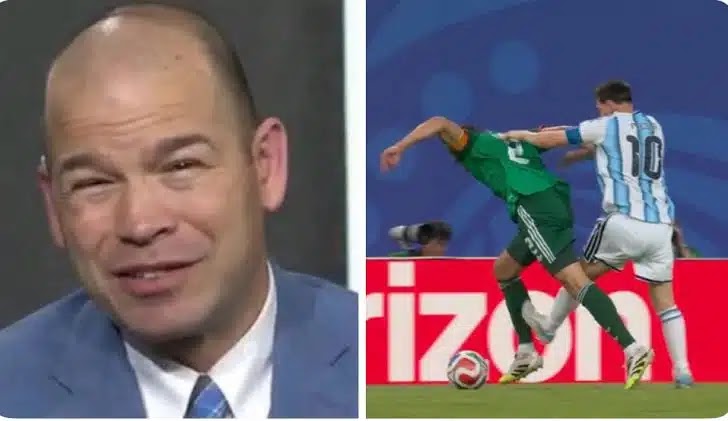
Former Venezuelan international footballer and football analyst Alejandro Moreno has argued that Argentina captain Lionel Messi was fortunate to remain on the pitch during his side’s 3-0 victory over Algeria at the FIFA World Cup, insisting that the eight-time Ballon d’Or winner should have received a red card for a dangerous challenge.
Messi was the star of the match, scoring a memorable hat-trick as reigning world champions Argentina opened their campaign with a convincing win. However, a controversial first-half incident involving the Inter Miami forward has continued to generate debate among football fans and pundits.
The incident occurred midway through the opening half when Messi challenged Algerian defender Aissa Mandi for possession. Replays appeared to show the Argentine star making contact with Mandi’s calf with his studs raised, leaving the defender in visible discomfort.
Despite protests from Algerian players and concerns raised by commentators, Polish referee Szymon Marciniak allowed play to continue without issuing either a yellow or red card.
The decision quickly became one of the major talking points of the match, particularly after Messi went on to score two additional goals in the second half to complete the first World Cup hat-trick of his illustrious international career.
Speaking on ESPN, Moreno expressed disbelief that the challenge was not punished more severely.
According to the former striker, the tackle met the criteria for a straight red card and should have prompted intervention from the Video Assistant Referee (VAR).
“It’s 100 percent a red card for Lionel Messi,” Moreno said.
“It should have been. It also feeds into the narrative that football’s biggest stars often receive preferential treatment from officials.”
Moreno suggested that the incident would likely have been judged differently had it involved a less prominent player.
The former Venezuela international also pointed to television footage showing FIFA President Gianni Infantino reacting to one of Messi’s chances later in the game, arguing that such moments contribute to perceptions that the Argentine icon enjoys special treatment.
“When Messi was close to completing his hat-trick and goalkeeper Luca Zidane made a save, cameras showed Gianni Infantino smiling as if to say, ‘that was close,’” Moreno said.
“That only reinforces the belief among some people that certain players receive a different level of treatment.”
Moreno further questioned the role of VAR officials, arguing that the replay footage clearly warranted a second look by the match referee.
“We don’t even need a freeze-frame image,” he said.
“If you watch the challenge in real time, it already looks reckless. Then you see the replay, and it becomes even more obvious that it was dangerous. Somebody should have called the referee over to review it.”
He added that the nature of the contact made the incident particularly serious.
“As much as I admire Lionel Messi, it was a clumsy challenge and a bad tackle. He raked the back of the defender’s calf from the knee all the way down toward the ankle. That should have resulted in a red card.”
The controversy has attracted additional attention because Marciniak was also the referee who officiated Argentina’s dramatic victory over France in the final of the 2022 FIFA World Cup in Qatar.
Despite the debate surrounding the incident, the referee’s decision stood, and Messi remained on the field to inspire Argentina to victory. His three goals not only secured all three points for the defending champions but also strengthened his place among the greatest players in World Cup history.
Nevertheless, discussions over whether the Argentine superstar should have been dismissed continue to divide football fans, with many arguing that the incident highlights the broader debate about consistency in refereeing and the influence of star players on major decisions.