World
Jerusalem and Beirut frustrated with Trump, hampering US plan to phase IDF out of Lebanon

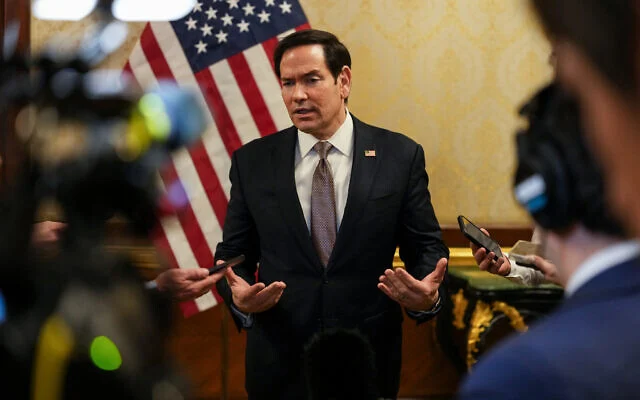
WASHINGTON — US Secretary of State Marco Rubio confirmed on Wednesday that Israel and Lebanon were discussing a potential scale-back of Israeli troops from southern Lebanon as part of the negotiations mediated by President Donald Trump’s administration in Washington this week.
“One of the issues that’s been discussed in these negotiations is the creation of pilot zones — specific, defined areas where the Lebanese Armed Forces can go in, take control, and secure that territory, and then move on to the next pilot zone,” Rubio told reporters in Kuwait.
Rubio defended the current Israeli military buffer zone in southern Lebanon, saying the only reason that it exists is because Hezbollah was using the area to launch rockets and drones at Israel.
“The more of that area that the Lebanese armed forces is able to secure, the less of it is in Hezbollah’s control, the less Israel will be in Lebanon. But that’s the process we’re working on right now with these talks,” Rubio said.
That effort did not appear to be going well though, with a government official and a second source familiar with the matter telling The Times of Israel later Wednesday that this week’s round of talks between Israel and Lebanon have been the least productive to date.
The two sources cited mutual frustration with the Trump administration’s decision to make a ceasefire in Lebanon part of the memorandum of understanding it inked last week with Iran.
Both Israel and Lebanon were opposed to the idea, arguing that it undermines the purpose of the channel between their two countries that Washington established in April, specifically to prevent Iran from maintaining its influence over Hezbollah and Lebanon, the two sources said.
The Israeli anger at Washington has led it to be less inclined to accept US requests that it begin pulling back some troops from southern Lebanon, the government official said.
Lebanon, meanwhile, feels that it must take a harder line in negotiations with Israel to counter the notion that Iran wields greater influence over affairs in Lebanese territory than it does, the source familiar with the matter explained.
Accordingly, the Lebanese government has presented maps for a proposed withdrawal that are much more expansive than what Israel is willing to accept at this stage — which was already very little due to the political pressures Prime Minister Benjamin Netanyahu’s government is facing, the source added.
The US was hoping that the three-day talks set to wrap up on Thursday would conclude with an announcement of a pilot program whereby the Israel Defense Forces would withdraw from small areas of southern Lebanon cleared of Hezbollah military infrastructure and be replaced by the Lebanese military.
However, such a development currently appears less likely, the two sources told The Times of Israel.
A State Department spokesperson did not respond to a request for comment.
Porous ceasefire holds
The second day of talks between Israel and Lebanon, which took place at the Pentagon and focused exclusively on security issues, ended on Wednesday evening without any public statement.
Thursday’s session will take place back at the State Department and focus only on political issues, with the US pushing the sides to make enough progress to be able to issue a public statement reporting as much, the source familiar with the matter said.
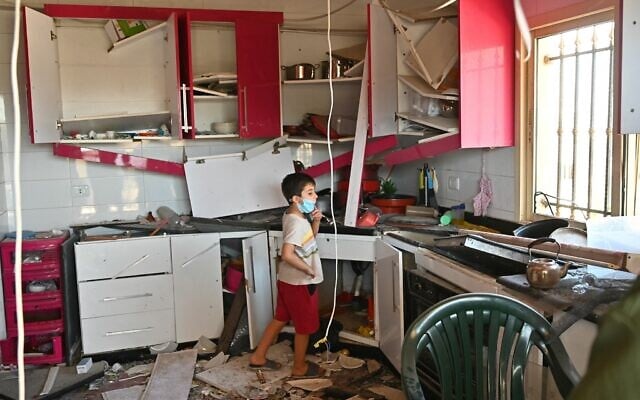
But even as the talks proceeded on Wednesday, Israel and Hezbollah exchanged fire in southern Lebanon, with the IDF saying it carried out a strike on a vehicle that crossed into Israel’s self-described security zone in the Ali Taher ridge area.
Lebanese media reported two dead in the strike. Separately, the IDF said a soldier was moderately injured in an “operational accident” in southern Lebanon earlier Wednesday.
The soldier was taken to a hospital, his family was notified and the circumstances of the incident are under further investigation, the army said.
Rubio defends US lift of Iran sanctions as part of ‘give and take’ negotiations
The frustration with the US extended beyond Israel and Lebanon and appeared to be the reason that Rubio jetted to the region this week. He made in the UAE, Kuwait and Bahrain as part of a tour aimed at assuring Gulf allies of Washington’s commitment to their security after the war Trump started left them significantly more exposed to Iranian threats.
While in Kuwait, Rubio defended the Trump administration’s decision to lift sanctions on Iran earlier this week, insisting Washington has to make some concessions as part of the negotiation process.
“Anytime you enter into a negotiation, it’s a process of give and take. This is a temporary measure. It’s for 60 days. As a result, we expect them to live up to the commitments they made in Switzerland. If they don’t… the president has a lot of options at his disposal,” Rubio told reporters.
The US first asserted that any sanctions relief that Iran would enjoy would only commence after Tehran made concessions in the 60 days of talks that kicked off over the weekend, following the signing of a memorandum of understanding last week to end the war between the two countries.

But then the US went on to acknowledge that some relief would be up-front, in the form of a waiver on the sanctions against Iranian oil exports.
Then on Monday, the US lifted major sanctions to allow Iran to trade oil in US dollars and delisted blacklisted shipping vessels under a 60-day temporary waiver.
Given the US insistence that sanctions relief would be based on performance, those more sweeping steps apparently came in response to Iran’s decision to allow UN nuclear inspectors back in the country. That was the only concession that the US has said Iran agreed to make in last weekend’s talks, although Tehran denies having done so.
Rubio also confirmed that the next round of technical talks between the US and Iran will begin early next week in Switzerland. He said those taking part in the talks will be beneath his post, so he will not be there, though more senior meetings have been led by US Vice President JD Vance, not Rubio.
Emanuel Fabian contributed to this report.