World
Israel sold advanced F-15 systems and gear to Qatar and Saudi Arabia – report

Advanced Israeli weapons systems, including air defense systems and computerized battle helmets for F-15 jets, have been sold to Qatar and Saudi Arabia, according to a Sunday report.
Out of the Qatari royal family’s 11 planes, three have Elbit’s C-MUSIC air defense system, which was installed between 2020 and 2022 while the planes were undergoing maintenance in Basel, the Haaretz news site reported, citing an analysis of publicly available photos.
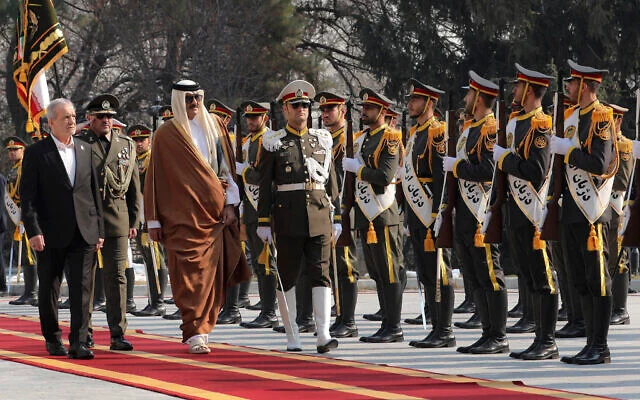
The report noted that when Qatar’s Emir Tamim bin Hamad Al Thani traveled to Tehran last year — the capital of Israel’s archnemesis Iran — he did so while his plane was equipped with the Elbit air defense system.
Using a sophisticated radar system, C-MUSIC tracks incoming MANPADs (shoulder-fired, surface-to-air missiles) and deflects them using a very powerful laser beam. The system can be installed in various parts of the plane, and is easy to operate, with no special training needed.
It also operates on the aircraft of Israel’s prime minister, Wings of Zion, as well as the French presidential plane, among others.
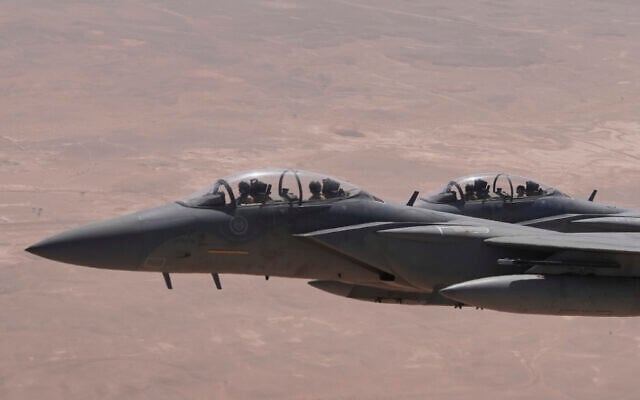
The report said that the contract for the 2017 US-Qatar deal to sell F-15QA Ababil warplanes to Qatar shows that Israeli firms won tenders for $150-250 million subcontracts to supply advanced parts and systems for the jets, including 160 JHMCS helmets worth some $200,000 each, and AN/AVS-9 night-vision glasses.
The report also cited a US Defense Department statement from 2010 as showing that, as part of a Boeing contract to sell F-15SA jets to Saudi Arabia, Riyadh received 462 JHMCS helmets and 462 night vision glasses of the same models sold to Qatar.
It said online footage shows the helmets are in use.
The advanced head gear shows flight data on the visor, giving the pilot the ability to zone in and fire at a target.
Saudi Arabia and Qatar both have no diplomatic relations or open defense ties with Israel.
However, in the years and months leading up to the October 7, 2023,Hamas-led massacre, it was widely reported that Riyadh was considering normalization with Israel, along the lines of the US-brokered Abraham Accords with other Arab states.
Despite efforts to keep the vision afloat, normalization does not appear imminent, with Israeli and Saudi leaders both signaling it is not currently on the table.
Qatar, however, is seen in a more negative light inside Israel. Doha’s role in supporting Hamas, including years of monthly cash grants officially earmarked for fuel purchases intended to help keep a lid on economic pressures in the beleaguered Strip, became a major issue in Israel as critics examined its role during the war in Gaza. The questions have been compounded by alleged ties to Qatar by members of Prime Minister Benjamin Netanyahu’s circle in the so-called Qatargate scandal.
Maj. Gen. (res.) Yoav “Poli” Mordechai was suspended from his role last year as the Israel Defense Force’s deputy envoy for hostage talks due to his suspected involvement in the scandal.
His company Novard has in recent years represented the Rafael and Elbit defense firms in marketing defense products to the Qatari government, the Ynet news site reported last year.
Mordechai and his partner earned thousands of dollars in brokerage fees from sales by Elbit to Qatar’s ruling family.
The company also reportedly signed a contract with Perception, a public relations company owned by Yisrael Einhorn, a former staffer to Netanyahu, as part of a campaign to boost Qatar’s image in the leadup to the 2022 World Cup.
Mordechai initially continued in his position on the negotiating team even after reports of his Qatar links surfaced.