World
Iran doubles down on control of Strait of Hormuz after weekend of violence — as shipping traffic plummets

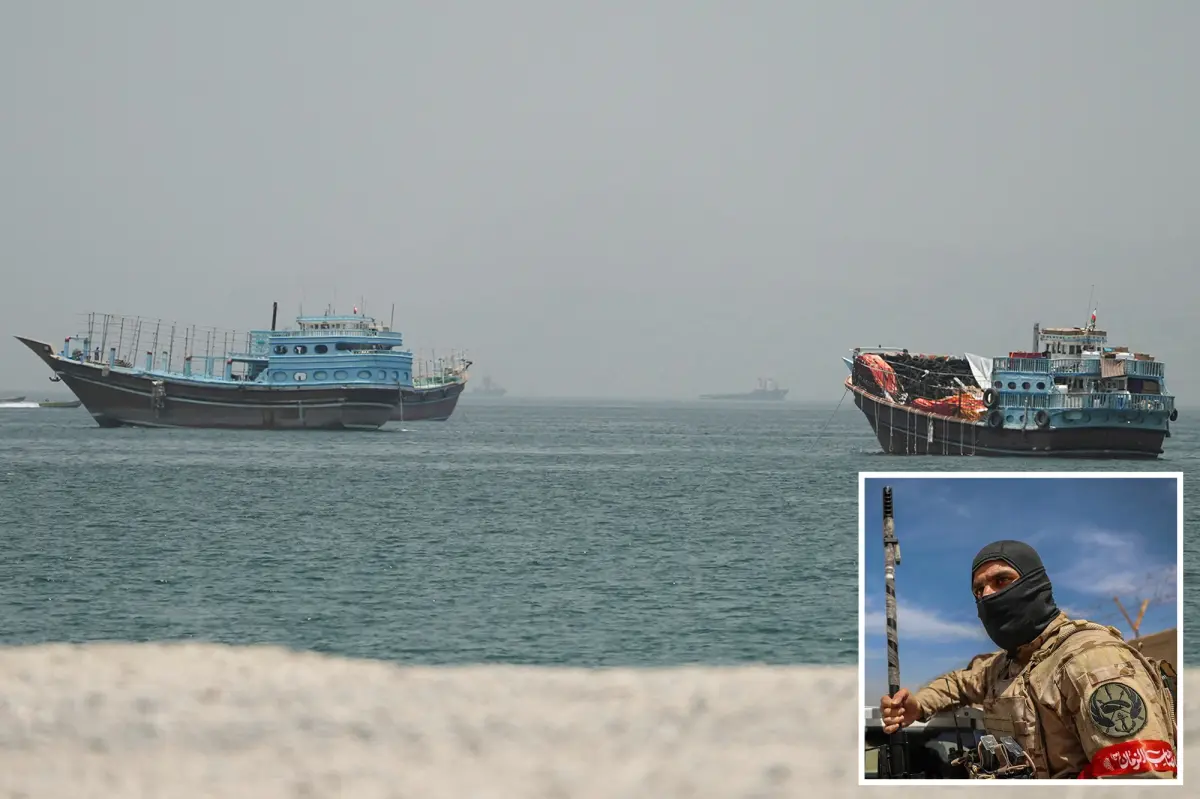
Iran doubled down on its control of the Strait of Hormuz Sunday — declaring on state-run TV that all ships must get permission from the Islamic Revolutionary Guard Corps before sailing through the critical choke point.
The announcement followed Iranian attacks on two ships that were transiting the strait in recent days — prompting strikes by the US, and tit-for-tat retaliation by the Islamic republic.
The violence threatened to unravel the delicate peace deal less than a week after the two sides met in Switzerland for talks on a permanent agreement. President Trump accused Iran of violating the cease-fire and warned the US could return to all-out war.
The attacks also resulted in shipping traffic through Hormuz, which once carried 20% of the world’s oil, to grind to a halt. Just 10 ships crossed on Saturday, compared with 40 to 50 earlier in the week.
The IRGC has maintained that Iran will keep full control over the Strait of Hormuz. On Thursday it fired a drone on a Singapore-flagged cargo ship along the coast of Oman — after the vessel apparently used a route through the strait that avoided Iranian controlled waters.
Iran claimed the vessel, the container ship Ever Lovely, was using military escorts in the Oman-half of the strait, and that it undermined the Islamic republic’s control over the passageway.
Iranian Foreign Minister Abbas Araghchi said Sunday that Iran will exercise sole management of the Strait of Hormuz for the next 30 days before allowing full traffic to resume.
“Any attempt to adopt new or separate arrangements compared to what is underway by the Islamic Republic of Iran, will only lead to more complicated situations and delays in the reopening of the Strait of Hormuz, and will increase the tensions, as we witnessed in the past two nights,” Araghchi told reporters in Iraq.
Under the terms of the MOU, Iran had agreed to keep the strait open and free for the full 60 days of negotiations before taking control of the waterway.
Iran said it plans to charge tolls or “insurance” for ships to cross after that — though the US has demanded no tolls can be allowed.
After Iran hit the Singapore ship, it apparently attacked the Panama-flagged tanker M/T Kiku, which was sailing from Qatar.
US fighter jets responded by launching strikes at 10 targets that facilitated that drone strike on the tanker.
Trump furiously warned Iran, accusing it of violating the cease-fire agreement.
“It is very possible that they will never learn! There may come a point when we are no longer able to be reasonable, and will be forced to militarily complete the job that we very successfully started,” he said on Truth Social.
“If that happens, the Islamic Republic of Iran will no longer exist!”
Iran responded by launching drones and missiles at US allies Bahrain and Kuwait.
Traffic along the Strait of Hormuz had begun trickling to a few dozen ships a day as peace held steady between the US and Iran last week.
The recent hostilities, however, caused the flow to drop to levels seem before the MOU was signed, according to maritime intelligence firm Kpler.
Shipping experts have warned that the renewed strikes will keep vessels too afraid to cross as they had before the war began, where more than 130 ships transited the strait every day.
Vice President JD Vance, who was in Switzerland for talks with Tehran last week, warned Iran to end its attacks in the region or face further retaliatory attacks from the US.
“Violence will be met with violence,” Vance said.