World
Iran pushes competing versions of a proposed deal as US sticks to timeline

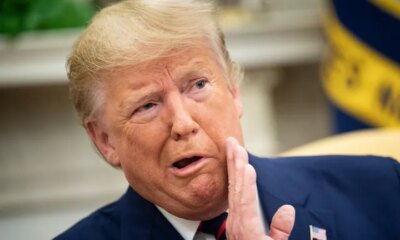
TEHRAN – Iran circulated competing versions of a proposed interim agreement with the US, even as President Donald Trump stuck to his timeline on June 14 to sign a deal.
All of the texts – there were at least three – include similar elements around reopening the vital Strait of Hormuz waterway, giving Iran sanctions relief and opening the door to longer-term negotiations around its nuclear programme.
But they diverge in key respects, making it difficult to assess how much of a win the deal will be for either side. A major discrepancy hinged on how much financial relief Iran would get immediately or in the future – a concern for Iran hawks in the US who don’t want Trump to give away too much.
The White House declined to comment even with time running out for an agreement to be signed by June 14 – Trump’s 80th birthday – as the president had promised. On June 14, Fox News cited Trump as saying a deal would be signed in two to three hours.
At one point earlier in the day, the likelihood of a signing appeared to grow more remote after Israel’s military hit the Lebanese capital, saying it was targeting Hezbollah after the Iranian-backed group fired more projectiles into northern Israel. Iran later vowed that a response was on the way.
In a subsequent social media post, Trump said that Israel should stop attacking Lebanon.
“We are very close to a Deal that will bring peace to the region, including to Lebanon, and all sides should stand down,” Trump wrote on social media. “This could be the beginning of a long and beautiful peace – Let’s not blow it!”
The competing drafts only exacerbated days of confusion around the prospects for a deal to end the fighting that began with US and Israeli missile attacks against Iran on Feb 28. That campaign has killed thousands of people, roiled the Middle East and spiked the price of oil.
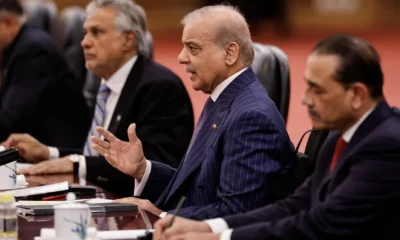
Trump has said many times over the weeks of the conflict that the two sides were close to a deal. That claim was given credence this time by similar statements from Iranian officials and Pakistani mediators that a deal was near. But Iran also didn’t like the symbolism of signing the deal on Trump’s birthday.
The multiple versions have several things in common. The Strait of Hormuz would reopen quickly and Iran would get sanctions relief to sell oil. A deal would start the clock ticking on weeks of negotiations around the future of Iran’s nuclear programme.
But they diverge in important ways. A version of the text seen by Bloomberg News suggests the US and “regional partners” create a programme for the reconstruction and economic development of Iran with minimum funding of US$300 billion (S$385 billion) if a final deal is reached. Iran’s nuclear programme will be the subject of the later talks, according to the draft.
Reuters, citing an unidentified Iranian official, reported that a draft of the MOU includes the US allowing the release of US$25 billion of frozen assets. The version seen by Bloomberg contained no such stipulation.
And on June 12, Iran’s semi-official Mehr news agency said any final negotiations wouldn’t begin until half of Iran’s frozen funds are released, oil sanctions are suspended, and the naval blockade is lifted.
Reconciling the competing claims was made more difficult by the fact that the Trump administration, while talking about timing of a deal, has so far declined to give many details about what it would look like. Crucially, it’s not clear whether Iran will demand tolls from ships crossing the strait, and the various versions didn’t mention the issue.
That reflects the challenge faced by the US president – he is eager to bring the war to an end yet has been unwilling so far to agree to Iranian demands – such as sanctions relief, releasing frozen Iranian funds, and a promise not to attack again – that Iran hawks at home have argued would mark a major victory for Tehran.
A senior US official, speaking to reporters on June 12, said the deal would reopen the Strait of Hormuz and send the US and Iran into negotiations on bigger issues around the country’s nuclear programme. It would involve a sequence of steps that would see Iran receive rewards as it meets certain US demands.
Here’s an abbreviated version of the 14 points in the latest Persian-language draft:
Iran and the US, along with their allies in the conflict, by signing this memorandum of understanding, declare the immediate and permanent cessation of this war on all fronts, including in Lebanon. They commit from now on not to initiate any war against each other, and to refrain from the threat or use of force against each other. The final agreement will confirm the permanent cessation of the war and the remaining provisions of this clause.
Iran and the US will respect each other’s sovereignty and territorial integrity and refrain from interfering in each other’s internal affairs.
Iran and the US will hold negotiations and reach a final agreement within 60 days, a timeframe which may be extended with the agreement of both parties.
Immediately after signing this MoU, the US will begin lifting its maritime blockade, and will bring shipping to full capacity within a maximum of 30 days. The US also commits to withdrawing its forces from the Persian Gulf region within 30 days of a final agreement.
Iran will immediately make arrangements to restart the transit of commercial ships from the Persian Gulf to the Sea of Oman and vice versa, and to return to pre-war numbers within 30 days, taking into account the necessity of removing technical obstacles and mines.
The US and its regional partners commit to creating a programme for the reconstruction and economic development of Iran with at least US$300 billion in funding. The mechanism for this programme will be part of the final agreement.
The US agrees all types of sanctions Iran faces, including United Nations Security Council resolutions and IAEA Board of Governors resolutions, and all US unilateral primary and secondary sanctions, will be terminated within a mutually agreed timeline as part of the final agreement.
Iran reiterates it will never produce nuclear weapons. Iran and the US will discuss the future of the Islamic Republic’s enrichment and its enriched-material stockpiles, as well as all other nuclear-related matters, including Iran’s nuclear needs. A framework for this, based on the outcome of the discussions, will be added to the final agreement.
Iran and the US will maintain the status quo until the final agreement: Iran maintains its current nuclear-program status and the US does not impose new sanctions on Iran and does not strengthen its forces in the region.
The US commits to issuing Treasury Department waivers for the export of Iran’s crude oil, petrochemical products and their derivatives, and all related services – including banking transactions, insurance and transportation – immediately after the signing of this MoU, and until the termination of sanctions.
The US commits to releasing and making fully usable the restricted or frozen funds and assets of Iran, in accordance with the progress of negotiations toward the final agreement. These funds will be usable for payment to any final beneficiary designated by Iran’s central bank. The US commits to issuing all necessary approval and licences for this.
Iran and the US will create a mechanism to monitor the implementation of the final agreement.
After this MoU, and after ensuring the commencement and implementation of clauses 4, 5, 10, and 11, Iran and the US will begin final-agreement negotiations, exclusively regarding the remaining clauses.
The final agreement will be confirmed by a binding UN Security Council resolution. BLOOMBERG