Viral
‘Impeachable Offence’ – Senator Monguno Challenges Finance Minister Over 2025 Budget Implementation

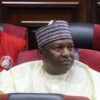
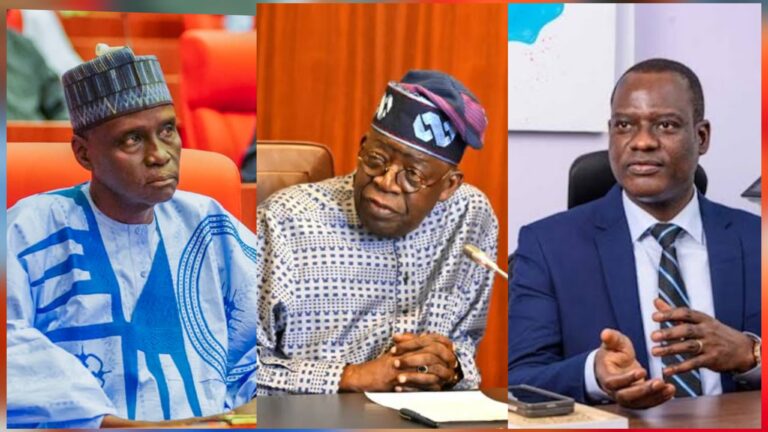
Senator Mohammed Tahir Monguno, representing Borno North Senatorial District, has criticised the Federal Government over the alleged poor implementation of the 2025 Appropriation Act, warning that failure to execute an approved budget amounts to a breach of the law and could constitute an impeachable offence.
The lawmaker raised the concerns during a National Assembly session while questioning the Minister of Finance and Coordinating Minister of the Economy, Taiwo Oyedele, on the management of public finances, budget implementation, and the distribution of government revenue.
Monguno also sought an explanation for the alleged retention of ₦1.7 trillion from a reported ₦3.7 trillion generated in one month, asking why only ₦2 trillion was reportedly shared among the federal, state, and local governments.
Monguno Questions Budget Performance
While acknowledging the financial presentation made by the Finance Minister, the senator argued that the more pressing issue was the slow implementation of the 2025 budget.
According to him, although the government assured lawmakers that 30 per cent of the budget would be implemented by March after approximately 70 per cent of the projects were rolled over into 2026, that target was not achieved.
He noted that the National Assembly was compelled to extend the lifespan of the 2025 budget until September to enable the executive complete outstanding projects.
“Where are these revenues going to? If the 2025 budget has not been implemented and we have to roll over 70% of 2025 to 2026, and we promised that 30% will be implemented before March. Up to March, even 30% was not implemented.”
Monguno maintained that budget implementation is the primary means through which citizens enjoy the benefits of governance.
“It is through the implementation of the budget that dividends of democracy are brought to the doorsteps of the people. If the budget is not being implemented, what is the function of government?”
Raises Concerns Over Security Funding
The senator also expressed concern over funding for security agencies, claiming that several agencies informed lawmakers they had received no capital allocations.
He stressed that safeguarding lives and property remains the government’s foremost constitutional responsibility.
“All the security agencies that we have interacted with are reporting to us that they have received zero allocation in terms of their capital.”
He further questioned the alleged retention of ₦1.7 trillion from the reported monthly revenue.
“About ₦3.7 trillion was received last month and only ₦2 trillion was disbursed to the three tiers of government. About ₦1.7 trillion was retained. Why?”
Concluding his remarks, Monguno declared:
“Why is budget not implemented? Because it is a breach of the law and it is an impeachable offence.”
Finance Minister Responds
Responding to the concerns, Finance Minister Taiwo Oyedele said there was widespread misunderstanding about Nigeria’s borrowing figures, explaining that many people confuse legislative approval for borrowing with the actual amount borrowed.
According to him, National Assembly approval merely establishes the maximum amount the government is permitted to borrow and does not mean the entire sum has been accessed.
“There is a need for some clarification in terms of how debt numbers are reported. For external loans, we always need the approval of the National Assembly.”
He added:
“Many people take that as money borrowed. When we now borrow the money, they report it again. That is misleading.”
Oyedele disclosed that the Ministry of Finance was preparing a detailed public report showing the amount approved by the National Assembly, the actual amount borrowed, and how the funds had been utilised.
“We will make it available to the public. It will show how much the National Assembly approved, how much we have borrowed, and how it has been spent.”
The minister maintained that the current administration had not exhausted the borrowing limit approved by lawmakers.
“We have not even taken half of what the National Assembly has approved.”
He further explained that all government borrowing is guided by the Fiscal Responsibility Act, which permits borrowing only for capital projects and human development initiatives.
Addressing concerns over Nigeria’s growing debt profile, Oyedele noted that public debt stood at about ₦75 trillion when the current administration assumed office, urging Nigerians to consider the broader economic context rather than relying solely on headline debt figures.