Special Report
IGP Reveals Why Security Agencies Delayed Rescue of Abducted Oyo Pupils

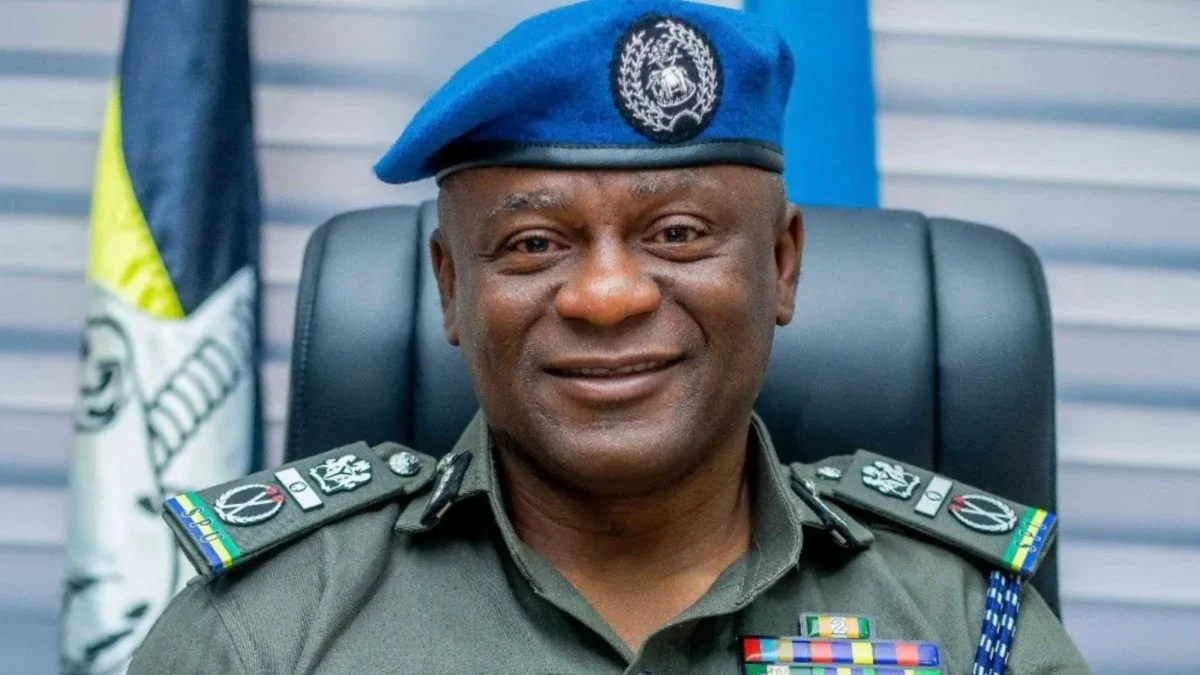
Inspector-General of Police, Olatunji Disu, has explained why security agencies did not immediately move to rescue schoolchildren and teachers abducted in Oyo State.
Speaking during a press briefing on Thursday, the police chief said security operatives came under intense public criticism during the period the victims were held captive.
However, he maintained that authorities deliberately avoided taking actions that could have endangered the children and their teachers.
The victims were abducted in May 2026 after armed attackers stormed schools in Oriire Local Government Area of Oyo State and whisked away dozens of pupils and members of staff.
They eventually regained their freedom after spending 56 days in captivity following a coordinated operation involving multiple security agencies.
Disu said the circumstances surrounding the attack made the operation particularly difficult.
According to him, the abductors targeted two schools before fleeing into a forested area with the victims.
“I will share with you the incident of the Ogbomosho kidnap. That day, they came. Two schools they went to and kidnapped those children and their teachers.
“They used the vehicle of one of the teachers, the head teacher. When they got to the entrance of the bush that they were going to, they set fire to the vehicle. We didn’t know why they did it,” he said.
The IGP noted that security operatives faced serious challenges due to the remoteness of the affected communities.
He said communication infrastructure in the area was poor, while security presence was limited.
“In that area, there is no network at all, at all. And I think even police station far, far, far, far from them. But they had only one street, one road that goes to the two villages where this kidnap happened,” Disu said.
He disclosed that police officers, soldiers and local vigilantes immediately launched a search operation after receiving reports of the abduction.
According to him, security personnel tracked the movement of the kidnappers through difficult terrain in an effort to locate the victims.
The police chief revealed that one officer lost his life during the operation while pursuing the attackers.
“Policemen came, soldiers came, vigilante came. I’m talking to you now because it’s only us who are here. They followed them, the path. Somebody was shot as we were following them.
“Nobody mentioned that. Nobody saw it. Nobody saw the effort we put in,” he said.
Disu said security agencies also deployed air assets to support the search mission. He explained that helicopters operated by the Nigeria Police Force and the Nigerian Air Force conducted surveillance and search operations throughout the period the victims remained in captivity.
“From that moment, the Nigerian Air Force helicopter, the police helicopter, everybody were there searching day and night,” he said.
According to the IGP, one of the major reasons authorities remained silent during the operation was to prevent sensitive information from reaching the kidnappers.
He said regular public briefings could have compromised the mission and exposed the hostages to greater danger.
“Everybody were attacking us, left and right, with gun security. What is this? What is that? We cannot come out and talk. We cannot expose those children,” he said.
“There’s something they call collateral damage. People are forcing us. People are comparing us to other countries in the world. They wanted us to take hasty decisions.”
Disu stressed that security agencies had to balance public expectations with the responsibility of ensuring the safe return of the victims.
He disclosed that several high-level meetings were held behind closed doors as officials weighed different options and monitored developments.
“So now, every night, your husband came out at that time and told you he was going to meet him. It is true. We were holding meetings late in the night about it, trying to take decisions,” he said.
The police chief further stated that details of the operation were kept confidential, with information shared only among personnel directly involved in the mission.
“Most of this, we did not come back and even tell a lot of our colleagues because we wanted to keep it secret. Parties we could not attend. A lot of things happened, we could not talk about it,” he said.
Disu maintained that the strategy eventually paid off, leading to the successful rescue of the schoolchildren and their teachers after nearly two months in captivity.