Viral
Global Oil Prices Falls Despite Renewed US-Iran Airstrikes

Global crude oil prices fell on Thursday despite renewed military tensions between the United States and Iran, easing concerns over a prolonged supply disruption in the international energy market.
Market data monitored by DAILY POST showed that both major crude benchmarks recorded losses during trading.
Brent crude, the international benchmark for oil prices, dropped by about 2 percent to trade at $76 per barrel, down from approximately $77 per barrel. Similarly, the United States’ West Texas Intermediate (WTI) crude fell to around $71 per barrel, compared with $73 per barrel recorded earlier.
The decline came even as geopolitical tensions in the Middle East intensified following a fresh exchange of military attacks involving the United States and Iran.
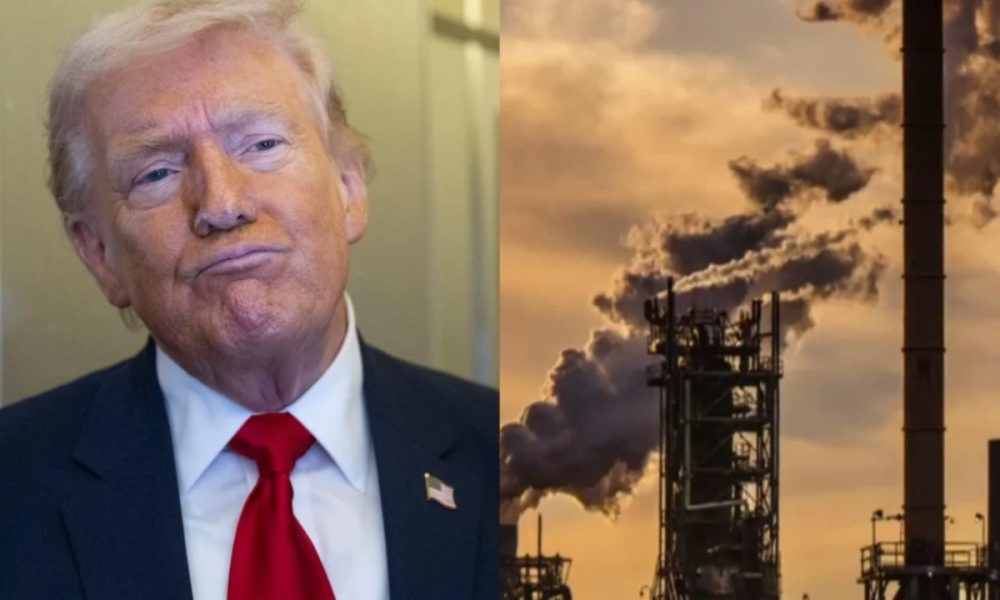
Oil prices had surged on Wednesday after US President Donald Trump announced the collapse of an earlier ceasefire arrangement with Iran, raising fears that escalating hostilities could threaten crude oil production and disrupt shipments through key global supply routes.
Those concerns deepened after the United States carried out another round of airstrikes targeting locations in Iran.
In response, Iran reportedly launched retaliatory strikes aimed at American allies in the Gulf region, including Bahrain, Kuwait, and Qatar, further heightening security concerns across the Middle East.
Ordinarily, rising geopolitical tensions in one of the world’s largest oil-producing regions tend to push crude prices higher because investors anticipate possible disruptions to production, exports, or maritime trade through strategic waterways such as the Strait of Hormuz.
However, Thursday’s decline suggests that traders believe the latest military exchanges may not immediately affect global oil supplies, prompting some investors to take profits after the sharp gains recorded in the previous trading session.
Analysts say oil prices are likely to remain volatile in the coming days as global markets continue to monitor developments in the conflict and assess their potential impact on energy supply and the broader world economy.