Topnews
Full List: Proposals Before Senate As Talks Begin On State Police

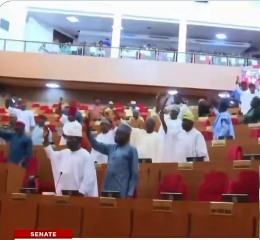
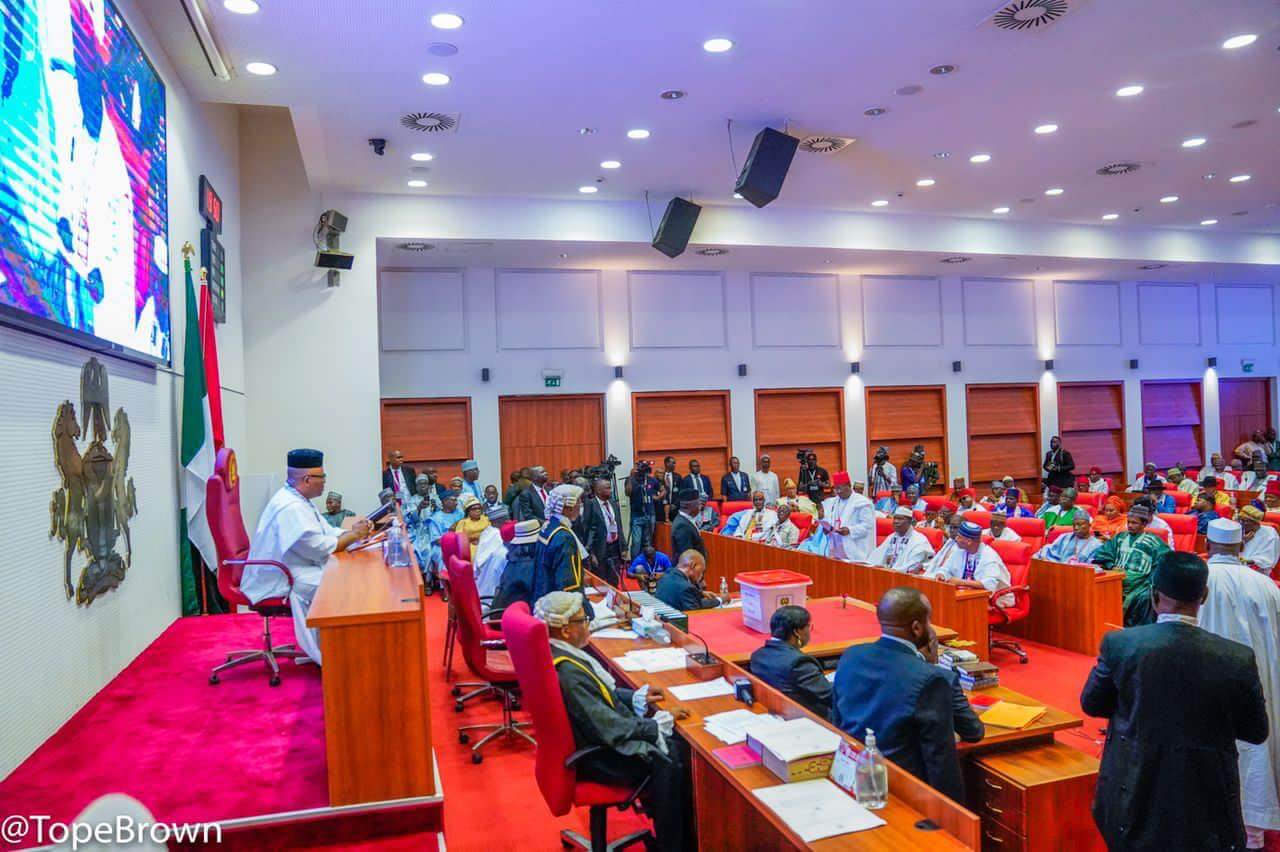
The Senate on Wednesday commenced what could become one of the most consequential constitutional voting exercises since Nigeria’s return to democratic rule in 1999, with lawmakers set to decide the fate of several landmark proposals touching on elections, security, justice, traditional institutions and human rights.
Among the major proposals before the Red Chamber are bills seeking to establish a constitutionally backed Electoral Offences Commission, introduce independent candidacy, place the Armed Forces of the Federation on first-line charge, grant constitutional recognition and financial autonomy to traditional rulers, and prohibit the public parade of criminal suspects by law enforcement agencies.
Also before the Senate is the highly contentious proposal for the creation of State Police Services, a measure strongly supported by President Bola Tinubu’s administration as part of efforts to tackle rising insecurity across the country.
Apart from the state police bill, senators are expected to vote on several far-reaching constitutional amendments, including:
Naija News reports that the exercise attracted key figures in President Bola Tinubu’s administration and some governors of the All Progressives Congress, who arrived at the Senate Chamber ahead of deliberations on the bills.
Among those present were the Chief of Staff to the President, Femi Gbajabiamila; Kaduna State Governor, Uba Sani; and the governors of Ogun and Ondo states.
Several state Attorneys-General, including representatives from Anambra and Akwa Ibom states, were also present to witness the proceedings.
Their presence attracted attention within the Red Chamber, as attendance by non-members during such critical legislative proceedings is traditionally uncommon.
Sources said some senators initially raised reservations over the admission of the visitors into the chamber, but they were eventually allowed in to observe the historic exercise.
The Senate had earlier scheduled the consideration of the constitutional amendment bills immediately after the swearing-in of newly inaugurated senators.
However, proceedings were delayed after lawmakers went into a closed-door session that lasted more than one hour.
The executive session followed a motion moved by the Senate Leader, Opeyemi Bamidele.
Before the Senate entered the closed-door session, Senate President Godswill Akpabio described the constitutional amendment process as a defining moment for the National Assembly and Nigeria’s democratic development.
Akpabio told senators that the proposals before the chamber were not merely routine legislative items but measures capable of reshaping the country’s security architecture and strengthening the federal system.
He urged lawmakers to approach the debate with patriotism, open-mindedness and commitment to the national interest.
According to him, history would judge the 10th Senate by its willingness to confront difficult national questions.
“The decisions we take will have the potential to shape the future of policing, public safety and intergovernmental relations in Nigeria for generations to come,” Akpabio said.
In a major departure from the Senate’s traditional reliance on voice votes, Akpabio announced that voting on the constitutional amendment bills would be conducted electronically.
He said each senator’s vote would be digitally recorded, displayed and printed for future reference.
The move, according to him, was aimed at ensuring transparency, accountability and proper documentation of the decisions taken by lawmakers.
The chamber subsequently commenced test runs of the electronic voting system, marking the first time the technology would be deployed for constitutional voting since the inauguration of the 10th Senate.
At the heart of the constitutional amendment exercise is the proposal to establish State Police Services.
Supporters of the bill argue that state police would enhance intelligence gathering, improve response time and bring law enforcement closer to local communities.
They also believe it would strengthen the fight against banditry, kidnapping, terrorism and communal conflicts by giving states greater control over internal security.
However, critics have warned that the structure could be abused by governors for political purposes, especially as the country moves closer to another election cycle.