World
France’s Eastern Mediterranean Energy Strategy: Between Commercial Pragmatism and Geopolitical Ambition

France has emerged as a significant actor in the Eastern Mediterranean energy landscape, combining commercial interests, geopolitical ambition, and European energy security priorities. Its approach rests on three pillars: support for French corporate activity, especially through TotalEnergies; strategic alignment with Greece, Cyprus, Egypt, and Israel; and efforts to counterbalance Turkey’s growing assertiveness in the region. Since the major gas discoveries of the 2010s, France’s policy has evolved into a multi-layered strategy involving diplomacy, military presence, and energy investment. Recent developments between 2024 and 2026 show a more pragmatic shift away from costly pipeline visions and toward commercially viable export routes through Egypt.
Commercial Interests and the Role of TotalEnergies
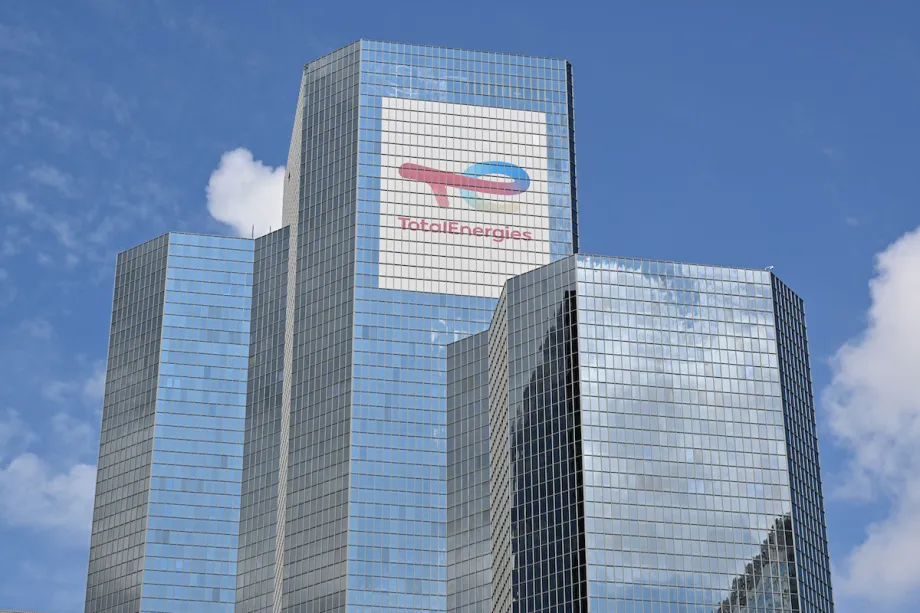
TotalEnergies plays a central role in France’s Eastern Mediterranean policy. In partnership with Italy’s Eni, the company has expanded its presence in Cyprus’s offshore blocks, particularly Block 6. The Cronos discovery in 2022, later appraised in 2024 at roughly 3.1 trillion cubic feet of gas in place, and the Zeus discovery, estimated at around 2.5 trillion cubic feet, strengthened Cyprus’s position as a potential gas supplier to regional and European markets. In February 2025, TotalEnergies and Eni signed a Host Government Agreement with Cyprus and Egypt to develop the Cronos field by using Egyptian infrastructure, including the Zohr facilities and the Damietta LNG terminal, for liquefaction and export to Europe. A final investment decision is expected in 2026, with first deliveries potentially beginning by 2029.
READ: Oil prices fall after Trump cancels strikes on Iran
By contrast, routing Cypriot gas through Egypt allows producers to use existing LNG infrastructure while reducing exposure to disputes over pipeline routes. It also fits wider regional trends, as Israeli gas from Leviathan already flows to Egypt for domestic use and LNG export. For France, this approach supports European supply diversification away from Russia while expanding TotalEnergies’ position in a promising gas basin.
France’s membership in the Eastern Mediterranean Gas Forum further institutionalizes its regional involvement. Approved in 2021, France’s participation gives Paris a formal platform alongside Cyprus, Egypt, Greece, Israel, Italy, Jordan, and Palestine, with the European Union, the United States, and the World Bank as observers. Through the EMGF, France supports regional gas market integration, regulatory coordination, infrastructure cooperation, and decarbonization initiatives. The forum also gives France a diplomatic channel to shape regional energy governance beyond bilateral corporate deals.
Geopolitical Strategy: Alliances, Deterrence, and Turkey
France frames this support as a defense of sovereignty, international law, and the United Nations Convention on the Law of the Sea. At the same time, it also reflects a strategic effort to limit Turkey’s influence and reinforce France’s role as a Mediterranean power.
This posture has been reinforced through defense cooperation and military deployments. France signed a major defense agreement with Greece in 2021, including provisions for mutual assistance, and has deepened security cooperation with Cyprus, including access to the Mari naval base. French naval and air assets, including the Charles de Gaulle carrier strike group and Rafale aircraft, have repeatedly operated in the region, particularly during periods of heightened tension. These deployments serve several purposes: protecting energy interests, monitoring key sea lanes, reassuring partners, and signaling deterrence toward Turkey.
Recent developments in 2026 suggest further integration of energy security and military strategy. Increased multinational military activity around Cyprus, involving France and other European actors, reflects the island’s growing importance as both an energy hub and a strategic platform. Discussions over nuclear cooperation with Greece also point to a broader French effort to link energy infrastructure, defense cooperation, and European strategic autonomy.
France’s posture has generated friction with Turkey. Ankara views the EMGF, French naval deployments, and Cyprus-centered energy projects as exclusionary. Turkey has responded by expanding its own energy diplomacy, including LNG agreements and exploration partnerships, while continuing to criticize projects that bypass Turkish interests.
Energy Security and European Goals
Russia’s invasion of Ukraine in 2022 gave Eastern Mediterranean gas renewed strategic importance for Europe. Although the region cannot replace Russian gas on a large scale, it can contribute to diversification and reduce dependence on single suppliers. France’s policy reflects this logic. While Paris remains committed to LNG imports, renewables, and nuclear energy, its Eastern Mediterranean engagement supports broader European efforts to strengthen southern energy corridors and improve supply resilience.
At the same time, France has adjusted to the limits of regional gas development. The EastMed pipeline has lost momentum, while LNG-based and Egypt-centered export models have become more attractive. Political risks remain significant, including the unresolved Cyprus dispute, instability in the wider Middle East, and Turkey’s opposition to projects that exclude it. The energy transition also complicates long-term gas investment, as European demand may decline over time. France has responded by hedging: supporting gas as a transition fuel while also promoting nuclear cooperation, renewable integration, and wider energy infrastructure partnerships.