World
Israeli authorities demolish buildings in Palestinian hamlet targeted by settlers

The Civil Administration, a department of the Defense Ministry, on Sunday demolished four buildings in the Palestinian Bedouin hamlet of Khallet a-Sidra, which was largely abandoned after it was raided violently by extremist settlers in January.
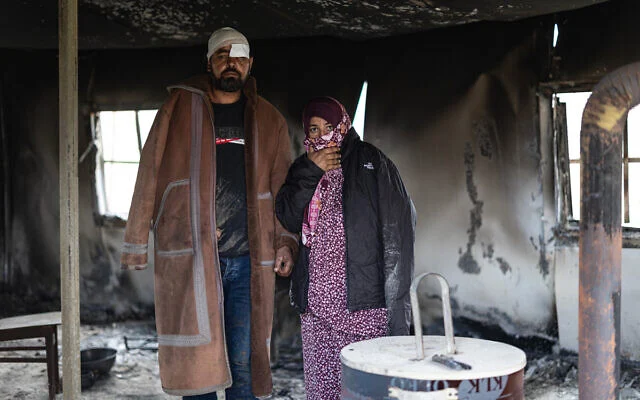
According to Youssef Zawahreh, a former resident of the hamlet, all four of the buildings that were destroyed in Khallet a-Sidra, which lies just northeast of Jerusalem, belonged to him.
“All my buildings are gone. This was the work of 20 years; all my life was there, I have nothing left,” Zawahreh told The Times of Israel by telephone.
The Civil Administration confirmed that an “enforcement” operation was carried out on the structures, which it said were illegal.
Zawahreh said, however, that he had built the structures many years ago, and insisted that the timing of the demolition and the targeting of his buildings was designed to prevent him specifically from returning to Khallet a-Sidra since he is the only former resident who is still trying to preserve the existence of the hamlet.
Zawahreh and his wife were severely beaten in the January settler attack, and now live in makeshift accommodation in nearby Mukhmas.
Following the January attack, all 15 families that had lived in Khallet a-Sidra left, and the IDF then placed roadblocks on the road leading from the hamlet to Mukhmas, which meant it would be extremely difficult for residents to conduct their everyday affairs if they should decide to return home.
The IDF and Civil Administration has also refused to let any of the residents rebuild homes that were burned down by the settlers.

Read more: Settlers drove an entire village into exile. Palestinians say the state is keeping them away
According to a recent UN report, more than 2,200 Palestinians have been displaced this year due to settler violence or restrictions on access, and hundreds more have been displaced due to home demolitions by Israeli authorities.
The report came just days after Amnesty International accused Israel of conducting a “state-sponsored” campaign of ethnic cleansing against Bedouin and Palestinian herding communities in the West Bank over the last three and a half years, designed to accelerate the annexation of the territory. The IDF rejected the charge.
The organization cited figures from the UN showing that some 117 predominantly Bedouin and herding Palestinian communities “have faced either full or partial displacement between January 2023 and April 2026,” amounting to at least 5,910 people who Amnesty said have been forcibly displaced.
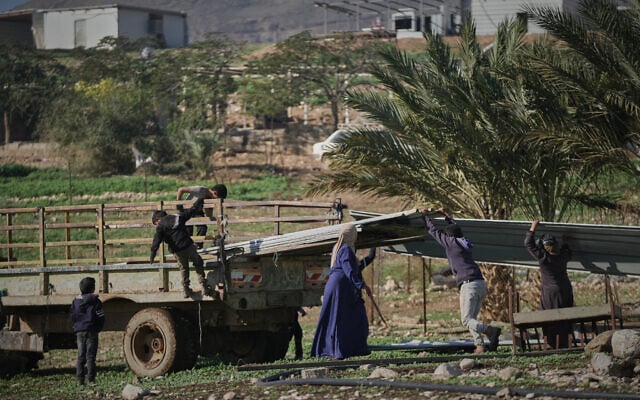
The report also detailed a massive increase in the establishment of new settlements by the Israeli government, alongside illegal herding outposts established by settlers, as part of what Amnesty said is an effort to drive Palestinians off the land — in particular in Area C, where Israel has full security and civilian control under the Oslo Accords and which constitutes some 60 percent of the West Bank.
Critics have accused the government and law enforcement of turning a blind eye to violent attacks and land grabs by settler extremists, which have become increasingly deadly in recent years and occur on a near-daily basis. Arrests are rare and prosecutions are even less common.