World
Foreign intel report said to show Qatar aiding Iran economically, militarily for years

A report by a foreign intelligence agency shows how Qatar has aided Iran economically and militarily for years, including by providing rocket fuel and material to build drones, according to a Tuesday report.
The Kan public broadcaster reported that the cooperation expanded in 2018, when US President Donald Trump pulled out of the Iran nuclear agreement signed three years earlier, and continued following the Hamas-led October 7, 2023, attack that began Israel’s multifront war across the region.
Qatar also holds some $6 billion of frozen Iranian funds that are due to be made accessible under the deal Trump is now negotiating with the Islamic Republic. That sum, according to the report, is meant to fund terror groups rather than economic development.
Kan did not say which country’s intelligence agency authored the report, nor when it was written or how the channel obtained it.
It appears to show that Iran-Qatar relations, which ramped up in the late 2010s, led to a high volume of trade and cooperation between the countries in subsequent years. Both Iran and Qatar have provided support to Hamas, whose leadership was long based in the Qatari capital Doha.
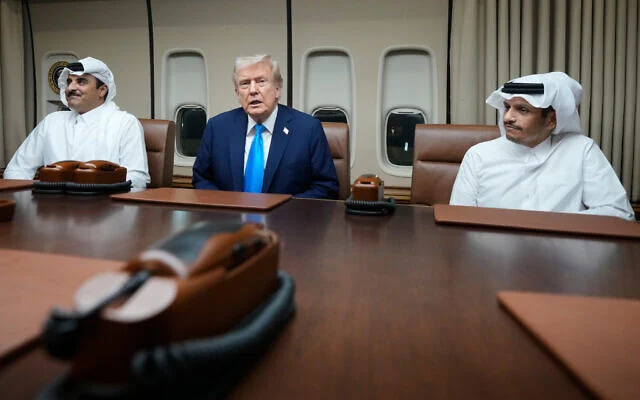
Qatar also hosts a US military base and has repeatedly drawn Trump’s praise. It has acted as a mediator in the Israel-Hamas war, as well as in the US-Israeli war with Iran.
According to the report, economic ties between the two countries grew closer in 2018, after the US pullout from the Iran deal — at Israel’s urging — caused the agreement to collapse. A year earlier, a group of Arab states, including some of Qatar’s neighbors in the Gulf, had severed relations with it due to its support for Islamist groups.
In 2020, Iranian state media reported on warming relations between the two countries, including a visit by the emir of Qatar to Tehran. Iranian officials have also visited Qatar. During the 2020 visit, according to Iran’s IRNA news agency, then-supreme leader ayatollah Ali Khamenei called for their economic ties to grow closer.
Kan, citing the foreign intelligence report, said that trade between Qatar and Iran grew beginning in 2018, particularly in terms of energy, which Iran began to supply to Qatar.
Qatar has also supplied Iran with weapons material, according to the report, including so-called dual-use items that can be used for civilian or military purposes. These include hydrogen and other materials that can be used for rocket and drone fuel as well as aluminum and engine parts to be used in the manufacture of drones.
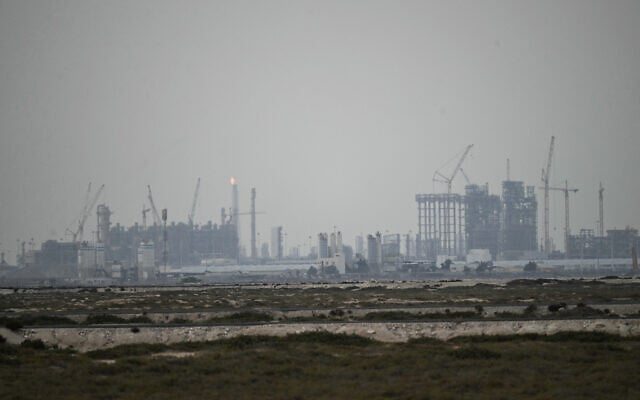
During this year’s Iran war, Tehran attacked Israel and countries throughout the region with missiles and drones. Multiple Iranian strikes hit Qatar, including an attack on its major Ras Laffan natural gas facility in March.
In 2024, according to the report, the governors of the two countries’ banks reached an agreement to unfreeze Iranian funds held in Qatar, though the United States, then under the Biden administration, blocked the agreement from taking effect.
Kan said that Iran is due to receive that money under the agreement now being negotiated between the US and Iran.