World
As ties sour, Poland to build new memorial for victims of WWII massacres by Ukrainians

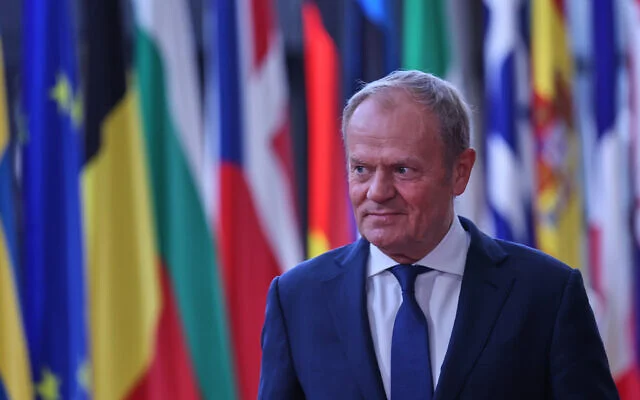
WARSAW, Poland — Poland’s Prime Minister Donald Tusk on Saturday announced the creation of a new monument to civilian victims of what he called a “genocide” by “Ukrainian nationalists” in World War II.
Warsaw and Kyiv have been at loggerheads for decades over the massacre of civilians on both sides during World War II, souring relations.
But the dispute has taken on more significance given Poland’s support for its neighbor as Ukraine fights off an invasion by Russia.
“A Wall of Remembrance will be erected in Warsaw, with an eternal flame and the names of every victim who has been found and identified,” Tusk said in a video on social media.
“The republic will not forget any of them.”
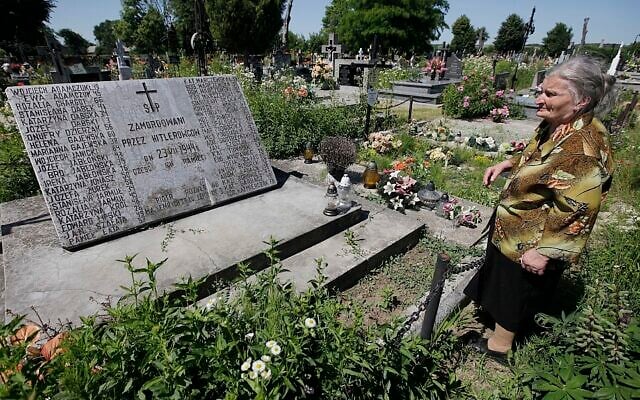
Tusk’s announcement came on the eve of the anniversary of “Bloody Sunday” in 1943, when units from the Ukrainian Insurgent Army (UPA) and the Organization of Ukrainian Nationalists (OUN) killed thousands of Poles in Volhynia, now in northwest Ukraine.
According to Poland, between 70,000 and 100,000 civilians were killed between 1943 and 1945, while reprisals are thought to have claimed the lives of up to 12,000 Ukrainians.
The UPA and the OUN are seen in Ukraine as groups that fought for independence against the Red Army and the Soviet Union.
Ukraine’s President Volodymyr Zelensky caused outrage in Poland in May by announcing that he was naming a military unit after the UPA.
In retaliation, Polish President Karol Nawrocki stripped Zelensky of the country’s highest honour, the Order of the White Eagle.
Heal wounds
Tusk, a former president of the European Council and a staunch backer of Ukraine against Russia, said “memory and truth must help us build a better future, without hatred and without contempt.”
“The Europe of peace and mutual respect, the Europe reconciled after World War II, was made possible thanks to truth and to calling things by their name.
“Whoever wants to join this community must be ready for this truth.”
In Olyka, northwest Ukraine, Poland’s Defense Minister Wladyslaw Kosiniak-Kamysz told a commemorative ceremony that Warsaw and Kyiv needed to “move forward together” to “build a better future by accepting responsibility for the past.”
“Friendship means telling each other the truth, even the difficult truth,” he said, adding that he was “not here to reopen old wounds but to heal them.”
In Warsaw, Ukraine’s Ambassador to Poland Vasyl Bodnar, laid a wreath in memory of “all victims of the Second World War, whether Polish or Ukrainian.”
He called for “reconciliation” between the two countries, which he said was essential to confronting “the Russian threat.”
Ceremonies were also held in the southeastern Polish border town of Chelm — a key rail link to Kyiv — at the site of a planned museum to those who died at Volhynia.
The town’s mayor, Jakub Banaszek, said the commemorations were “not directed against today’s Ukraine or its citizens” nor to cause division and hostility.
“They are an expression of remembrance for the victims of historical events,” he added.