World
As settlers rampage, IDF soldiers accused of aiding violence, theft against Palestinians

One bright morning in October, a dozen soldiers riding in several military jeeps rolled up to the Issa family home in the northern West Bank village of Sanur.
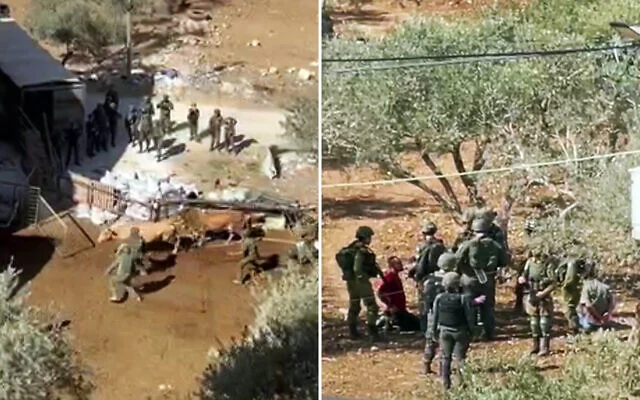
The troops hopped out of the vehicles and grabbed Tayir Issa and his son Jamal without explanation, handcuffing and blindfolding them. Soldiers proceeded to kick and shove Issa and his son onto the ground, pushing their heads into the dirt as they showered the pair with insults and epithets.
Meanwhile, other soldiers arrived in a large civilian cargo truck.
In extraordinary scenes captured on camera by an individual who filmed the incident, the soldiers, in full combat gear, can be seen wrangling the family’s cattle into the truck via a makeshift ramp rigged up by the uniformed Israel Defense Forces troops.
Despite Tayir and Jamal’s repeated requests to speak with a senior officer or see a legal warrant for the seizure of the 14 cows, no such documentation was produced.
Instead, the cattle were driven away by the soldiers.
The family has yet to recover their livestock, their primary source of income, and in all likelihood, they never will.
The cows were taken, the army eventually admitted, in response to a request from two radical settler activists who run illegal farming outposts in the Jordan Valley and had falsely claimed to own the animals.
It was one of numerous instances of IDF soldiers assisting settlers in seizing Palestinian livestock or showing a willingness to work with Israeli extremists carrying out even worse crimes.
Across the West Bank, observers say, extreme, and often violent, settler activism is now taking place with the protection, cooperation and sometimes active participation of IDF soldiers of different types.
Increasingly, the IDF is cooperating with the extremists who set up illegal farming outposts and stations soldiers in those outposts, who are deployed in situations of violence — or “friction” as the army euphemistically calls it — that at least one outpost leader has described as a deliberate tool for displacing Palestinian communities.
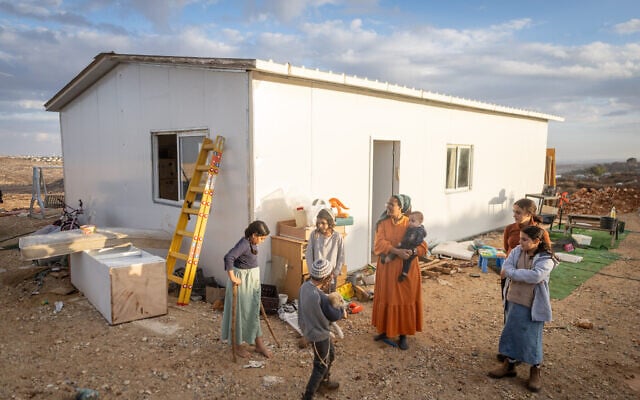
This has generated a situation in which IDF soldiers are intimately involved in daily occurrences of extremist settler harassment, and frequently either turn a blind eye to such incidents or intervene on behalf of the settlers.
In the most troubling situations, some IDF soldiers participate in the violence itself, especially those mobilized in regional defense, or Hagmar, units, made up of reservist settlers who are tasked with operating in areas near their homes.
In a number of cases, the soldiers have themselves been extremist settler activists, who have used their army-issued rifles to fire on Palestinians.
In a written statement, the IDF said it “strongly condemns incidents of violence and crime and is responsible for maintaining security and public order in Judea and Samaria and the Jordan Valley,” referring to the West Bank.
“Its role is to protect all populations in Judea and Samaria, and the Jordan Valley, while implementing the decisions of the political leadership, all in accordance with the law, international law, and military orders,” the statement added. “All IDF service members, both regular and reserve, are fully committed to this.”
Cases of violence and theft were described as “irregular incidents” that were “thoroughly investigated and handled in accordance with the findings.”
Critics say, though, that while the army regularly probes allegations of wrongdoing, investigations rarely result in prosecutions or convictions.
In the Issa family case, because the theft was caught on tape, legal proceedings were able to expose the IDF’s role in the act, though justice has yet to be served.
Following a petition to the High Court of Justice in November 2025 by the Association of Civil Rights in Israel, the army admitted in a formal submission to the court in December that the officer who ordered soldiers to seize the cattle had done so “without authority” and that the seizure had therefore been “unlawful.”
Video footage of IDF soldiers unlawfully removing cattle from the Issa family farm in the West Bank Palestinian village of Sanur, October 10, 2025. (Courtesy)
The IDF claimed that the cattle had been taken “in the sincere belief” that the settlers owned the livestock, and said that since it was a case of theft, the claim should be handled by the police and not the army.
Since the IDF does not have the authority to investigate property claims, the army told the court, it could not fulfill the demands of the petitioners to return the livestock to the Issa family, passing the case to the police.
The police have yet to recover the cows for the Issa family.
The army added that it was still examining the claims of violence made by the Issa father and son.
The harassment of rural Palestinian communities
The explicit goal of the settler extremists who establish illegal outposts and engage in violence against rural Palestinians is to push them off the land they own, or otherwise control or use, as part of their broader project to assert Jewish control over the entire West Bank.
The Palestinian Bedouin have become a specific target for forcible population transfer efforts because they graze their livestock across large tracts of land in the West Bank and their communities stand in the way of a rapidly expanding network of Israeli settlements and illegal outposts.
The Bedouin are also especially vulnerable because many of their hamlets and homes lack any kind of building permit or zoning plan as required by the Israeli authorities who administer Area C of the West Bank, and are therefore illegal.
This makes it far easier for extremist activists to harass and terrorize them, and, once they flee, prevent them from returning.
Over the last three years, IDF forces have been repeatedly documented as either turning a blind eye to the harassment and violence by settler extremists against such communities or actively assisting them.
Under the Geneva Conventions and other international treaties, the IDF, as the occupying authority, is obligated to protect the local population, including preserving public order and preventing the destruction of their property. Forcing local populations off their land is also prohibited except as a temporary security measure.
Ras ‘Ein al-’Auja was a Bedouin community in the southern Jordan valley, but incessant harassment and violence by extremists who built illegal outposts close to the hamlet ultimately led to its total depopulation in January this year.
In one notorious incident in March 2025, dozens of settlers entered the hamlet and stole some 1,500 sheep and goats from the community, one of the largest such thefts of livestock to date.
Footage from Looking the Occupation in the Eye, a left-wing organization that publishes evidence of settler violence against Palestinians, showed a man in IDF fatigues and an IDF-issued assault rifle present in the village at the time, as well as activists asking military personnel in an IDF armored vehicle for help in stopping the theft, to no avail.
protective presence activists encounter an unprecedented event in a Palestinian shepherd community? They bravely film and talk to everyone they can to achieve justice. They couldn’t stop the settlers from stealing 1,000 sheep – but they documented it. pic.twitter.com/qcXlXMxYt4
— מסתכלים לכיבוש בעיניים (@Mistaclim) March 11, 2025
Ras ‘Ein al-’Auja had been the last Bedouin community remaining in the southern Jordan Valley.
According to the B’Tselem human rights organization, 59 Palestinian communities, home to over 4,000 people, have been displaced since that date due to settler violence and harassment in Areas C and B of the West Bank. Another 500-odd Palestinians have been forced out of their homes in 16 partially displaced West Bank communities.
The kind of harassment and theft witnessed in Ras ‘Ein al-’Auja has been repeated across the West Bank, either with the same indifference shown by the IDF soldiers in the mass livestock theft incident, or with their active participation and assistance.
In another incident of livestock theft by settlers seemingly abetted by the army, IDF soldiers were caught on security camera footage accompanying settlers as they made off with 150 head of sheep from the hamlet of Khirbet al-Halawa in the southern West Bank one night in January this year.
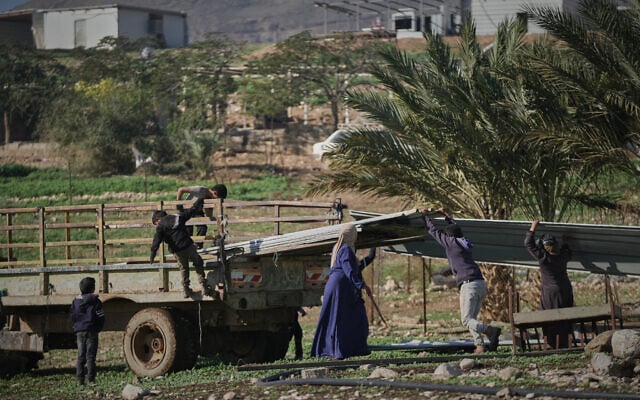
The IDF claimed in response that the troops had been alerted to the theft of livestock from a Jewish shepherd by Palestinians. But as previously admitted by the IDF itself in the Issa family case, police actions such as property recovery are not within the military’s authority, especially without a lawful order, which was not presented in the Khirbet al-Halawa incident.
In a response to this article, the IDF said that incidents in which IDF soldiers “exceeded their authority” have been examined and “steps taken to prevent similar incidents in the future.” It also claimed that in some incidents of IDF involvement in the seizure of livestock, the actions were “carried out by the police in accordance with the law and with an IDF escort,” but did not say which incidents it was referring to.
Doron Meinrath, a longtime activist with Looking the Occupation in the Eye and a member of a so-called “protective presence” squad in the Jordan Valley for several years, said he has repeatedly seen IDF forces participating in the harassment of rural Palestinian communities.
Protective presence units formed by various left-wing groups are active across the West Bank in trying to shield Palestinians from Israeli abuse.
In one incident Meinrath said he observed in June 2024, also in Ras ‘Ein al-’Auja, IDF and police forces raided the village following an accusation from Zohar Sabah — an extremist under indictment for assault against Israeli human rights activists and under sanction by the UK and other nations — that herders in Ras ‘Ein al-’Auja had stolen his sheep.
Police and IDF forces initially ransacked sheep pens and confiscated livestock based on Sabah’s claims, Meinrath said. The next day, an IDF officer and three soldiers returned with Sabah to conduct further searches. A short time later, they fired several rounds of tear gas at the hamlet without any apparent reason, according to video Meinrath filmed.
IDF soldiers fire tear gas towards the West Bank Palestinian village of Ras al-Ein Auja, June 22, 2024 (Courtesy Looking the Occupation in the Eye)
Soldiers, soldiers, everywhere
The apparent increase in cooperation of IDF soldiers in incidents of settler harassment and violence against Palestinians appears to be partly a function of the increasing diversity of the type of IDF forces present in the West Bank.
In a recent report on violence committed by IDF soldiers, the Yesh Din human rights organization noted that it is often difficult, if not impossible, to distinguish between a regional defense unit soldier, a member of an emergency response team, and a settler who independently decided to put on a uniform, and to know when the individual is on active duty or not.
Emergency response teams are composed of civilians who have volunteered to help guard the settlement where they live, and whose operations are authorized under a classified military order. Until October 2023, they were not permitted to wear military uniforms, but that restriction was lifted in the wake of the October 7 Hamas-led attack. Their mandate for operations is not known since it is regulated by the classified military order, but they do appear to operate at times beyond the boundaries of the settlements they are supposed to defend.
Some settlers are members of both an emergency response team and a Hagmar regional defense unit, causing even greater confusion as to their powers and authorities.
“Israel consistently, and as a matter of policy, enables the deliberate blurring of lines between settlers and military forces and promotes violent actions against Palestinian civilians in the West Bank by militias working in the service of settlement interest,” Yesh Din alleged in a recent report.
According to Meinrath, the soldiers, of all types, are not neutral referees when confrontations erupt between extremists and Palestinians, but display a clear preference for the settlers, prejudicing their response regardless of who initiated the violence or the surrounding context.
“There is no doubt that these soldiers feel more comfortable with the settlers than with human rights activists or Palestinians,” Meinrath told The Times of Israel. “They chat with them, have coffee with them, soldiers will visit the farming outposts and ride on the settler’s donkey.”
He noted that when soldiers are newly deployed to the area, they are often briefed by security coordinators from nearby settlements, who shape their understanding of local conditions. The coordinators operate under military authorization to secure settlements against threats and are armed by the IDF.
“The IDF soldiers come [to a sector], they are there for a few months, they don’t know the area, and they go and speak to the local security coordinator because he knows the sector better than them,” said Meinrath.
הטרור היהודי בשטחים הוא לא נערי גבעות סוררים. הוא נעשה בשיתוף פעולה עם הצבא.
צפו בסרטון הזה בו נערי גבעות מציתים רכב בכפר הפלסטיני דיר דבוואן כשחיילי צה”ל עומדים יחד איתם ולא עושים דבר. אם הפלסטיני היה יוצא להגן על רכושו, מה נראה לכם החיילים היו עושים?pic.twitter.com/9jcBNU95M3
— דוב מורל???? (@DovMorell) March 28, 2026
Often when activists call the IDF to report violence or harassment by settlers, a local security coordinator will turn up first, and then tell the local IDF force himself that everything is in order, despite the violence, Meinrath claimed.
On other occasions, the IDF unit dispatched to the area will either fail to stop the violence, fail to detain the settlers, or detain the Palestinians, even when the settlers initiated a confrontation inside a Palestinian dwelling.
Military harassment of rural Palestinian communities
As well as facing army-abetted settler violence, Palestinian herders and farmers in Area C have been detained or otherwise harassed by IDF forces following claims made against them by settlers and illegal outpost residents, similar to the Issa family incident.
Iris Gur, 61, has been volunteering with the left-wing Combatants for Peace organization in the West Bank for the last eight years, in particular in the northern Jordan Valley area.
She described one incident in March in which Ahmad Abu Muhsin, a Palestinian Bedouin shepherd from the hamlet of al-Farisiyah, was detained by IDF soldiers on private Palestinian land he rents, while a settler from a nearby illegal outpost was able to continue grazing his flocks on the same plot.
The IDF declined to respond on the record as to why Abu Muhsin was detained.
Gur said Abu Muhsin has been repeatedly harassed by local settler extremists with the cooperation of the IDF due to the location of al-Farisiyah, which she said the settlers are trying to depopulate.
The army in May confiscated vehicles belonging to Abu Muhsin, claiming they were used inside IDF firing zones, but it has failed to enforce the prohibition against settler activists setting up outposts and carrying out grazing activities within the same zones, according to a High Court petition filed by the Association for Civil Rights in Israel on behalf of Abu Muhsin and other residents.
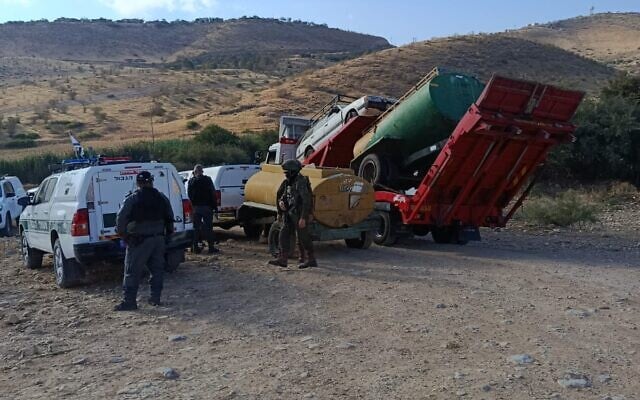
In response to the petitions, the IDF said that the asset seizures had been conducted against property unlawfully used within firing zone 901, and that the assets could be recovered if the owners paid NIS 26,000 ($8,900) in seizure expenses. The army did not address the claims of discriminatory enforcement of the firing zone restrictions.
The IDF also frequently uses closed military zone orders — ad hoc closures imposed over entire Palestinian villages — that activists say stymie their efforts to protect Palestinians from settlers, apparently in violation of a recent High Court decision.
According to rights groups, closed military zone orders often facilitate settler violence, since the IDF will frequently detain civil rights activists defying the order and trying to assist the Palestinian locals, while failing to detain settlers who are also ignoring the order.
Gur said she noticed the practice became commonplace during the 2024 olive harvest season, when she said IDF soldiers came to stop Palestinian olive growers and Israeli volunteers from harvesting the fruit “the minute we came there.”
Before the war that broke out following the October 7, 2023, Hamas invasion and massacre, activists only needed to perform their protective presence operations for shepherds going to pasture their flocks out in the open, Gur said. Since the war, volunteers were also being called to protect Palestinian homes as well.
“After October 7, the level of violence by soldiers and settlers became extreme very quickly. Since then, the free hand which the soldiers and settlers received has turned the violence into a daily event, day and night, extreme violence not only against the Palestinians but also against Israeli and international activists,” said Gur.
The IDF said in response that the army uses closed military zone orders “in accordance with the law and High Court decisions, and only in situations where there is a concrete concern over regional security or of a disturbance to the public order,” and said that any claims that such orders are used for other purposes “are without foundation.”
The IDF also said that olive harvesting in the West Bank was carried out without restrictions “in 95% of the territory.” It added that in situations where the olive grower is close to Israeli settlements the harvest must be coordinated “for the sake of the security of the parties,” and said there were similar arrangements for the plowing season.
Military – settler outpost symbiosis
According to Yehudah Shaul, co-director of the OFEK organization, which researches Israeli policy in the West Bank, in recent years the IDF has devoted greater resources to protecting settlers and settlement outposts.
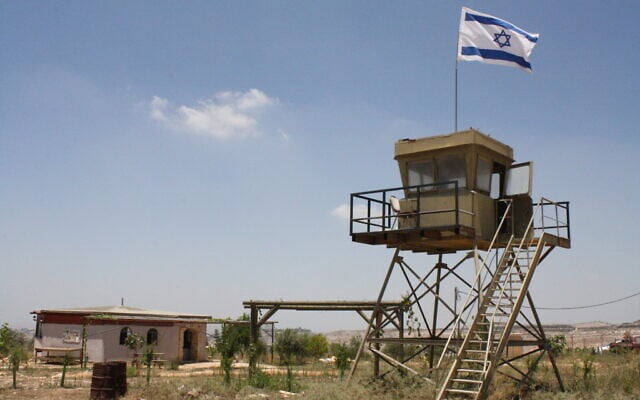
While there is no hard data, government funding allocations in recent years, including for security equipment, show a marked uptick in support for both settlements and illegal outposts.
Shaul noted that many illegal settlement outposts have IDF soldiers assigned to guard them, often from the regional defense units staffed by local settlers established after October 7. The residents of many outposts have a direct line of communication with the local IDF unit in the sector to enable their defense, he said.
In many cases, the soldiers of the regional defense units are themselves residents of illegal farming outposts, or from nearby settlements.
And the outposts are very often forward posts for the extremists inhabiting them, to attack Palestinian communities.
In one incident caught on camera in October 2025, Ariel Dahari, a resident of the illegal outpost of Oz Yair in the central West Bank, bludgeoned 52-year-old Afaf Abu ‘Olia around the head with a club as she was harvesting olives on land outside Turmus Ayya where she lives.
Abu ‘Olia was knocked unconscious and sustained a severe head injury as a result of the attack, and was hospitalized for a week. Dahari was indicted on terror charges over the attack.
Shaul pointed to a recent report detailing comments by the head of IDF Central Command Maj. Gen. Avi Bluth, in which he criticized the establishment of wildcat farming outposts set up without the coordination of the military or state authorities, indicating that other farming outposts that are illegal under Israeli law are nevertheless being established in the West Bank in coordination with the IDF and local government.
All settlements require cabinet authorization, and any settlement, outpost, or farm that never received such authorization is illegal under Israeli law.
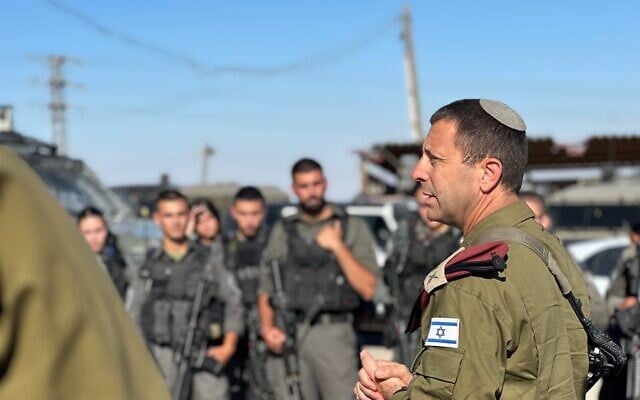
But an investigation published by the Kan public broadcaster in December cited a lieutenant colonel who had served in the IDF’s Central Command for years who alleged that the army began cooperating with the establishment of illegal farming outposts once Bluth was appointed commander in July 2024.
“Starting in July 2024, an organized mechanism began to be built for establishing farm outposts in coordination with Central Command. There are actual orders authorizing settlement on the ground — a structured, orderly process,” the officer, who spoke on condition of anonymity, told Kan.
The IDF Spokesperson’s Department, in response, did not deny the allegation, but said that Bluth “acts in accordance with the law, and according to the authorities laid out in his position, and every decision regarding the evacuation or approval of settlements is done in accordance with regulations, in cooperation with the political echelon or with its approval.”
The IDF and the Civil Administration of the Defense Ministry do remove some of the wildcat outposts that are established without coordination with local municipal authorities in the West Bank and other state agencies. But of the 185 illegal outposts established in the last three and a half years, the left-wing Peace Now organization estimates that fully 160 have been established with the cooperation of state or local authorities, and have therefore not been targeted for demolition.
As well as apparently assisting in the establishment of coordinated outposts, the IDF Central Command, together with the Defense Ministry, also coordinates with settlement municipal authorities to determine which illegal farming outposts are eligible for government-issued security and infrastructure equipment, such as all-terrain vehicles (ATVs), floodlights, night vision goggles, drones, communications equipment, camera posts, water tanks and generators.
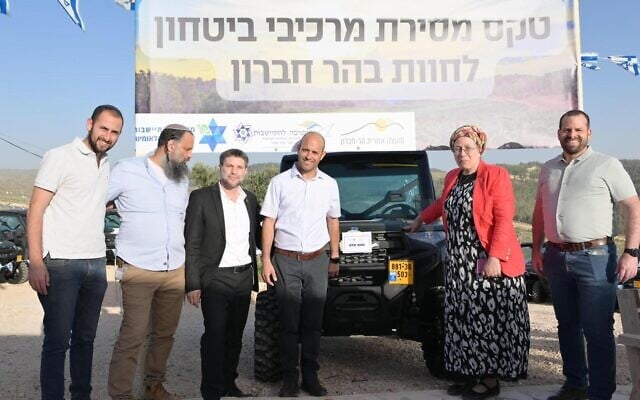
A letter issued by the legal adviser to the Settlements and National Missions Ministry in November 2024 confirmed that IDF Central Command approves which illegal outposts can get security equipment.
Tens of millions of shekels’ worth of such equipment has been distributed by the Settlements and National Missions Ministry to the outposts under the current government.
Finance Minister Bezalel Smotrich, who has spearheaded the government’s massive expansion of West Bank settlements, praised farming outposts for “grabbing massive territories” in the region at one event where the equipment was distributed, and at another such event said the equipment was being awarded to help the outpost managers and residents “deepen our hold on the Land of Israel.”
“The heroic and pioneering settlers who live here are doing Zionism, and they need security, they need security components, and they are not second-class citizens. We are here to build with them and to settle the land,” he said.
One incident in March this year demonstrated explicitly how this close coordination between the IDF, the government, and the settlers has affected rural Palestinians.
Video footage of the incident in the northern Jordan Valley showed a settler armed with a handgun threatening local Palestinian herders, and pointing his pistol directly at them.
לא הכרתי את הסרטון הזה האמת (זה מה שקורה בזמנים של אינפלציה), אז שתי הערות:
1. תגדילו את התמונה ותראו מי קנה את הריינג’ר שהוא הגיע איתו למקום.
2. התצ”א מראה איפה הארוע הזה מתרחש. הכל כמובן אדמות פרטיות טאבו של פלסטינים. הכי סביר שהמחבלון הצעיר הגיע ממאחז הטרור “שירת העשבים”. https://t.co/gkjPCCbG5W pic.twitter.com/7QoZJZnDkA— Dror Etkes (@dror_etkes) March 18, 2026
The video showed that the ATV he owned still bore a sign declaring it to be a gift from the Settlements Ministry, which the settler was apparently awarded in recent months. Dror Etkes, an anti-settlement activist who monitors the movement, said it was likely the settler came from the nearby illegal farming outpost of Shirat Asavim.
“One might think that the IDF in the West Bank is there to fight terrorism, but actually they are there to protect settlers and facilitate land grabs; this is part of the mission of the IDF,” alleged OFEK’s Shaul.
The Yesha Council, an umbrella organization representing settlement municipal councils in the West Bank, said in response that residents of agricultural and other outposts, as well as established settlements, were all “law-abiding citizens” who face terror attacks on a daily basis, including firebombs, rock-throwing, arson and agricultural theft.
“Most are terrorist attacks sponsored by the Palestinian Authority and Iran,” a spokesperson said. “Despite these relentless terror attacks, the Yesha Council’s position has been and remains clear: Responsibility for fighting terrorism and enforcing the law rests solely with the state and the security forces.”
Yesha did not respond to The Times of Israel’s questions as to whether it condemns settler violence, and whether it will act to prevent it, especially in light of the fact that the municipal councils it represents actively participate in the establishment of illegal outposts from which much of the settler violence emanates.
Initiating friction
Since they were first established in the years following Israel’s capture of the West Bank in the 1967 Six Day War, settlements and settlers have been the target of Palestinian terrorism, including deadly infiltrations of homes and random shootings or stonings of Israeli cars on West Bank highways.
The ongoing terror threat has served not only as a rationale for expanding settlements and illegal outposts but has created a condition in which any confrontation with Palestinians brings in an IDF response, resulting at times in Palestinians being subject to violence from both settlers and soldiers who wind up abetting their illicit activity.
“On the hilltops we say the first thing is to distance the contact line of the enemy,” Elisha Yered, a key outposts organizer, told the Hebrew-language Al Hamashmaut podcast in March. “This is a perimeter that is always going forward, otherwise it’s no use.”
“The [livestock] herds are the tip of the spear,” he continued, in reference to the acquisition by the farming outposts of sheep and goats in order to take them out to pasture over large tracts of land as a means of asserting control and expanding the line of contact.
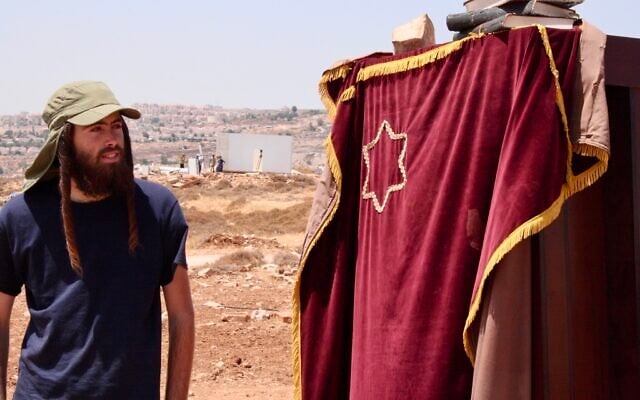
He explained that “instead of me going home every night and calling an emergency meeting and discussing [the Palestinians’] progress and their attempted terror attacks, they are going home every night and holding an emergency meeting about what to do about the settlers who are advancing and trying to conquer the mountain they are on at the moment.”
The outposts’ greatest period of growth has coincided with a period in which Palestinian attacks on Israelis in the West Bank have been at a low ebb, in stark contrast to settler attacks on Palestinians, which have risen sharply in recent years.
In 2025, the army recorded 1,015 stone-throwing and Molotov cocktail attacks by Palestinians, compared to 1,230 the year prior and 3,256 in 2023. In 2021, 8,633 such attacks were reported. Other types of incidents are similarly down.
According to Yered, settlers establishing and operating outposts deliberately initiate harassment and violence as a way to keep pushing out the local Palestinians from the area.
“We are unambiguously initiating friction; we are also proud of it,” declared Yered.
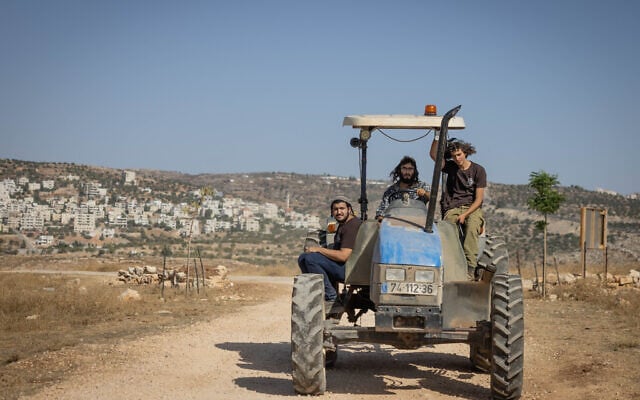
When the military responds to such incidents, critics say they are most likely to end up abetting the settlers, furthering the extremists’ agenda.
“If Yered’s agenda is to go to [the Palestinian town of] Deir Dibwan, for example, and create friction and then have the army protect him, and if the IDF’s mission is indeed to protect these gangs, then the IDF in practice is de facto facilitating the [extremist settlers’] mission,” charged Shaul.
A clear example of this dynamic took place in February in the Palestinian village of Mukhmas.
In an incident caught on security camera footage, settler extremists from nearby outposts, allegedly including Yered himself, entered the outskirts of Mukhmas, broke into sheep pens, let out some 350 sheep, and led them off toward the outposts. Among the settlers was the security coordinator of a nearby illegal settlement outpost who was armed with a rifle, according to reports and witnesses to the attack.
When local Palestinian men hurried to the site and tried to stop the theft, a violent confrontation broke out between the two sides.
IDF soldiers arriving at the scene dispersed the Palestinians by firing tear gas and pushing the villagers away from the area of the sheep pens, witnesses said.
Video footage of the incident published by the Haaretz news site shows the settlers and the soldiers calmly interacting during the incident, with settlers at one stage apparently directing the soldiers to the direction of the Mukhmas villagers who were trying to recover their sheep.
תיעוד: פלסטינים זורקים אבנים לפני הירי אתמול בשטחי מרעה ליד רמאללה שממנו נהרג נסראללה אבו סיאם, תושב הכפר מוחמאס. בצה״ל עורכים תחקיר של מפקד החטיבה ומפקד אוגדת איו״ש לגבי זהות היורה – חייל הגנה מרחבית או מתנחל@HGoldich pic.twitter.com/Ryxz7iLmE2
— כאן חדשות (@kann_news) February 19, 2026
Mukhmas resident Nasrallah Abu Siam, 19, was killed and three villagers were injured during the incident, apparently from shots fired by settlers when the village residents tried to prevent the theft of the sheep.
Aed Abu Ali, whose family owned some of the sheep pens where thefts took place, alleged that he was beaten by the soldiers, who helped steal the sheep.
The IDF did not comment on the allegations when asked by The Times of Israel. A joint IDF and police investigation remains ongoing.
Settlers in uniform
The most serious violence carried out by IDF soldiers against Palestinian civilians has been committed by the Hagmar regional defense units.
These units were historically created to defend Israeli border communities, and comprised residents of those communities.
Following the October 7, 2023, Hamas attack, most soldiers previously deployed to the West Bank were diverted to Gaza and the northern border. To take their place, the army recruited settlers to serve as reservists in regional defense units, authorizing them to operate in and around the settlements where they lived and providing them with uniforms, equipment, vehicles, and assault rifles. The total size of the network of Hagmar forces totaled some 7,000 soldiers, according to the Yesh Din organization.
The units’ operations have expanded steadily since, and their activities now include conducting patrols, setting up checkpoints, and carrying out operations inside Palestinian villages, such as searching for weapons.
Because the units are made up of local settlers, they are liable to include the same extremists responsible for setting up illegal outposts and attacking Palestinians.
Though part of the IDF’s chain of command, critics accuse the Hagmar units of acting as a rogue militia, acting on behalf of settlers but carrying the authority of IDF soldiers.
The units are often the first to arrive in response to so-called “friction” in Palestinian villages, and have allegedly provided settler attackers with armed backing.
In March, an IDF reservist apparently serving in a regional defense unit shot and killed two Palestinian residents of Qaryut in the central West Bank during an incident of what the army termed “friction,” which was set off when settlers ran a backhoe through an adjacent olive grove owned by villagers.
Local Palestinians went to the area to try and stop the backhoe and threw stones at the digger, according to an IDF statement.
According to eyewitnesses cited by B’Tselem, some 10 to 15 settlers then entered Qaryut itself, including the reservist soldier armed with an assault rifle, who Yesh Din says is thought to have been from a local regional defense unit
Some of the settlers began throwing stones at houses in the village, according to the B’Tselem investigation, and when Palestinian residents began to throw stones at the settlers, the regional defense soldier shot Muhammad Muammar, 52, in the head, and his brother Fahim Muammar, 47, in the pelvis while they were standing outside the gate to Muhammad’s house.
???? Happening now: Settler terrorists opened live fire, killing two brothers inside their home in Qaryut village near Nablus. Reports indicate the terrorists are still in the village while the IDF stands by. Iran? Lebanon? Nothing stops ethnic cleansing from moving forward. pic.twitter.com/sIw1mMGpLX
— Breaking the Silence (@BtSIsrael) March 2, 2026
Muhammad, a father of six children, and Fahim, a father of five, were both killed. A third brother was also shot by the same soldier, but survived, while a 15-year-old was shot and injured by a different settler.
The IDF has opened an investigation into the incident and confiscated the soldier’s rifle.
According to Yesh Din, of 12 Palestinians killed by settlers so far this year, seven were killed by Hagmar unit soldiers.
The units have also been frequently involved in harassment and vandalism against Palestinians.
In one incident in March 2025, settler extremists attacked the village of Jinba and severely beat and injured three villagers, following a confrontation between settlers and villagers earlier in the day.
A regional defense unit arrived in Jinba after the settler attack, arrested 22 men and boys from the village on suspicion of involvement in the earlier confrontation, handcuffed and blindfolded them, and took them to a nearby military base.
The IDF declined to comment at the time as to whether any of the settlers involved in the assault on Jinba had been arrested.
The regional defense unit returned to Jinba after midnight and ransacked a dwelling, destroying produce made by villagers such as yogurt, butter, and olive oil, vandalized an Italian-funded school, and rampaged through Jinba’s clinic, damaging infrastructure and medical facilities.
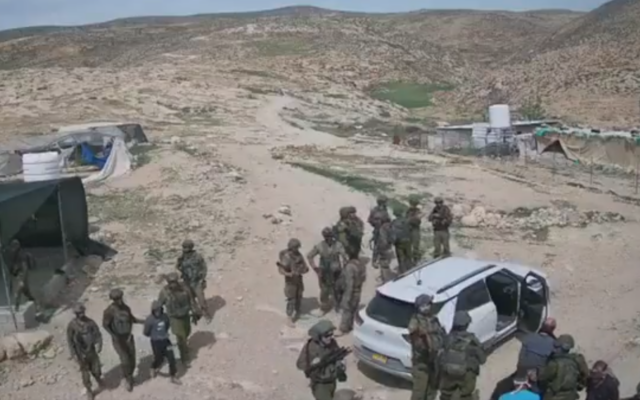
The IDF disciplined several officers and troops for vandalizing property during the incident, after an investigation into the affair.
Meinrath said he had seen Hagmar soldiers harass Palestinian farmers and prevent them from carrying out agricultural work. In other cases, he said, the regional defense troops stood by as extremists set fire to harvests or stole produce, sometimes actively shielding the settlers.
“Usually the regional defense units protect the settlers and allow them to do whatever they want,” said the activist.
For volunteer Gur, the problem is not confined to regional defense units or even just the army. Rather, she contended, the abuse being suffered by rural Palestinians is a reflection of the nation’s attitude.
“We used to say the army is the face of our society, and unfortunately, that is true today as well,” she said despondently. “Saying it is only one battalion, one division — no, no, no. This is the face of the army all over the place and this is the face of society.”
The Yesha Council requested that its entire response, which references the incidents in Mukhmas, Jinba, and Turmus Ayya, be included in full:
“The attempt to base a broad claim on three isolated incidents over a period of nearly a year and a half, incidents for which the full factual context was not even presented, does not reflect the reality in Judea and Samaria.
“The reality on the ground is that the residents of the agricultural farms, as well as those in both the new and established communities, are law-abiding citizens. Every single day, they face terror attacks. From rock-throwing, Molotov cocktails, to arson and agricultural theft. Most are terrorist attacks sponsored by the Palestinian Authority and Iran.
“Despite these relentless terror attacks, the Yesha Council’s position has been and remains clear: Responsibility for fighting terrorism and enforcing the law rests solely with the state and the security forces.
“The Yesha Council will continue to build, develop, and settle the land of our ancestors, and no attempt to present a distorted reality in Judea and Samaria will deter us from our path.”