Viral
2027: Peter Obi Reaffirms Plan to Free Nnamdi Kanu, Open Talks with Bandits If Elected President

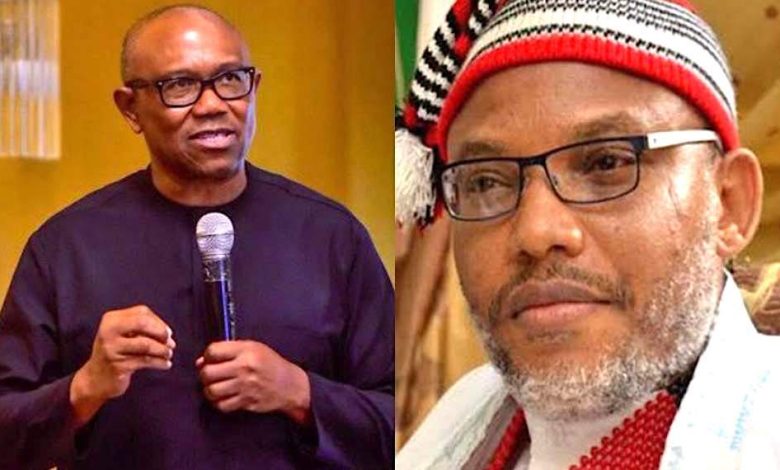
The presidential candidate of the Nigeria Democratic Congress (NDC) for the 2027 general election, Peter Obi, has reiterated his commitment to securing the release of the detained leader of the Indigenous People of Biafra (IPOB), Mazi Nnamdi Kanu, if he becomes president.
Obi also stated that his administration would be open to engaging in dialogue with armed groups and other agitators across the country as part of broader efforts to address Nigeria’s worsening security challenges.
The former Anambra State governor made the remarks during an engagement in Washington, where he spoke on his approach to governance, security, and national reconciliation.
According to him, Kanu should not remain in detention over statements made on radio broadcasts, arguing that dialogue remains a more effective tool for resolving political grievances and security-related disputes.
“I have said this repeatedly, there is no reason for detaining Mazi Nnamdi Kanu. You cannot arrest somebody just because the person is speaking on radio. I am a politician, people have been calling me names. If I am in government today, I will discuss and engage with all agitators,” Obi said.
Obi further emphasized that his leadership style would prioritize communication and negotiation as a first step toward resolving conflicts, insisting that engagement does not amount to endorsing unlawful actions.
He also extended his position to include non-state armed actors, stating that he would be willing to open discussions with bandits as part of a broader peace-building strategy if elected president.
“I will free Nnamdi Kanu as president, he has done nothing wrong. I will also negotiate with Bandits,” he stated.
Obi argued that sustainable peace in Nigeria requires inclusive dialogue with groups expressing grievances, adding that ignoring or suppressing such voices often worsens tensions.
According to him, engaging aggrieved individuals and groups could serve as a pathway to de-escalation, while stronger enforcement measures would still be applied where necessary under the rule of law.
The comments are expected to generate further political debate, particularly as discussions around national security, separatist movements, and negotiations with armed groups continue to shape public discourse ahead of the 2027 elections.