Viral
FG Moves to End Open Grazing, Plans Rehabilitation of 470 Grazing Reserves Nationwide

The Federal Government has unveiled plans to gradually phase out open grazing across Nigeria as part of a broader strategy aimed at transforming the livestock sector, improving productivity and promoting modern animal husbandry practices.
The initiative was disclosed by the Minister of Livestock Development, Idi Maiha, who said the government has identified 470 gazetted grazing reserves across the country for rehabilitation and development as designated settlements for pastoralists.
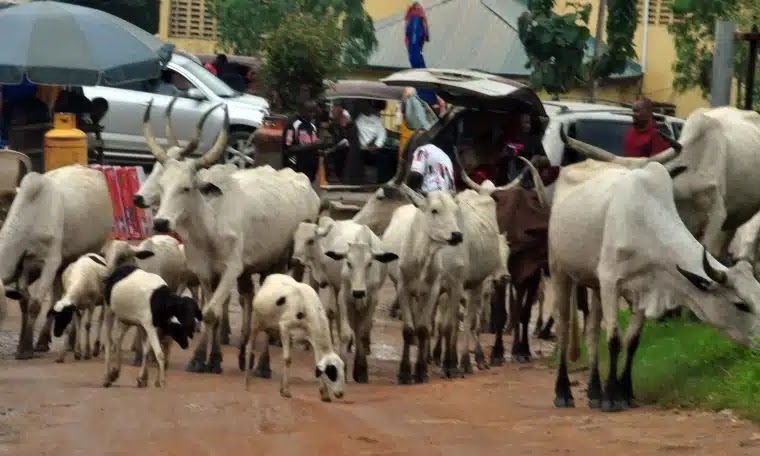
According to the minister, the programme is designed to encourage herders to adopt a more settled lifestyle, reducing the need for the long-distance movement of cattle and other livestock across highways, farmlands and urban centres.
Maiha explained that the policy forms a key component of the Federal Government’s efforts to modernise livestock production and address longstanding challenges associated with open grazing, including conflicts between farmers and herders, poor livestock productivity and inadequate disease management.
Speaking during discussions on the implementation of the National Dairy Policy Framework, the minister said relocating pastoralists to properly managed grazing reserves would create a more organized livestock system and enhance government support for the sector.
He noted that the establishment and rehabilitation of grazing reserves would enable authorities to effectively monitor livestock health, improve breeding programmes and strengthen veterinary services.
According to him, a settled livestock management system would make it easier to implement government interventions aimed at boosting milk production, improving cattle breeds and increasing the overall contribution of the livestock sector to the national economy.
“The objective is to encourage pastoralists to settle in designated areas where they can access support services and where livestock can be managed more efficiently,” he said.
Maiha added that the government intends to introduce modern technology into livestock management through the deployment of electronic identification and tracking systems for cattle.
Under the proposed arrangement, livestock would be fitted with electronic tags capable of monitoring their movement. Authorities would then be able to quickly detect animals that stray beyond approved grazing zones, helping owners locate missing livestock and reducing incidents of theft and loss.
The minister stated that open grazing is becoming increasingly unsustainable in a rapidly growing and urbanising country such as Nigeria.
He argued that the continuous movement of cattle over long distances affects animal health, reduces productivity and limits the sector’s capacity to meet the country’s growing demand for dairy and meat products.
Maiha expressed concern over Nigeria’s relatively low milk production despite possessing one of Africa’s largest livestock populations.
According to him, cows in Nigeria currently produce an average of between 1.2 and 2 litres of milk per day, a figure significantly lower than production levels recorded in several other African countries that have adopted modern livestock management systems.
The minister attributed the low productivity to factors such as poor livestock genetics, inadequate feeding practices, weak disease control mechanisms and the limited adoption of scientific breeding programmes.
He noted that although Nigeria is home to an estimated 270 million ruminants including cattle, sheep, goats and camels the country has yet to fully harness the economic potential of its livestock resources.
Maiha observed that many countries have successfully transformed their livestock industries through deliberate genetic improvement programmes, modern ranching systems and advanced veterinary care, while Nigeria continues to depend largely on traditional breeds with lower production capacity.
He emphasized that the Federal Government’s livestock reform agenda seeks to reverse this trend by introducing modern practices that will increase yields, improve food security and create new economic opportunities for millions of Nigerians involved in livestock production.
The minister expressed optimism that the rehabilitation of grazing reserves and the adoption of technology-driven livestock management would significantly improve the sector, reduce conflicts associated with open grazing and position Nigeria as a major player in Africa’s livestock and dairy industries.
The initiative comes amid renewed efforts by the Federal Government to diversify the economy, strengthen agricultural value chains and boost local production in key sectors capable of generating employment and reducing dependence on imports.