World
Xi Rolls Out Red Carpet for Putin, Yet $55 Billion Pipeline Dream Remains Unfinished

Russian President Vladimir Putin’s high-profile visit to Beijing this week was designed to send a message far beyond China and Russia. Just days after US President Donald Trump wrapped up his own China trip, Putin arrived at the Great Hall of the People to reaffirm what both Moscow and Beijing described as an “unyielding” strategic partnership. The summit featured military cooperation pledges and dozens of agreements spanning trade, AI, nuclear energy and infrastructure. Yet behind the carefully choreographed optics and declarations of friendship, one crucial deal — the long-discussed Power of Siberia 2 gas pipeline — remained unresolved, highlighting the limits of the partnership even as both countries publicly tighten ties.
Putin and Chinese President Xi Jinping signed a sweeping joint statement on “deepening good-neighborliness and friendly cooperation” and enhancing “comprehensive strategic coordination” between the two countries.
The meeting underscored how central the China-Russia relationship has become for both leaders amid rising tensions with the West. Xi described Putin as a “dear friend,” while both sides projected their partnership as a stabilising force against what they called unilateralism and Western dominance.
What Was Agreed
One of the biggest takeaways from the summit was the decision to deepen military cooperation. The joint statement included commitments to expand coordination between Russian and Chinese armed forces, further strengthening a strategic relationship that has grown significantly since Russia’s invasion of Ukraine in 2022. The two countries also signed more than 20 cooperation agreements covering sectors such as artificial intelligence, nuclear energy, trade, scientific research, technology and media exchanges.
The leaders also spoke about their shared vision of a “multipolar world order,” a phrase repeatedly used in official statements and speeches during the visit.
On global conflicts, Xi called for de-escalation in the Middle East and warned against further instability after tensions involving Iran disrupted energy markets and raised fears over the Strait of Hormuz. According to Chinese state media, Xi stressed that prolonged conflict could severely affect global supply chains and oil flows.
The Deal That Did Not Happen
Despite the long list of signed agreements, the summit failed to produce a final agreement on the Power of Siberia 2 gas pipeline, arguably the most economically important project under discussion.
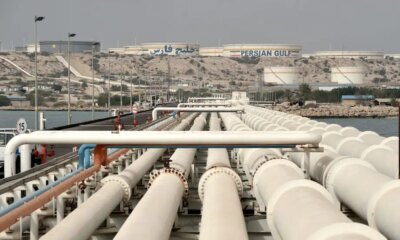
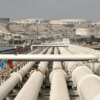
The proposed 2,600-kilometre pipeline would transport up to 50 billion cubic metres of Russian gas annually to China via Mongolia, offering Moscow a critical replacement market after Europe sharply reduced Russian energy imports following the Ukraine war.
Ahead of the summit, there were expectations that worsening instability in the Middle East and concerns over maritime energy routes could push Beijing closer to finalising the project. But that breakthrough never came.
The Kremlin said Russia and China had reached only a “general understanding” on the project’s parameters. Crucial issues, especially gas pricing, financing and timelines, remain unresolved. No final contract was signed during Putin’s visit.
Meanwhile, China continues to negotiate aggressively on pricing while also diversifying its energy imports through Central Asia and global LNG supplies, reducing urgency to lock itself into Russian terms.
For Russia, the pipeline is far more than an energy project. It is central to the Kremlin’s attempt to redirect its economy eastward after losing much of the European gas market due to sanctions and geopolitical fallout from the Ukraine war.
For China, however, the equation is different. Beijing values Russian energy and strategic alignment, but it also knows Moscow currently has fewer alternatives , giving Xi significant leverage in negotiations.
That imbalance was visible throughout the summit. While Putin arrived seeking deeper economic commitments, China largely offered symbolism, diplomatic backing and selective cooperation rather than the one major economic concession Moscow badly wanted.