World
The Kharg gamble could backfire on America

Military tensions in the Persian Gulf have once again reached a dangerously critical point. The fragile ceasefire efforts pursued since April have effectively collapsed following a series of retaliatory exchanges between the United States and Iran. The latest escalation was triggered by the downing of a US Army Apache helicopter by Iranian forces near the Strait of Hormuz. In response, US Central Command (CENTCOM) launched airstrikes against Iranian radar, communications, and air-defense facilities. Tehran quickly retaliated by striking five US military installations across Jordan, Kuwait, and Bahrain, including the headquarters of the US Fifth Fleet.
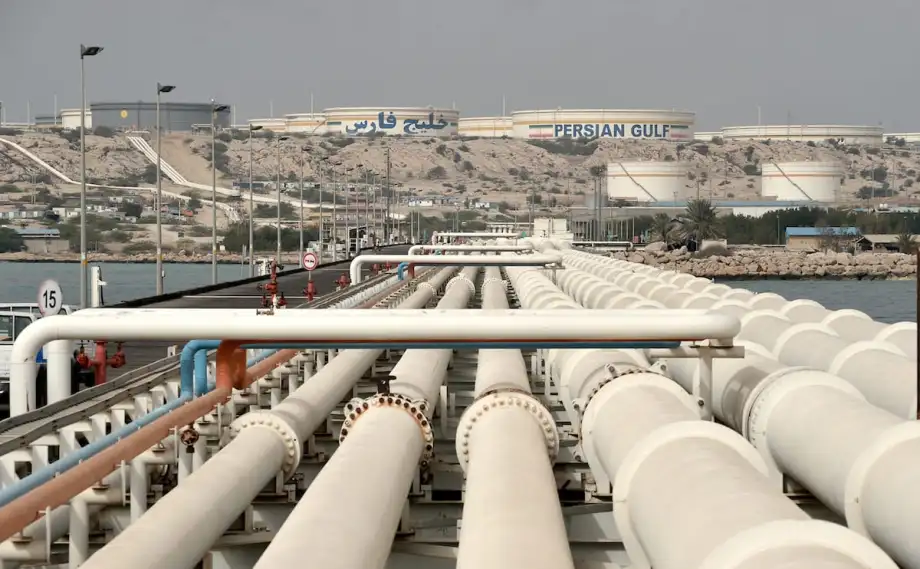
Amid this accelerating cycle of violence, President Donald Trump has raised the stakes dramatically. In a post on Truth Social, Trump declared that the US military would strike Iran with overwhelming force and seek to assume control of the country’s oil and gas industry, including the occupation of Kharg Island. He explicitly compared the proposal to Operation Absolute Resolve in Venezuela earlier this year, when Washington seized control of the country’s oil sector following the arrest of former President Nicolás Maduro.
The threat to seize Kharg Island reflects growing frustration in Washington over the failure of diplomatic efforts. Mediation initiatives led by Pakistan and Qatar have stalled, with neither side willing to moderate its demands. Backed by Defense Secretary Pete Hegseth’s rhetoric of “negotiating with bombs,” the White House appears to be constructing maximum leverage to force Tehran into concessions. Although Vice President JD Vance later suggested that the US would refrain from targeting Iran’s energy infrastructure as long as Tehran kept the Strait of Hormuz open, the option of physically occupying Kharg remains under serious consideration within the Pentagon.
READ: Israel surprised by Trump’s announcement cancelling Iran strikes, says Hebrew media
The Military Calculation
Pentagon planning for a possible seizure of Kharg Island does not envision a full-scale invasion of mainland Iran. Instead, CENTCOM has reportedly prepared options involving limited amphibious assaults and precision air operations that could be executed over several weeks. Major US combat assets are already positioned across the Gulf. Among them is the amphibious assault ship USS Tripoli, functioning as a light aircraft carrier equipped with F-35B Lightning II stealth fighters to secure local air superiority. The USS Boxer, carrying the 31st Marine Expeditionary Unit, has also been deployed alongside rapid-response elements of the US Army’s 82nd Airborne Division. These forces would likely conduct vertical envelopment operations using MV-22 Osprey tiltrotor aircraft and CH-53E Super Stallion heavy-lift helicopters.
Yet capturing Kharg is one challenge, holding it is another altogether. Military doctrine suggests that any occupying force on the island would be positioned directly inside Iran’s firing envelope.
Geography further complicates the equation. The mountainous coastline around Bushehr provides natural radar cover for Iranian forces, making it more difficult for US Navy Aegis-equipped warships to detect incoming missile launches in sufficient time. Logistics would present an equally daunting challenge. The nearest American military facilities in Kuwait, Bahrain, and Qatar are located more than 100 nautical miles away. Every resupply mission would have to navigate narrow and contested waters, forcing the US Navy to devote valuable destroyers to escort duties. Rather than becoming a strategic asset, Kharg could quickly turn into a costly liability, draining American resources in a prolonged war of attrition.
Tehran’s Asymmetric Fortress
Iran is unlikely to remain passive in the face of such a threat. Kharg Island is protected by multiple layers of security overseen by the Islamic Revolutionary Guard Corps (IRGC). On the maritime front, the IRGC Navy maintains the 112th Zolfaghar Surface Combat Brigade, equipped with missile-armed fast attack craft capable of conducting swarm tactics against larger naval formations. This asymmetric capability is reinforced by an integrated air-defense network that includes Russian-made S-300PMU-2 missile batteries designed to engage high-value targets at medium and high altitudes. These systems operate alongside Tor-M1 and Pantsyr-S1 point-defense systems, both of which are well suited for countering drones and precision-guided munitions in heavily contested electronic-warfare environments.
Clearing those mines would be an arduous task under combat conditions, particularly if American minesweeping vessels came under continuous attack from coastal cruise missiles such as the Noor system, a derivative of China’s C-802 missile, concealed within hardened positions along the Bushehr and Qeshm coastlines.
Iranian officials have also broadened their warnings beyond Kharg itself. Senior politician and parliamentarian Manouchehr Mottaki has cautioned that if US forces occupy any part of the island, Iranian special forces could launch helicopter-borne raids against American bases in Kuwait, Bahrain, and Jordan. The objective, he suggested, would be the capture of US military personnel as political hostages. In other words, Tehran appears prepared to transform a localized conflict over Kharg into a regional, multi-domain confrontation involving the wider Axis of Resistance network.
READ: Oil prices fall after Trump cancels strikes on Iran
Global Economic Shockwaves