Entertainment
Why Bellingham escaped red card despite mouth-covering controversy

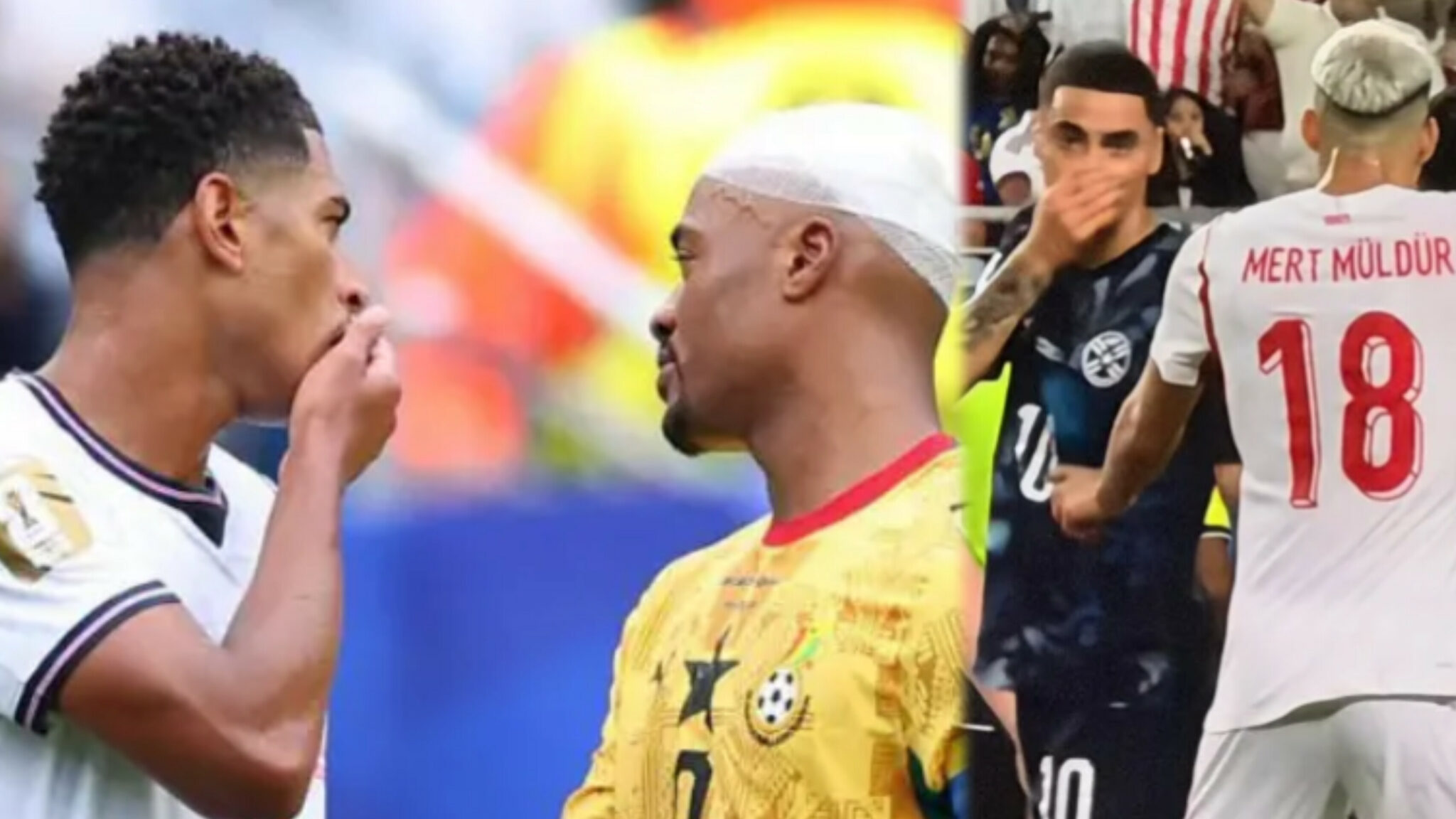
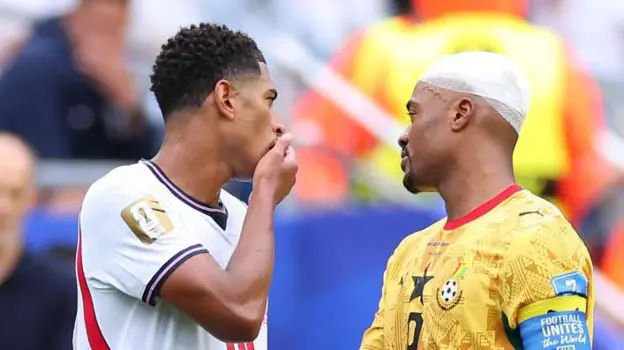
England midfielder Jude Bellingham was not sent off during his side’s World Cup draw with Ghana despite images showing him covering his mouth while speaking to Ghana captain Jordan Ayew.
The incident sparked controversy online because FIFA introduced a new rule for the 2026 World Cup that allows players to be dismissed for covering their mouths during confrontational exchanges with opponents.
However, officials determined that Bellingham’s actions did not fall under the circumstances targeted by the new regulation.
New rule targets confrontations
The law was introduced following concerns about players concealing abusive or discriminatory comments during matches.
Under the regulation, covering the mouth itself is not an offence. Instead, punishment applies when a player hides their mouth during a heated or confrontational interaction with an opponent.
FIFA’s head of referees, Pierluigi Collina, clarified before the tournament that players are still allowed to cover their mouths during normal conversations.
According to FIFA, the key factor is whether the discussion is friendly or part of an aggressive confrontation.
Why Bellingham’s case was different
During England’s goalless draw with Ghana, there was no sign of hostility between Bellingham and Ayew.
The pair appeared to be engaged in a routine conversation rather than an argument or flashpoint during the match.
As a result, neither the referee nor the video assistant referee considered the incident worthy of disciplinary action.
The situation differed significantly from the case involving Miguel Almirón, who became the first player sent off under the new rule.
First red card under new law
Almirón was dismissed during Paraguay’s match against Turkey after covering his mouth while speaking to an opponent during a heated confrontation involving multiple players.
VAR reviewed the incident and advised the referee to issue a red card.
The Paraguay midfielder later received a one-match suspension and will miss his country’s final group-stage fixture.
While FIFA has defended the rule as a measure aimed at promoting respect and transparency, questions remain over how consistently it can be enforced and whether players could potentially exploit it to influence refereeing decisions.
For now, tournament officials maintain that context remains the decisive factor, which is why Bellingham avoided punishment despite the images attracting widespread attention.