World
US sanctions five Cuban companies, Castro relative

WASHINGTON – The US government on June 23 announced sanctions against five Cuban companies affiliated with the military conglomerate GAESA, as well as against Raul Castro’s daughter-in-law.
The sanctioned entities include GAESA financial intermediaries Rafin and Banco Financiero Internacional, its logistics arm Almacenes Universales, state-owned mining company Geominera and Antillana de Acero, Cuba’s largest steel producer, the US State Department said.
“GAESA continues to operate as the financial muscle behind the Cuban regime’s repressive security apparatus,” Secretary of State Marco Rubio said in a statement.
Washington has cranked up pressure on the communist island in recent months, imposing an energy blockade that worsened its already dire economic crisis.
In recent weeks, Washington has slapped sanctions on a number of regime-linked companies and individuals, including Cuban President Miguel Diaz-Canel and members of the Castro family.
Among them was Alejandro Castro Espin, the son of Raul Castro, the surviving historic leader of the 1959 Revolution.
The new sanctions target the son’s wife Annalie Lilliam.
“The US government, led by its dishonest and mendacious Secretary of State, continues to tighten the noose around Cuba’s economy,” Foreign Minister Bruno Rodriguez wrote on X.
Castro Espin, 60, played a key role in the secret negotiations between Cuba and the United States that led to the re-establishment of diplomatic relations between the two countries in 2015.
The sanctions freeze any US-based assets and prohibit the listed entities and individuals from accessing the US financial system or doing business with US counterparts.
According to media reports, some members of Castro Espin’s extended family live in Florida.
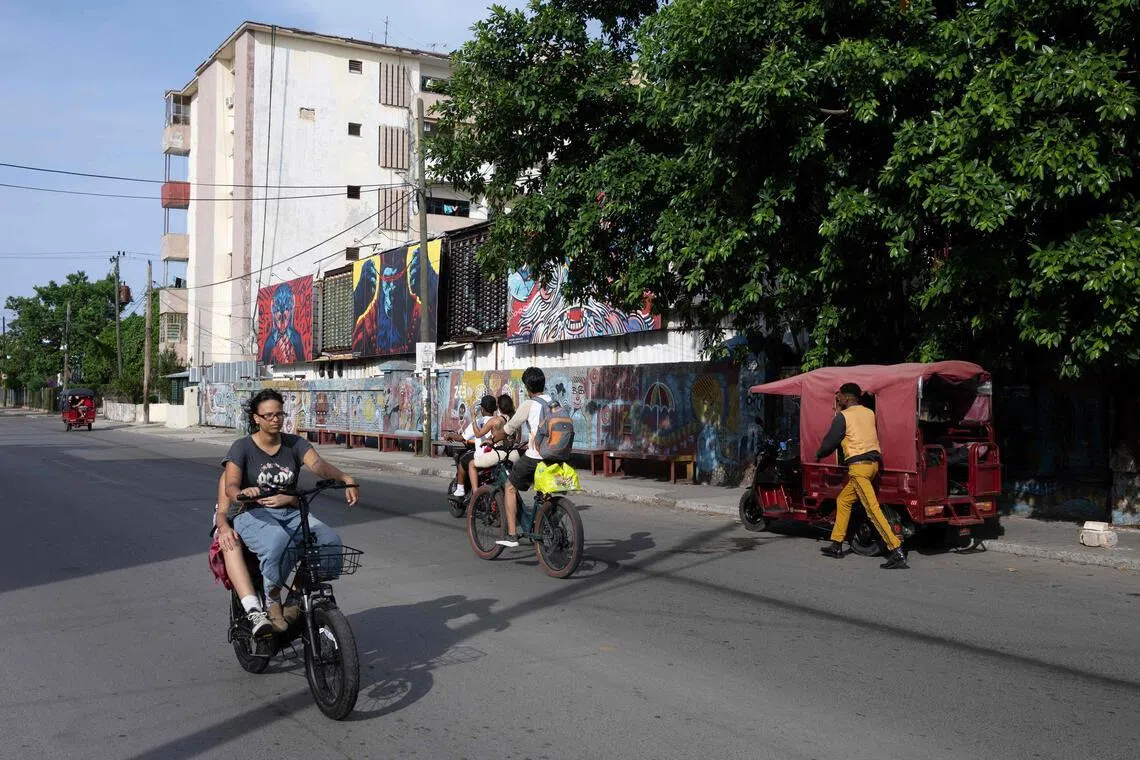
The US fuel blockade and successive waves of sanctions have piled misery on Cuba’s 9.6 million inhabitants, aggravating the worst economic crisis in recent memory.
Shortages of subsidised food in state-run stores are leaving a growing number of Cubans hungry.
Power cuts lasting more than 30 hours have become increasingly frequent, and fuel, drinking water and medicine have grown scarce.
“Never in my life did I expect to see Cubans looking for food in the trash or begging,” Carlos Dibus, a 43-year-old Norway-based logistics expert who visited family in Cuba, recently told AFP.
“It hurts,” he said. “It hurts a lot.” AFP