World
US reportedly mulls pulling troops from Saudi Arabia as ties sour over Iran war

US-Saudi relations have significantly deteriorated in recent months amid anger in Riyadh over Washington’s decision to launch a war against Iran that has caused massive blowback for the rest of the region, to the extent that the US is reportedly considering pulling troops from the Gulf kingdom.
A Middle Eastern intelligence official told The Times of Israel that relations between the two countries have substantially soured because of the war, partly confirming a Wall Street Journal report on Wednesday.
Saudi Arabia refused to allow the US to use its bases to conduct Project Freedom, which was aimed at breaking Iran’s control over the Strait of Hormuz by escorting stuck ships out of the channel.
Saudi bases and airspace were critical to the operation and Riyadh’s refusal to cooperate forced the US to abort the mission, the WSJ revealed. At the time, US President Donald Trump claimed that it was progress in talks with Iran that led him to call off Project Freedom after less than two days.
Infuriated by the Saudi decision, the White House threatened to hold back the delivery of interceptors that Riyadh had been using to shoot down Iranian missiles and drones, WSJ said, citing US and Arab officials familiar with the matter.
Riyadh subsequently relented and Project Freedom resumed covertly, but the damage wouldn’t be easily undone, US officials said.
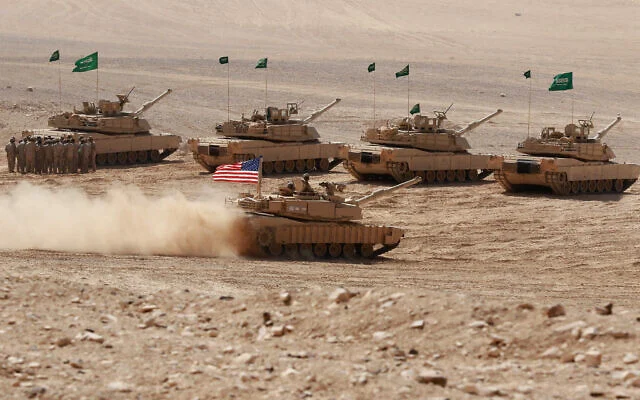
The US is now considering reducing its military presence in Saudi Arabia, US officials told the Journal.
US Secretary of State Marco Rubio visited the Gulf last week, making stops in the UAE, Kuwait and Bahrain, in what Riyadh viewed as a snub, WSJ said.
A week earlier, Saudi Crown Prince Mohammed bin Salman turned down an invitation to participate in a G7 summit in France — which was attended by Trump — in protest of Washington’s handling of the war, sources familiar with the matter told WSJ.
Saudi Arabia had lobbied Trump against launching the war, fearing that efforts to topple the Iranian regime wouldn’t work and that Tehran would respond by closing the Strait of Hormuz, destabilizing the region and damaging the global economy.
Trump went ahead with the war, anyway, exacerbating Saudi concerns that its investment in the relationship with the US president wasn’t translating into actual influence over American policy, Arab officials told the Journal.
After initial reluctance, the kingdom and other Gulf states allowed the US to use their bases for attacks against Iran, as they quickly found themselves bearing the brunt of Tehran’s retaliatory strikes.
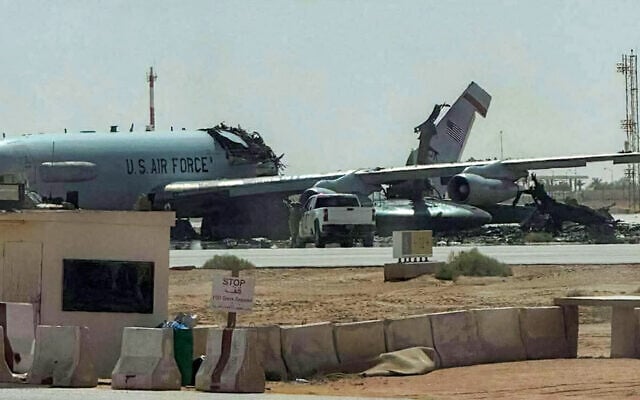
Saudi Arabia even launched a number of its own strikes against Iranian drone and missile sites, US officials and a Gulf official said.
Iran proceeded to target energy sites, including ones in Saudi Arabia, leading Riyadh to begin pushing for a diplomatic resolution to de-escalate tensions.
Saudi Arabia took particular issue with continued Emirati attacks on Iran, fearing that it put regional energy facilities at further risk.
Riyadh wanted the US to pressure the UAE to halt its attacks and join regional diplomatic efforts to end the war, WSJ reported.
Abu Dhabi’s hardline stance against Iran further exacerbated tensions with Saudi Arabia that have been bubbling for the past year. The UAE pulled out of the Saudi-led OPEC in April.
Saudi Arabia also pushed the US during the war to drop its blockade of Iranian ports, something that Trump refused to do until a deal was reached last month.
The memorandum of understanding, which has been tested by recent exchanges of fire between the sides, includes a 60-day ceasefire pausing the war that broke out with US-Israeli strikes targeting the Iranian regime in late February, as well as the reopening of the Strait of Hormuz and a timeframe for a final deal to permanently end the conflict and reach an agreement on Iran’s nuclear program.
The Wall Street Journal reported Wednesday that Trump has told aides that he believes that deadline to be moveable.
Israel had no part in negotiating the memorandum of understanding, and Prime Minister Benjamin Netanyahu has distanced himself from it. Still, the terms of the opening clause, permanently ending the war and ruling out any resumption, assert that it is binding on the US, Iran “and their allies.”
Israeli officials are bitterly opposed to the deal’s terms, which resolve none of the war’s key goals — notably, eliminating Iran’s nuclear and ballistic missile programs and creating the conditions for the collapse of the regime.