World
Venezuela earthquake victims' shelters house homeless volunteers and survivors

LA GUAIRA, Venezuela, July 1 – The command center at a disused classroom in Venezuela is a hive of activity as radios crackle to life and medical staff check in for their day’s assigned duties.
Though this organization would not be out of place at a military barracks overseen by generals, the deployment is taking place at the local ‘Republic of Panama’ school in La Guaira, the state hardest hit by twin earthquakes last week, and the commanders are aged between 20 and 27.
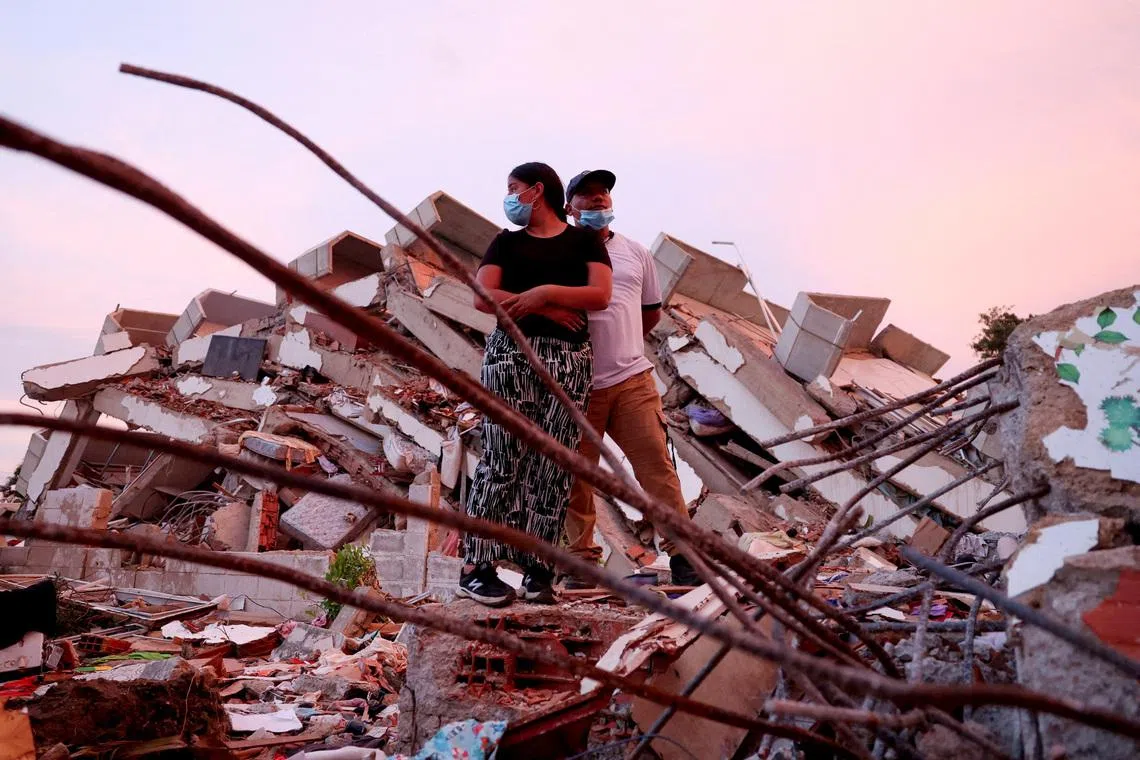
Their task is the management of the makeshift shelter for victims of the magnitude 7.2 and 7.5 quakes that devastated the South American country less than a minute apart, killing more than 2,200, according to the latest tally, which is likely to rise.
The dozen or so staff – all volunteers and members of the youth wing of Venezuela’s socialist party – have designed software to register residents, most of whom have lost loved ones, their homes, or both in the disaster.
They are also largely homeless after the quakes, and rotate work shifts staffing the command center 24 hours a day. Like the shelter residents, they sleep on metal bunk beds delivered by the commerce ministry.
The group registers each of the more than 350 people staying at the shelter, where an average of three families sleep per classroom. The program records their previous addresses, injuries, and who has yet to grab lunch in the cafeteria.
“We’re like the Titanic. We go down with the ship,” said Daniel Rivas, 25, as his colleagues searched the registry for a missing person sought by a relative standing at the school gate.
Showers, a medical center, a laundromat and cafeteria are available to the residents, whose children play in stairwells and on the basketball court.
Each of the nine shelters in La Guaira is run by a different team, the staff at this school said.
‘FULL OF RAGE’
“People are 50% very sensitive and 50% full of rage, lost,” said Jose Mendez, who is also part of the team. “They are angry about not finding their family members, about losing everything. But we’re ready to help.”
All team members were born just before or in the years after La Guaira’s last major disaster – a 1999 landslide that killed up to 30,000 people.
Last week’s quakes have killed 2,295, according to government figures published on Wednesday. An unofficial but widely used list of the missing stands at 40,567. A United Nations envoy this week said it was procuring 10,000 body bags for Venezuela, an indicator of how large the death toll could ultimately be.
Residents have criticized the government of interim President Delcy Rodriguez for what they call a slow and inadequate response by the state, while NGO the International Rescue Committee on Tuesday said “the scale of the response does not meet the scale of humanitarian need.”
Rodriguez in a post on X said that authorities continue helping those affected, as well as supervising recovery efforts. “I know that many Venezuelans feel pain and frustration. I deeply share those feelings,” she said.
NEXT STEPS
The team here is waiting on two major next steps: Visits from the registration authority, to replace lost government identification cards, and from the housing ministry, to clarify what people who lost their homes should do to get aid.
“I feel like I still have the earthquake within me,” said shelter resident Deisy Tapias, 36, who was in the shelter with two of her five children. “I wish I could go home.”
Her apartment further down the coast was nearly destroyed, though her 17-year-old son was able to rescue their identity cards and tank of cooking gas from the ruins.
Tapias said she was willing to move out of state if that is how she can replace her home.
Her mother, Deisy Bermudez, 55, has an intact home in a nearby settlement and arrived with clothing and food for her family.
“I can’t stand shelters,” said Bermudez, who lost her house in the 1999 disaster and said she missed out on government housing constructed afterward for victims.
As the women spoke with Reuters, an army transport truck pulled up outside, and soldiers helped eight new families carrying sparse bags of belongings into the shelter, where they were welcomed by the team.
Many of those arriving now have been living alongside the ruins, the team said, and searching for loved ones trapped under rubble. REUTERS