World
US-Iran ceasefire crumbles

New fighting erupted between the United States and Iran ahead of the burial of supreme leader Ali Khamenei yesterday, with Tehran targeting US regional allies and American strikes hitting the perimeter of an Iranian nuclear power plant.
The renewed hostilities, triggered by tensions over the Strait of Hormuz, sparked concerns of a return to full-scale war after an April ceasefire that ended five weeks of conflict before a US-Iran accord in June.
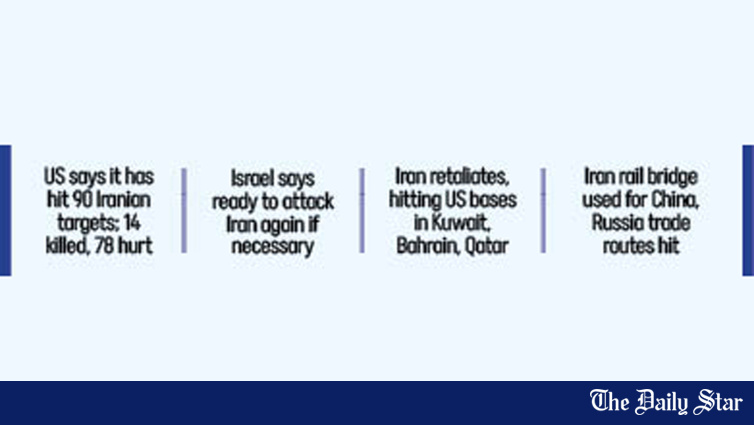
This was the second day in a row that the decades-old foes exchanged attacks, with Iranian officials reporting that US strikes killed 17 people and state media saying one targeted a railway line between Tehran and the eastern city of Mashhad, where Khamenei’s burial is being held.
The Islamic republic said it had resumed its attacks targeting US assets in Kuwait, Bahrain and Qatar, while sirens blared in Jordan — another US ally — where the military said it had intercepted eight missiles launched from Iran.
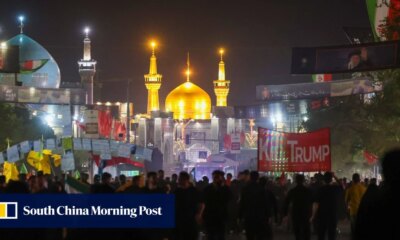
The fighting came with Iran preparing to bury Khamenei, who was killed alongside close family members on the first day of the US-Israeli war against Iran on February 28.
Crowds of men and women clad in black, many urging vengeance, were massed against the backdrop of slogans including “there will be blood”, AFP correspondents said.
Such were the crowds that the body was to be transferred to a holy shrine for burial by helicopter, state television said. The burial was due to take place later in the evening.
The US targeted the perimeter of Iran’s only civilian nuclear plant with a strike yesterday, Iranian state media reported, citing the deputy governor of Bushehr province.
State media said the US targeted a section of the Tehran-Mashhad railway 55 kilometres (34 miles) from Mashhad, forcing the closure of the line. Passengers were transferred to buses.
US military officials said yesterday’s strikes hit approximately 90 Iranian military targets, including air defence systems, missile and drone storage sites.
Iran’s army said it had targeted a Patriot missile interceptor system in Kuwait, an early warning system in Qatar and fuel tanks in Bahrain with drones, as part of its attacks on US bases in the region.
But a US defence official said the dozens of missiles and drones fired by Iran were either intercepted or caused no significant damage, with no injuries to American personnel.
Meanwhile, US President Donald Trump used his old Air Force One plane to leave Turkey after a Nato summit instead of his new Qatari-gifted jet, a move the New York Times described as a security precaution in the current context.
Following Israel’s June 2025 war against Iran and this year’s conflict, Defence Minister Israel Katz yesterday warned at a military ceremony that Israel was prepared to attack Iran for a “third time” if needed, vowing to do so “with even greater force”.
“We are preparing for every scenario,” added Prime Minister Benjamin Netanyahu.
The Strait of Hormuz, a vital oil and gas corridor, remains a key point of contention, with Tehran insisting on control of the waterway despite it being open to free passage before the war began.
Traffic through the strait has fallen sharply since Wednesday, especially through the UN-backed Omani route, according to data from maritime tracking firm Kpler, after vessels were attacked earlier this week.
Trump said the ceasefire with Iran was “over” but left the door open to more talks, while describing the Iranian side as “sort of crazy”.
Iran’s chief negotiator Mohammad Bagher Ghalibaf warned on X that “if you strike, you will be struck”.
The Iranian military hit at least three ships in recent days, prompting extensive US strikes against Iranian targets on Tuesday.