World
'Unstoppable’ Drones? Hezbollah’s New Weapons Are Outplaying Israel

Nearly two years ago, thousands of pagers exploded almost simultaneously across Lebanon in what was described as a coordinated Israeli strike targeting Hezbollah. The blasts killed at least 32 people, including two children, and injured thousands, marking an unprecedented form of attack. Now, Hezbollah appears to have developed a weapon of its own, one that is quietly inflicting casualties on Israeli forces.
At the centre of this shift is a fibre-optic quadcopter drone, compact, weighing only a few kilograms, but capable of precise strikes. Its key advantage lies in how it is operated.
Unlike conventional drones that depend on radio signals, this system is controlled through a physical fibre-optic cable linking it directly to the operator. Without emitting any wireless signal, it cannot be intercepted or jammed by electronic warfare systems—long a pillar of Israel’s counter-drone defences.
Yehoshua Kalisky, a senior researcher at Israel’s Institute for National Security Studies, told CNN that such drones are “immune to communication jamming” and, lacking an electronic signature, make it extremely difficult to trace their launch point.
A Lethal Strike on Video
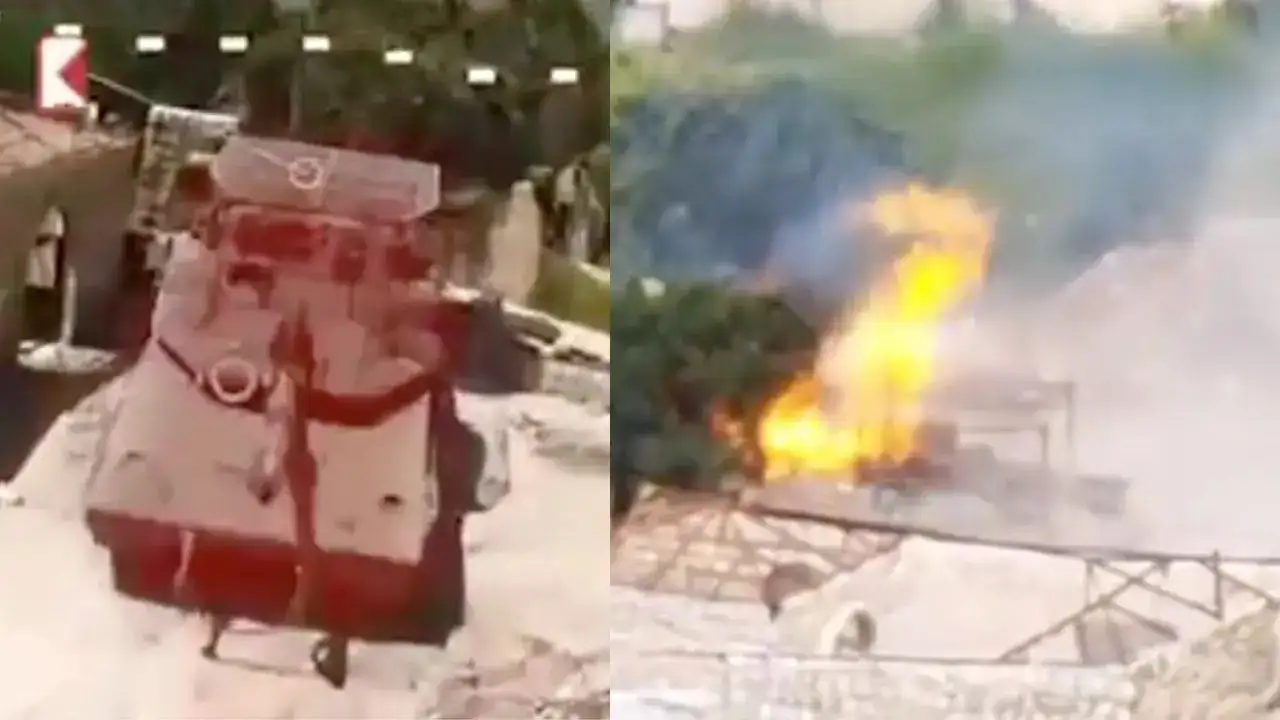
On Sunday, Hezbollah released footage showing one of these drones in action. The video appeared to show Israeli soldiers unaware of the incoming threat before impact. The Israel Defense Forces confirmed that 19-year-old Sergeant Idan Fooks was killed in the strike, while several others were injured.
Israeli tank EXPLODES into flames in southern Lebanon Hezbollah drone RIPS through Merkava’s anti-drone cageSECOND drone films everything pic.twitter.com/UjhC2SnacP
— RT (@RT_com) May 1, 2026
Hezbollah reportedly launched additional drones when a rescue helicopter arrived to evacuate the wounded.
According to an Israeli military source cited by CNN, the fibre-optic cable controlling the drone can extend up to 15 kilometres. Thin and lightweight, the cable is nearly invisible to the naked eye, allowing operators to remain at a safe distance while maintaining a real-time, first-person view of the target.
Borrowed Tactics from Ukraine
The use of fibre-optic drones is not new. They gained prominence during the war in Ukraine, where Russian forces deployed them effectively. Over time, the technology evolved to include base units connected to operators, enhancing control and range.
With Israeli forces operating near Hezbollah positions in southern Lebanon, the group is now using similar tactics to target troops both in southern Lebanon and northern Israel.
Israeli officials believe Hezbollah acquires basic drone units from China or Iran before modifying them with explosive payloads such as grenades. The result is a relatively low-cost, hard-to-detect weapon capable of carrying out targeted strikes.
Israel Adapts to a Growing Threat
In response, the Israel Defense Forces have begun deploying physical countermeasures such as nets and barriers to intercept incoming drones, tactics also seen in Ukraine.
However, officials acknowledge the limitations. “It’s not foolproof,” one IDF official told CNN, adding that the military is working with intelligence units to refine its response.
“It’s a threat we are still adapting to,” the official said.