World
Uneasy calm in Middle East as fighting pauses

Fighting paused in the Middle East yesterday after two days of deadly strikes between the United States and Iran, as Qatari negotiators travelled to Tehran in an attempt to get diplomacy back on track.
However, both sides showed no signs of backing down on their demands, especially over the Strait of Hormuz. The at-tacks renewed concerns about the recovery of global oil supplies and shipping, and highlighted the fragility of an inter-im truce while the US and Iran hammer out a lasting agreement.
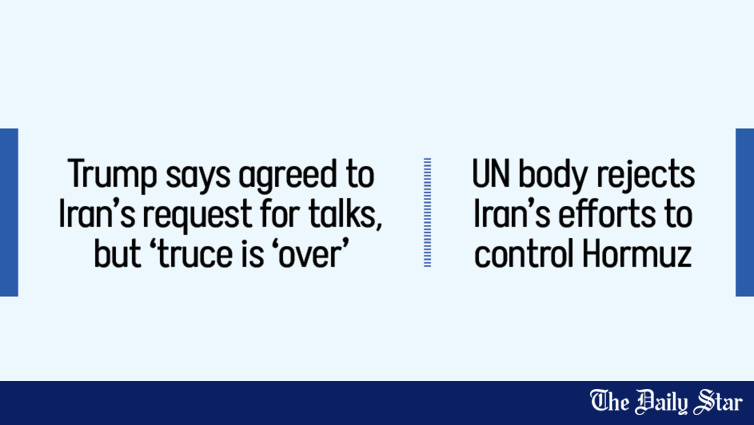
US President Donald Trump yesterday said that Iran had asked to continue talks and the US had agreed, but that the ceasefire was over.
His comments came after three Qatari and Saudi commercial tankers came under fire this week, prompting the US to hit Iranian sites, and Iran to respond with strikes on US military installations in neighbouring Gulf states on Thursday.
“The Islamic Republic of Iran has asked us to continue ‘talks.’ We have agreed to do so, but the United States has stat-ed to them, in no uncertain terms, that the Cease Fire is OVER!,” he wrote.
Qatari negotiators were meeting officials in Iran yesterday to seek to de-escalate, a source with knowledge of the situ-ation told Reuters.
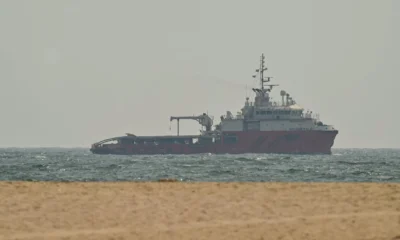
Daily tanker traffic through the critical waterway appeared to have slowed yesterday, after the series of attacks stoked concerns about the recovery of global oil supplies and shipping, and highlighted the fragility of the interim truce.
Talks in Iran aim to address the implementation of the US-Iran memorandum of understanding and the issues that trig-gered the recent escalation between Washington and Tehran, including disputes over navigation in the strait, the source said.
Iran sees the Strait of Hormuz as its biggest wartime gain — and appears determined to hold on to it. Tehran’s view, experts say, is that the Trump administration is trying to return the waterway to prewar shipping levels without ac-knowledging Iran’s newfound authority there.
Iran has said ships traversing the strait can only follow the route it has assigned. The latest round of fighting began af-ter the US retaliated against Iran for firing at vessels that did not comply with its directives.
At the heart of the renewed violence are competing interpretations of the fifth point of the memorandum of under-standing (MoU). That section says Iran will “make arrangements… for the safe passage of commercial vessels” and en-gage with Oman “to define the future administration” of the strait. But it does not explicitly grant Iran exclusive author-ity over shipping there.
“Tehran’s message is clear: the Strait is open but not on US terms,” Negar Mortazavi, host of the Iran Podcast, wrote on X. “Trump signed an agreement on paper but is now trying to stretch it at sea. Iran is responding by pulling the dis-pute back to the text of the MoU and demonstrating that military power cannot rewrite what was negotiated.”
The development came as US and Iran traded the most intense strikes since agreeing to extend the ceasefire after at-tacks on the three Qatari and Saudi shipping vessels in the strait.
US Central Command said on Wednesday its forces had struck approximately 90 Iranian military targets. Iranian state media said those attacks killed 14 people and injured 78.
Iran’s army said it had launched attacks on US Patriot systems in Kuwait, an early-warning site in Qatar and a US Army fuel depot in Bahrain. The Revolutionary Guards later said Iran had fired 10 ballistic missiles at Jordan’s Azraq military base, used by US forces.
Meanwhile, the UN’s London-based International Maritime Organization (IMO) yesterday agreed to reject Iran’s effort to impose sovereignty over Hormuz and Tehran’s “unilateral decision” to create a body to control traffic through the waterway.
Prior to this week’s attacks, daily tanker traffic had risen to its highest since the war began, averaging 40 ships transit-ing the strait. That was still far off the pre-conflict average of 125 to 140 daily sailings.
On Thursday, Iran buried its slain supreme leader Ayatollah Ali Khamenei at the country’s holiest shrine in Mashhad, capping a week of funeral processions and rallies. Khamenei was killed in an airstrike on the first day of the war on Feb-ruary 28.
A condolence ceremony will be held on Friday after sunset prayers on behalf of Supreme Leader Mojtaba Khamenei for his father in the city of Qom, his office announced. Mojtaba Khamenei, who was injured in the strike that killed his fa-ther, has still not appeared in public.
Trump’s inability to end the war has frustrated the president, whose Republican Party faces midterm elections later this year amid high gas prices and voter discontent.