World
UN chief urges support for Syria on first visit since before civil war

DAMASCUS, Syria — United Nations Secretary-General Antonio Guterres urged international support for Syria on Saturday as he visited the country, which is in transition following years of war and the overthrow of longtime ruler Bashar al-Assad.
Guterres is the first UN chief to visit Syria since his predecessor Ban Ki-moon in 2009, two years before the start of Syria’s civil war, which went on to kill more than half a million people before the new Islamist authorities took power in December 2024.
“I have just arrived in Damascus for a visit of solidarity. My message is clear: The UN stands with Syria at this pivotal moment and I appeal to the international community to spare no effort to support the people of Syria as well,” Guterres said on X.
State media reported that Guterres met President Ahmed al-Sharaa at the presidential palace after visiting Damascus’s Old City, with images appearing to show him at the famed Umayyad Mosque.
Foreign Minister Asaad al-Shaibani had earlier received the UN chief and his accompanying delegation at Damascus airport.
Since Sharaa took power, the international community has urged the new Islamist authorities to build strong and effective institutions and establish a governance system that includes all components of Syria’s multi-ethnic, multi-confessional society.
Guterres “will emphasise that the opportunity now is not only to recover from conflict, but also to lay the foundations for a future for Syria that will be more stable, more inclusive and more prosperous for all Syrians,” his spokesman Stephane Dujarric said ahead of the visit.
He will also “reaffirm the role of the United Nations is to accompany and support the Syrian people on this journey,” Dujarric added.
Guterres is set to meet representatives of Syrian civil society and non-governmental organisations supporting women’s issues, and to visit a UN peacekeeping force that has been stationed in the buffer zone between Israel and Syria in the Golan Heights since 1974.
After Assad’s overthrow, Israel sent troops into the UN-patrolled zone that separated Israeli and Syrian forces on the Golan, and has carried out strikes and repeated incursions deeper into Syrian territory.
Israel has also carried out strikes in Syria to protect the Druze minority from sectarian violence.
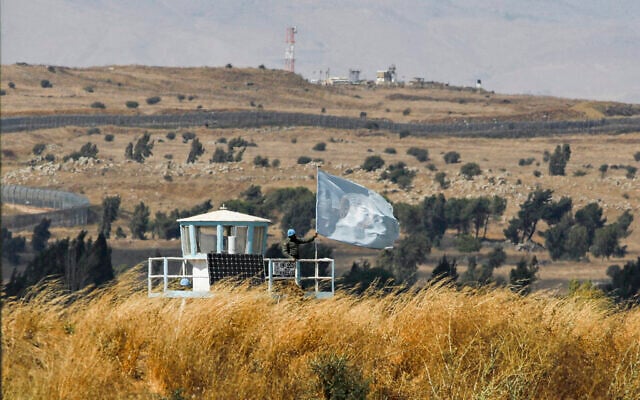
Israeli officials have said they intend to keep forces in a “security zone” in southern Syria, where they seek a broader demilitarised zone.
Despite tensions between the neighbours, Israel and Syria’s new authorities have held several rounds of direct talks and have agreed to establish an intelligence-sharing mechanism, though the move has failed to halt Israeli military activity.
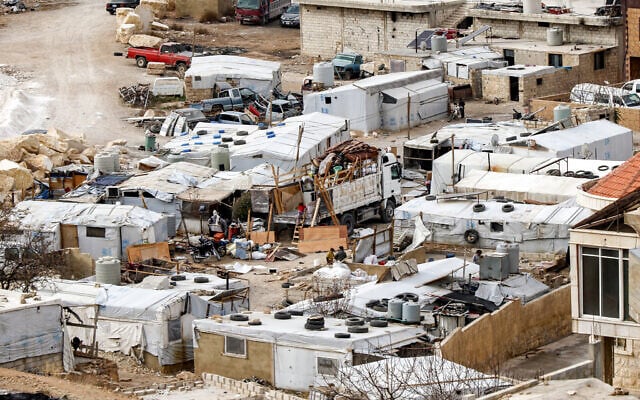
Syria’s war shattered the country’s infrastructure and pushed millions of people to flee internally and abroad.
Since Assad’s ousting, some 1.9 million internally displaced people and 1.7 million refugees from abroad have returned, according to the UN, while around 5.5 million people remain displaced inside the country and another six million overseas.
With many Syrians living in poverty, an estimated 15.6 million people require humanitarian assistance.
Several senior UN officials have visited Syria since Assad’s fall, including rights chief Volker Turk and UN nuclear watchdog head Rafael Grossi, while a UN Security Council delegation of ambassadors made its first-ever visit to Syria late last year.
Sharaa last year made a landmark visit to the UN, where he became the first Syrian president in decades to address the body’s General Assembly.
Times of Israel Staff contributed to this report