World
Ukraine hits two Russian oil refineries

Ukraine hit two Russian oil refineries in the regions of Krasnodar and Yaroslavl overnight, President Volodymyr Zelensky said yesterday, as Kyiv ramps up pressure on Russia’s fuel supply with its drone fleet.
Kyiv’s increasingly frequent drone attacks have caused acute fuel shortages in parts of Russia, one of the world’s biggest oil producers, with queues and rationing seen at petrol stations.
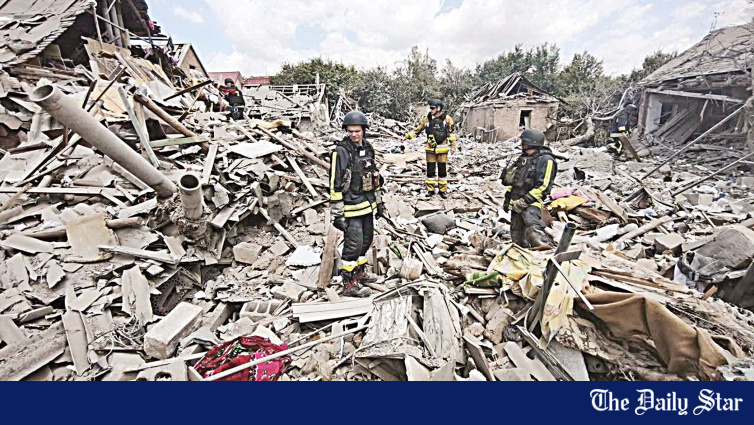
Meanwhile, a Russian attack on Kyiv wounded at least two people, the city’s military administration said yesterday shortly after warning the capital was being targeted by ballistic missiles, reports AFP.
“As of now, the number of wounded in the overnight attack has risen to two,” head of the local military administration, Tymur Tkachenko said in a post on Telegram.
Zelensky wrote on social media: “We continue our operations that weaken Russia’s ability to wage this war,” adding that the refineries were about 300 km and 700 km (190 miles and 430 miles) from Ukrainian territory.
In a statement on Telegram yesterday, Krasnodar region governor Veniamin Kondratiev said that a fire had broken out at the refinery in Slavyansk-na-Kubani, with one person killed and another injured in a nearby village.
In Yaroslavl region, east of Moscow, the governor said the region had come under drone attack and that temporary limits had been placed on movement on some road routes to the Russian capital.
Russian President Vladimir Putin yesterday vowed to ensure security in his country and overcome “challenges” as Ukraine has stepped up its retaliatory attacks on targets. “Yes, we see the problems, we are aware of them and are responding to them, but we will certainly ensure the security of both the country and our citizens, as well as the inviolability of Russia’s borders,” Putin said at the United Russia party congress.
“We will undoubtedly overcome all the challenges facing us today, including terrorist attacks on our territory and infrastructure facilities,” he added.
Russia has targeted Ukraine with near-daily strikes since the launch of its full-scale invasion in February 2022, the bloodiest conflict in Europe since World War Two.