Society
UK visa crackdown: 84% of Nigerian students fail credibility checks

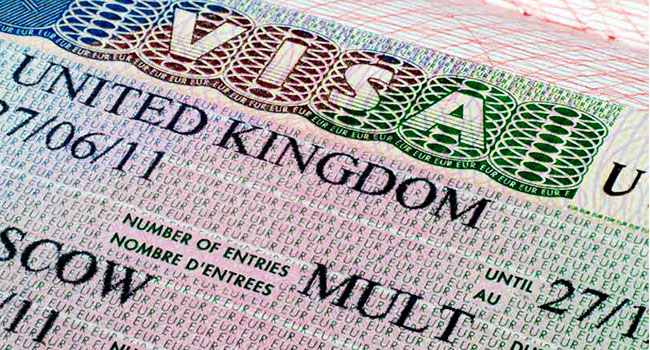
The United Kingdom has rejected approximately 84 per cent of Nigerian students who applied for study visas between May and October 2026, highlighting increased scrutiny of international student applications.
The figures, reported by The PIE News, showed that Nigerians ranked among the six nationalities with the highest student visa refusal rates during the six-month period.
They were also the only Africans in the top six, alongside applicants from Nepal, India, Bangladesh, Sri Lanka and Pakistan.
According to the report, Nigerian applicants ranked third among students who were refused visas after undergoing credibility interviews conducted by UK Visas and Immigration (UKVI).
UKVI caseworkers conducted 11,415 credibility interviews between May and October 2026, of which 9,043 applicants were considered non-credible, representing approximately 79 per cent of those interviewed.
Nepalese applicants recorded the highest rejection rate, with 92 per cent of students interviewed deemed non-credible by UKVI caseworkers, according to The PIE News.
Indian students followed with an 89 per cent rejection rate, while Nigeria ranked third at 84 per cent. Bangladesh recorded 79 per cent, Sri Lanka 79 per cent and Pakistan 73 per cent.
The publication, however, cautioned that the figures represented only a six-month period and should not be interpreted as a full-year assessment of student visa applications.
The report also highlighted a significant increase in the proportion of Nigerian applicants invited for credibility interviews. Between 2025 and 2026, the percentage of Nigerian students called for interviews rose from seven per cent to 21 per cent.
UKVI identified inadequate research into prospective universities and courses as one of the common reasons for rejecting student visa applications.
According to the report, many applicants struggled to explain why they had chosen to study in the UK, why they selected particular institutions and how their chosen courses aligned with their academic backgrounds and future career plans.
Other concerns identified by UKVI included applicants’ limited knowledge of their proposed courses, doubts about their English language abilities and questions surrounding the credibility of their financial resources.
The increased scrutiny comes amid concerns about the integrity of international student applications and the need for UK authorities to distinguish genuine students from those who may be using the student visa route for other purposes.
However, Oliver Rae, Head of Work, Study, Family and Ukraine Services at the UK Home Office, recently said the government’s stricter compliance measures were not intended to restrict the overall number of international students entering the country.
“There is no cap on the number of students that we want to see coming to the UK, but very much a focus on genuine students,” Rae clarified.