World
UK military says bulk carrier near Strait of Hormuz reports being attacked

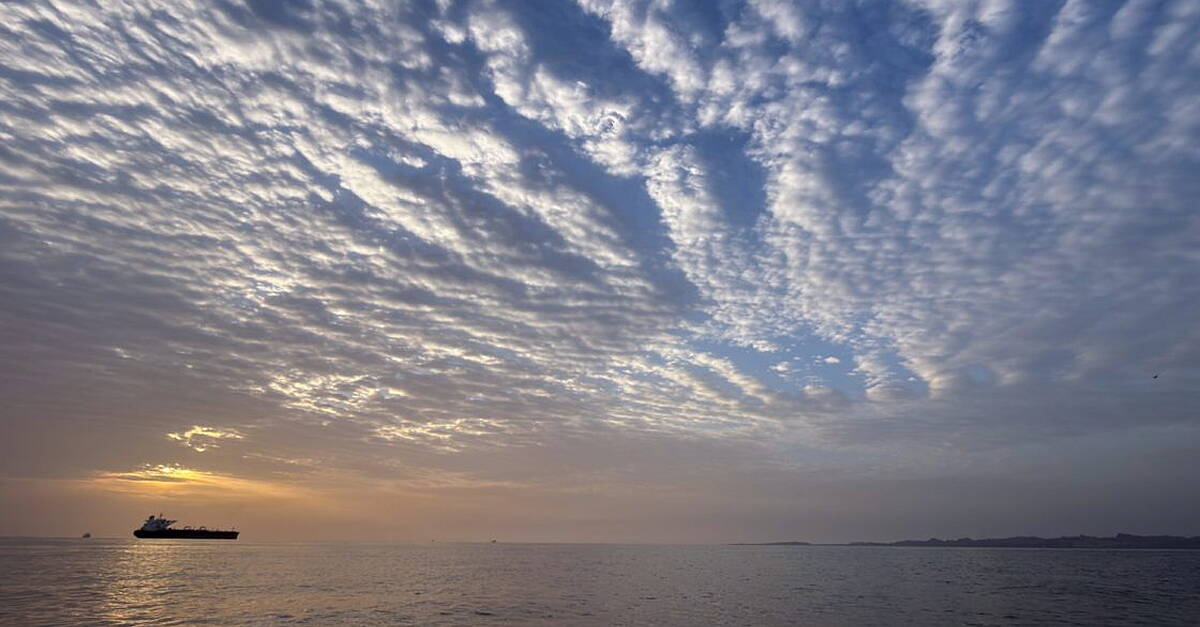
A bulk carrier near the Strait of Hormuz has reported being attacked by multiple small craft, the British military’s United Kingdom Maritime Trade Operations Centre said on Sunday, marking at least two dozen attacks in and around the strait since the Iran war began.
All crew on the unidentified northbound carrier were safe after the attack off Sirik, Iran, east of the strait, the monitor said.
Iranian officials have asserted that they control the strait and that ships not affiliated with the United States or Israel can pass if they pay a toll.
There was no immediate claim of responsibility for the attack, the first reported in the area since April 22, when a cargo shop reported being fired upon, the monitor said.
The threat level in the area remains critical. Tehran effectively closed the strait by attacking and threatening ships.
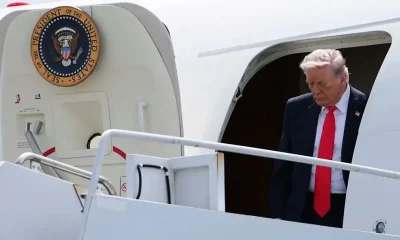
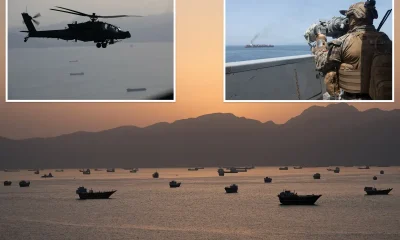
Iranian patrol boats, some powered only by twin outboard motors, are small, nimble and hard to detect and have attacked several ships. US President Donald Trump last month ordered the US military to “shoot and kill” small Iranian boats that deploy mines in the strait.
The fragile three-week ceasefire appears to be holding, though Mr Trump on Saturday told journalists that further strikes remained a possibility.
It comes as Iran’s latest proposal to the US calls for issues between the two countries to be resolved within 30 days and aims to end the war rather than extend the ceasefire, according to Iran’s state-linked media.
Mr Trump said on Saturday that he was reviewing a new Iranian proposal to end the war but also expressed doubt it would lead to a deal, adding on social media that “they have not yet paid a big enough price for what they have done to Humanity, and the World, over the last 47 years” since the Islamic Revolution there.
Iran’s 14-point proposal calls for an end to the war, rather than just an extension of the truce.
The proposal, a rebuttal to the US nine-point plan, also calls for the US lifting sanctions on Iran, ending the naval blockade, withdrawing forces from the region, and ceasing all hostilities, including Israel’s operations in Lebanon, according to the semi-official Nour News and Tasnim agencies, which have close ties to Iran’s security organisations.
There was no mention, however, of Iran’s nuclear programme and its enriched uranium, long the central issue in tensions with the US and one that Tehran would rather address later.
Iran sent its reply via a Pakistani intermediary, the news agency reported.
Pakistan has hosted previous negotiations between Iran and the US.
Mr Trump rejected a previous Iranian proposal this week.
However, conversations have continued, and the ceasefire appears to be holding.
Seven countries in the Opec+ grouping of oil-producing countries — including Saudi Arabia and Russia — said on Sunday they have decided to make a modest increase in production starting in June as part of a commitment to “market stability”.
The commitment from the seven countries, also including Algeria, Iraq, Kazakhstan, Kuwait and Oman, to raise production by 188,000 barrels per day came after a virtual meeting they held on Sunday.
It also follows a decision by the United Arab Emirates to leave the Opec oil cartel, shaking up the 65-year-old alliance that produces some 40% of the world’s crude oil and exerts major influence over the price of energy around the globe.
Iran is one of Opec’s 12 member countries, and Russia is not — it works with the Vienna-based oil producers alliance through the Opec+ grouping.
The seven countries said they would hold monthly meetings “to review market conditions, conformity, and compensation” and plan to meet again on June 7.
Also on Sunday, Iranian foreign minister Abbas Araghchi spoke with Oman’s foreign minister Badr al Busaidi, who oversaw previous rounds of talks between the US and Iran before the latest round of fighting.

The US president also offered a new plan to reopen the Strait of Hormuz at the mouth of the Persian Gulf, where about a fifth of the world’s trade in oil and natural gas typically passes.
Iran’s deputy parliament speaker said on Sunday that Iran “will not back down from our position on the Strait of Hormuz, and it will not return to its pre-war conditions”.
Ali Nikzad, who has no decision-making power in parliament, made the comments while on a visit to port facilities on Iran’s strategic Larak Island, located close to the narrowest part of the strait.
“The Strait of Hormuz belongs to the Islamic Republic of Iran,” he said, adding that the country was working to compensate businesses and property damaged during the war, and that Mr Trump’s blockade plan was certain to fail.
Mr Nikzad reiterated Iran’s position that any ships not associated with the US or Israel will be able to pass after paying a toll.
The US has warned shipping companies they could face sanctions for paying Iran in any form, including digital assets, to pass safely.

Iran effectively closed the strait by attacking and threatening ships after the US and Israel launched a war on February 28.
Tehran later offered some ships safe passage via routes closer to its shore, charging fees at times.
The US has responded with a naval blockade of Iranian ports since April 13, depriving Tehran of oil revenue it needs to shore up its ailing economy.
The US Central Command on Sunday said 49 commercial ships have been told to turn back.
“We think that they’ve gotten less than 1.3 million dollars in tolls, which is a pittance on their previous daily oil revenues,” US Treasury Secretary Scott Bessent told Fox News on Sunday.
He said Iran’s oil storage is rapidly filling up and “they’re going to have to start shutting in wells, which we think could happen in the next week”.
On Sunday, the second day of Iran’s working week, the rial weakened further against the US dollar.
In Tehran’s Ferdowsi Street, the capital’s main currency exchange hub, the dollar was trading at 1,840,000 rials.
Analysts say there is a strong possibility the currency will slip further in the coming days.
The rial was trading at 1.3 million to the dollar in December, which at the time was a record low, and triggered widespread protests over the worsening economy.
Markets in Tehran remain unstable, with prices of some goods rising daily.
According to reports published in Iranian media, several factories have not renewed contracts for workers after the Iranian new year holidays, and significant numbers have lost their jobs.
Yousef Pezeshkian, the son and adviser of Iranian President Masoud Pezeshkian, wrote on Telegram that both the US and the Islamic Republic see themselves as the winner of the war and are unwilling to back down.
Meanwhile, the Norwegian Nobel Committee urged Iran to immediately transfer jailed Nobel Peace Prize laureate Narges Mohammadi for medical treatment in Tehran after her health sharply deteriorated.
The committee said it was in touch with Ms Mohammadi’s family and lawyer, and that the 2023 prize winner’s life remains at risk without treatment by her dedicated medical team in Tehran.
Ms Mohammadi fainted twice in prison on Friday in the north-western city of Zanjan, her foundation said, and was admitted to a local hospital.
Her lawyers have said she is believed to have suffered a heart attack in late March.
“Narges Mohammadi is imprisoned solely for her peaceful human rights work. Her life is now in the hands of the Iranian authorities,” Nobel committee chairman Jorgen Watne Frydnes said.
Ms Mohammadi, 53, a rights lawyer who won the prize while in prison, was arrested in December during a visit to the eastern Iranian city of Mashhad and sentenced to seven more years in prison.