World
Trump: US ‘very close’ to deal with Iran, but demanding stricter nuclear terms

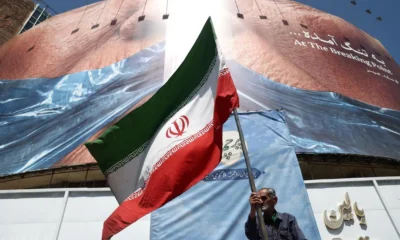
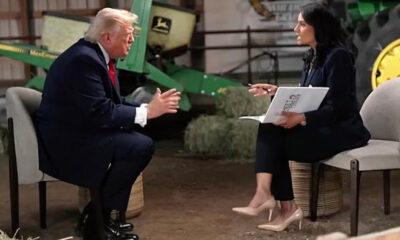
US President Donald Trump said Sunday that Washington is “very close” to reaching a deal with Iran, but is seeking airtight language to ensure the country cannot get a nuclear weapon.
“I’m going to put it out permanently,” he told NBC News’ “Meet the Press,” referring to the nuclear threat. “Either I’m going to do it through negotiation – where we’re very close to a deal – or I’m going to blow the hell out of them, to be honest with you.”
The interview was recorded before a major escalation in the conflict later that day. After Hezbollah — an Iranian proxy that attacked Israel on March 2 in support of its sponsor — targeted northern Israel, Israel launched airstrikes in Beirut’s southern suburbs, which it had largely refrained from attacking, in deference to the US. A few hours later, Iran directly attacked Israel for the first time since an April 8 truce.
Trump told NBC: “They (Iran) cannot have a nuclear weapon. And if there was even a one percent chance that they’d have it, I wouldn’t leave.” He added: “We’re almost finished.”
Trump said Iran has “conceded the fact that they will not have nuclear weapons,” and already agreed to language committing not to “develop” them.
“And I said, ‘Well, what happens if they, not develop, but they go out and purchase, they acquire? I want to put the word, ‘If they buy, purchase or acquire,’” he said, arguing, “You know, you’ve got to have that in there, too, because that’s not developing.”
Though the Islamic Republic has always denied seeking a nuclear weapon, it has enriched uranium to near-weapons-grade levels – far beyond what is necessary for civilian purposes – and has obstructed inspectors from checking its facilities.
Tehran has not made any public concessions on its nuclear program, insisting that negotiations on the matter occur only once a preliminary ceasefire – including the lifting of the US blockade, imposed after Iran shut the Strait of Hormuz – is already in place.
Trump reiterated that Washington will retrieve and destroy Iran’s stockpile of highly enriched uranium if the sides reach an agreement, while warning that the US would further degrade Iran’s capabilities and secure the material by force if talks collapse.
“If we make a deal that now we’re friendly, we’ll all go together. It’ll be our equipment. We’ll take it out and destroy it, whether it’s on-site or whether we take it off-site,” he said of the uranium.
“If we don’t make a deal, then we’re going to take them out militarily, very harshly. And we’ll wait ’till we do that before we go, in which case we’ll have safety either way.”
The president told reporters Thursday that American forces could remove Iran’s enriched uranium even without a deal, but argued that “there’s no reason to” because the regime currently cannot access the stockpile. He also revealed that he considered sending US troops to retrieve the buried uranium stockpile at the outset of the war, but decided against it because of the military risks involved.
Trump told NBC that he intends to keep US troops deployed in the region until the “completion” of the talks, and that he was not demanding that Lebanon be a part of a short-term deal with Tehran.
He also said he would not unfreeze Iranian assets or lift any sanctions before a peace deal is reached, saying that relief “comes after.”
“If they behave, if they do a good job, we start talking,” he said.
Trump asserted, as he has in the past, that Iran’s leadership is now “more rational” and “very smart” following the assassination of several senior officials during the war.
Trump on Mojtaba Khamenei: ‘A certain bravery there’
Asked about Iran’s Supreme Leader Mojtaba Khamenei, Trump said the Shiite cleric is “pretty badly injured. So there’s a certain bravery there.”
“A lot of people, if they were injured that badly, they wouldn’t be talking about, you know, ‘How are we doing with the United States?’ They’d have other things on their mind,” he mused.
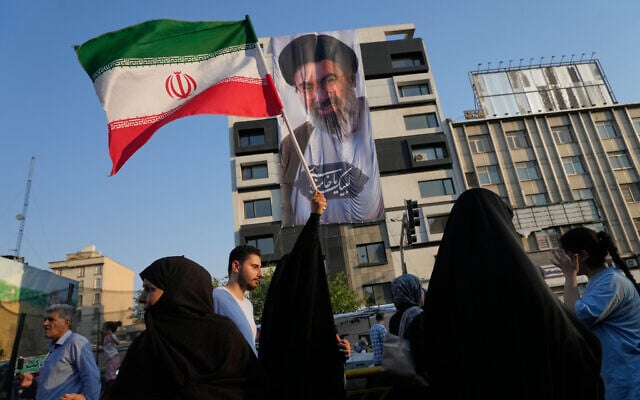
Khamenei has ostensibly issued statements, but not been seen or heard publicly, since US-Israeli airstrikes at the very start of the war killed his father and predecessor, Ali Khamenei. Washington believes the new leader is seriously wounded and in hiding, but engaged in the decision-making process to some extent.
Trump declined to clarify whether he knows Khamenei’s exact location or whether the leader is in Iran, saying, “I don’t want to say whether or not I know where he is… But there’s a good probability that I do.”
US pushes IAEA resolution demanding answers from Iran
Alongside the talks with Iran, the US is lobbying other countries on the UN nuclear watchdog’s board of governors to back a draft resolution demanding the Islamic Republic disclose to the agency what happened to its bombed nuclear sites and the enriched uranium stored there.
The US-drafted text, seen by Reuters on Sunday and circulated ahead of this week’s quarterly meeting of the 35-nation board, risks complicating talks between Washington and Tehran. Iran has typically retaliated against resolutions against it at the International Atomic Energy Agency, escalating its nuclear activities or scaling back cooperation.
Previous IAEA board resolutions on Iran, submitted by the US, Britain, France and Germany, have passed by wide margins. One adopted in November demanded that Iran inform the agency “without delay” about the status of its enriched uranium stock and damaged sites — something that has yet to happen.
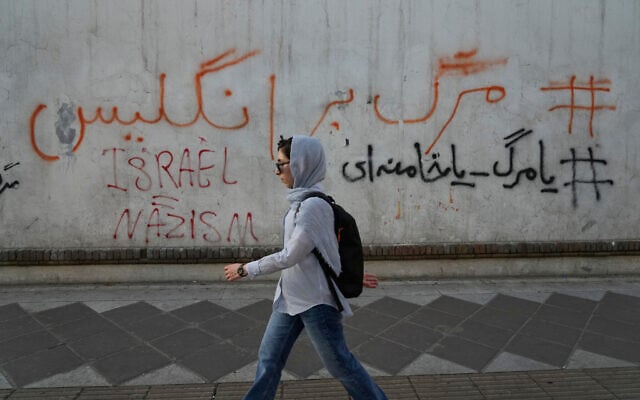
The US draft says Iran must “provide the Agency with precise information on nuclear material accountancy and safeguarded nuclear facilities in Iran” and grant “all access it requires to verify this information.” Both steps are described as “essential and urgent” and must be taken “without delay.”
The text stops short of referring Iran to the UN Security Council, a move some diplomats had said was under consideration. That would have followed up on a June 12, 2025 resolution declaring Iran in breach of its non-proliferation obligations. Israel began bombing Iran’s nuclear sites a day later.
The US mission to the IAEA declined to comment.
While circulating a draft does not guarantee it will be formally submitted to the board, which would then vote on it, it signals an intention to do so.
While strikes destroyed or badly damaged uranium-enrichment facilities, much of Iran’s enriched uranium is believed to have survived. The country was estimated to have about 440.9 kilograms (972 pounds) enriched to up to 60% purity — a short step from roughly 90% weapons grade — prior to the war.
That amount would be enough, if further enriched, for 10 nuclear weapons, according to an IAEA yardstick.
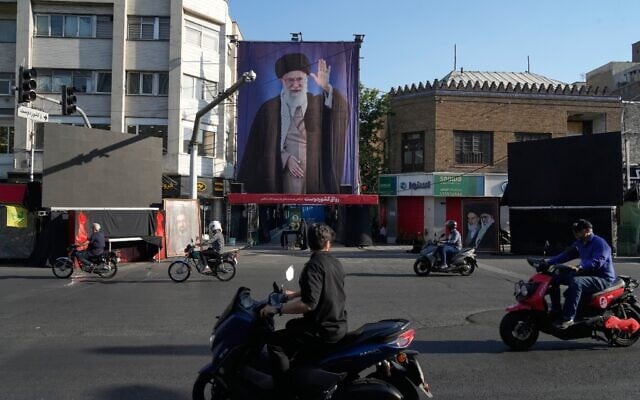
Russia’s ambassador to the IAEA told reporters on Friday a resolution would only antagonize Iran.
“It was exactly the United States who undermined this cooperation,” he said, referring to the fact the IAEA had access to Iran’s sites until the bombing started.
Russia and China have opposed all recent resolutions against Iran.