World
Trump Slaps New Iran Sanctions After Hormuz Ship Attacks; Satellite Images Suggest Nuclear Sites Being Rebuilt

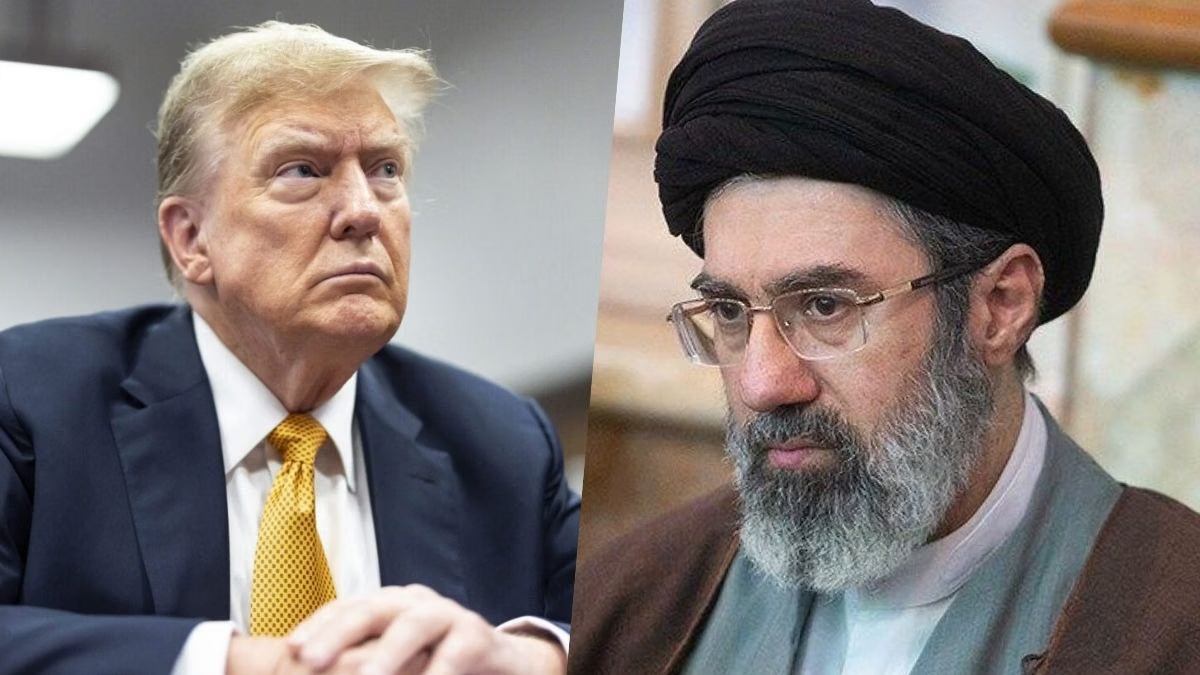
Tehran: The Trump administration announced a new package of sanctions against Iran on Friday, targeting people and financial networks connected to the country’s leadership. The move followed in direct response to Tehran’s recent attacks on commercial shipping in the Strait of Hormuz and represents the latest step in Washington’s pressure campaign. The fresh sanctions were imposed moments after Trump declared that the ceasefire with Iran was over.
According to the US Treasury Department, the measures are to cut off funding streams that benefit senior figures in the Iranian establishment. The fresh measures followed a string of retaliatory actions by the United States in recent days, including direct strikes on Iranian targets and the cancellation of a sanctions waiver that had permitted Tehran to continue oil sales.
Even though tensions have risen following Iranian attacks on ships in the Hormuz and the US strikes on Iranian military facilities, diplomatic channels have not been shut. Trump declared that the US-Iran memorandum of understanding (MoU) was “over”, but also confirmed that negotiations with Tehran would go ahead. The White House appeared to be pursuing a dual approach of economic pressure alongside a willingness to return to the negotiating table.
Treasury Targets Financial Networks Linked To Leadership
The Treasury singled out Iranian financial facilitator Ali Ansari, calling him the overseer of “a sprawling global network of assets benefitting Iran’s leader, Mojtaba Khamenei, and other regime elites”.
The sanctions also hit several Iranian exchange houses, as the US officials alleged that these firms move billions of dollars each year on behalf of Iranian banks that are already under sanctions, helping to circumvent restrictions on the country’s financial system.
The fresh announcement on sanctions was another escalation after a week of hostilities in the Gulf. The US move to tighten the economic noose was triggered by Iran’s targeting of multiple commercial vessels in the Strait of Hormuz, a vital global shipping artery. Though no further US strikes were carried out on Thursday, a US official stated to CNN that Washington’s current military approach involved limited strikes followed by pauses to give diplomacy space to work.
Tehran Warns Of ‘All-Out Defence’
Meanwhile, amid the US sanctions coming into effect, Iran has pushed back strongly against the new measures. Chief negotiator Mohammad Bagher Ghalibaf stated that Tehran was prepared for “all-out defence” if the US broke its commitments, while also stressing that ending the current conflict remained a priority for the world.
On the other hand, Iran’s President Masoud Pezeshkian has been active on the diplomatic front as well. He held a telephone call with Pakistani PM Shehbaz Sharif this week, as both Pakistan and Qatar are trying to play roles as mediators, with Qatari negotiators reported to have travelled to Iran for talks focused on de-escalation.
Nuclear Activity And Regional Mediation Continue
Alongside the sanctions and mediation efforts, questions over Iran’s nuclear programme have resurfaced again. CNN reported, citing satellite imagery from Vantor, that there are indications that Iran may be trying to rebuild parts of its nuclear infrastructure.
In a separate development, Russia’s state nuclear energy corporation Rosatom has begun sending employees back to Iran’s Bushehr Nuclear Power Plant, a sign that civilian nuclear cooperation with Moscow is resuming despite the standoff.
Amid mounting financial pressure, military options on hold for now, and regional mediators shuttling between capitals, both Washington and Tehran appear to be keeping the door to talks open, even as they prepare for the possibility of further confrontation.