World
Trump says Iran agreed to nuclear inspections into ‘infinity’, Tehran denies US claims

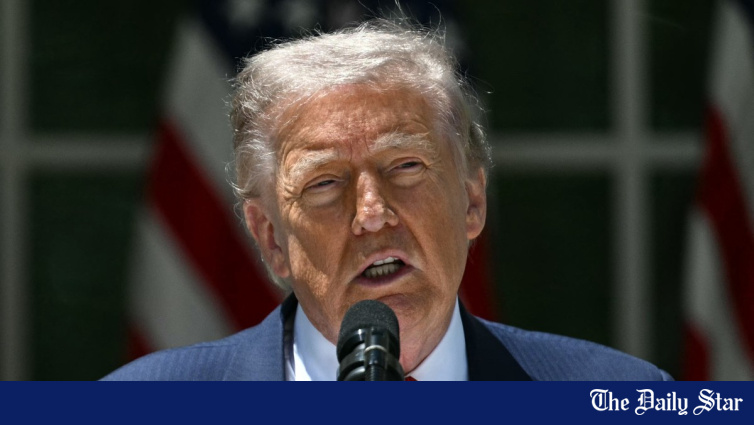
US President Donald Trump said today that Iran had agreed to nuclear inspections into “infinity”, despite Tehran’s denials, and that unfrozen Iranian assets would be used to buy humanitarian supplies from the United States.
Washington agreed to waive sanctions on Iran for 60 days from yesterday after the first round of talks under a nascent peace deal agreed last week on ending more than three months of war.
US Vice President JD Vance said the talks with Iranian officials in the Swiss mountain resort of Buergenstock laid a good foundation for a final accord and that Tehran had agreed to allow nuclear inspectors back into the country.
But Iran denied it had begun discussions on its nuclear program at the talks, mediated by Qatar and Pakistan, and said it had not agreed to invite back International Atomic Energy Agency inspectors.
IRAN SAYS IT WILL DECIDE ALONE ON ASSETS’ USE
Foreign Ministry spokesperson Esmail Baghaei said today that Iranian officials had not held a meeting with IAEA chief Rafael Grossi in Switzerland and had no plans for the UN nuclear watchdog to inspect Iran’s damaged nuclear facilities.
Trump hit back today at what he said were Iran’s “protestations and false statements.”
“Iran has fully and completely agreed to the highest level Nuclear inspections long into the future (Infinity!!!),” Trump said in a post on Truth Social.
He also said any Iranian assets unfrozen under the deal would be placed in an escrow account and used to buy food and medical supplies from the US, “including Corn, Wheat, and Soybeans from our great American Farmers.”
Iran’s ambassador to the United Nations in Geneva had earlier today denied there had been any such agreement.
“Iran is the only country to decide what to do with its assets, which are going to be defrozen, and so I reject any claim about that if there would be any role for any other country to have an influence on those decisions or on those processes,” Ali Bahreini told reporters.
ROADMAP FOR TALKS
The conflicting statements highlighted the uncertainty facing negotiations to halt a war that has upended the Middle East.
Yesterday, the sides agreed on a mechanism to end fighting between US ally Israel and Iran-backed Hezbollah in Lebanon, and opened a communications line to help ensure safe passage for commercial ships through the Strait of Hormuz, a vital waterway for global oil supplies blockaded by Iran during the war.
In the first of several steps to provide economic relief to Iran, the US Treasury announced a waiver until August 21 on sanctions, allowing Tehran to sell oil and related products and receive payment for them.
Bahreini said “good progress” had been made in the talks and that two working groups would be established in the coming days to focus on the removal of sanctions and Iran’s nuclear activities.
He told reporters that five parts of the initial deal need to be fully implemented before negotiations begin on the nuclear dossier and any role for the IAEA.
CONFLICT IN LEBANON
The ambassador said Lebanon was an “unquestionable” part of the interim accord between the US and Iran, and that it included the withdrawal of Israeli troops from Lebanon.
A ceasefire has largely held in southern Lebanon since Sunday, but Lebanon’s Civil Defence and state media said Israeli gunfire had killed two people there today. Hezbollah said the incident violated the ceasefire.
Israel has said it will maintain a security zone in southern Lebanon and continue to act to “neutralise” threats against Israeli soldiers and citizens.
Israel and Lebanon were due to start a new round of talks in Washington today. Israeli strikes against Hezbollah in Lebanon have killed thousands of people and displaced millions.
Tanker traffic through Hormuz started to pick up yesterday, although Iran and Oman suggested in a joint statement that there may be costs involved in using the strait, whose closure pushed up oil prices and global inflation.
Oman and Iran said a joint working group would seek agreement on administrating navigation in the strait, the services provided, and associated costs. Any arrangement, they said, must respect their “sovereignty and sovereign rights”.
POLITICAL LIABILITY FOR TRUMP
Oil prices have fallen since the interim deal was reached, with crude prices dropping further today after settling 3% lower yesterday.
The war with Iran, which started with joint US-Israeli strikes on Iran, has become a political liability at home for Trump and his fellow Republicans in Congress as midterm elections loom in November.
Opinion polls show public frustration over a rise in gas prices since the war began, and Trump faces pressure from Republicans who say Iran’s nuclear program must be completely shut down.
Iran has limited inspections by the IAEA since the US and Israel launched a first round of airstrikes last year, and suspended them entirely when war broke out. Iran says its nuclear program is peaceful.