World
Trump Pushed To Have An Iran ‘Deal’ In Hand For The G7. People Don’t Seem Impressed.

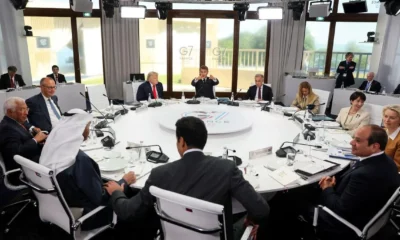
EVIAN-LES-BAINS, France ― After making sure to have a long promised “deal” ending his war against Iran in hand before facing world leaders at the G7 Monday, President Donald Trump is likely learning summit attendees aren’t really all that impressed.
While Trump spoke about the now 3-and-a-half-month-old war in the past tense ― “now that this is finished” ― his counterparts expressed encouragement that there was progress and hoped to see more details about the agreement.
“What we’re being told is that things should get back on track now,” French President Emmanuel Macron, the G7 summit’s host, told a French television outlet Monday. “Above all, I will be cautious and patient. We did not participate in this offensive, as you know.”
LUDOVIC MARIN via Getty Images
In a joint statement Monday, France, the United Kingdom and Germany struck a similar note of cautious encouragement.
“We warmly welcome the announcement of the memorandum of understanding between the U.S. and Iran,” it stated. “It is now vital that the detailed negotiations are concluded and this agreement is implemented rapidly and comprehensively. We are ready to support that effort.”
The apparent reluctance to accept Trump’s claim that a deal is done as an accurate depiction of reality may be based on his track record. Trump has, on dozens of occasions since he and Israeli Prime Minister Benjamin Netanyahu launched their air attacks, claimed that Iran had been totally defeated or that a peace deal was imminent or both.
Trump’s announcement of a deal comes as his war on Iran has faced growing backlash and drawn scrutiny for failing to achieve many of the administration’s goals. Although he’s emphasized the need to guarantee that Iran can never obtain a nuclear weapon, that issue is still subject to upcoming talks.
Additionally, any attempt at regime change has fallen flat. While the U.S. and Israel have killed prominent Iranian leaders, Tehran’s authoritarian regime still remains in place. American voter discontent toward the war’s effects on the economy and rising energy prices has surged as well.
The current deal also reportedly doesn’t resolve some of the thorniest outstanding issues, making any agreement feel especially tenuous. As Pakistani officials told The Associated Press, the deal lifts the U.S. naval blockade, reopens the Strait of Hormuz and kicks off 60 days of talks. Longstanding points of contention, such as the future of Iran’s nuclear program and potential sanctions relief, however, have been left to negotiators to address, according to The New York Times.
Ongoing instability in the region raises concerns about whether a ceasefire agreement will hold. On Monday, Israel launched a drone strike in Lebanon after the deal had been announced, while Hezbollah also said that it had targeted Israeli forces in the southern part of the country. Netanyahu has said that Israeli forces will stay in Lebanon, and other Israeli leaders have panned the deal.
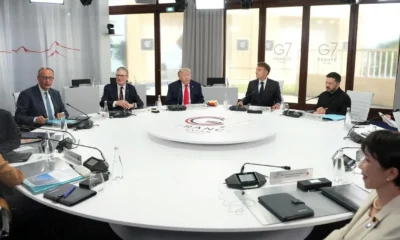
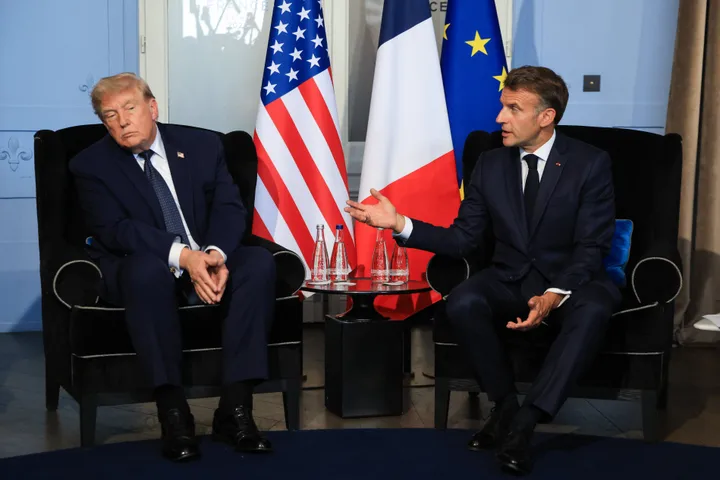
Macron, appearing in a question-and-answer session with reporters alongside Trump, called his deal “a very important agreement” and “a very important step toward peace, but also for the global economy” before moving on to a number of other topics he wanted to discuss at the summit.
Trump, for his part, wandered off topic as he nearly always does in his public remarks and began bragging about the bloody kick-boxing fights he staged at the White House for his birthday.
After mentioning the war in Ukraine and how many soldiers were still dying, Trump, apropos of nothing, turned to the Ultimate Fighting Championship event on the South Lawn Sunday: “We had a really exciting, I think, maybe one of the most incredible evenings in the history of the White House. We had an evening last night with the fighters, and I was very happy.”
Trump, who turned 80, also appeared exhausted, having left Washington, D.C., at 3 a.m. and then flying seven hours east. When a French reporter asked Macron a question, Trump apparently thought the “Mr. President” appellation applied to him and answered it himself.
Macron, as reporters were ushered out, answered in French that he was ready to send ships to the Strait of Hormuz to help secure it for tanker traffic ― after hostilities were truly over and any mines were cleared.
He and British Prime Minister Keir Starmer had months ago said they would help get oil tanker traffic moving freely through the strait after the war was over.
Trump, though, getting a whispered translation from a U.S. interpreter as Macron spoke, interjected that the U.S. really didn’t need any assistance. “I don’t think we’re going to need much help, because we have an agreement where it’s going to be open and it’s toll free,” he said.
The G7 summit is to continue through Wednesday afternoon, after which Macron is to host Trump for dinner at the Palace of Versailles outside Paris. Trump plans to return to Washington from there.